Spring 2026 ENE Course Offerings
Engineering the Climate: Technical & Policy Challenges
 Egemen Kolemen
This seminar focuses on the science, engineering, policy and ethics of climate engineering — the deliberate human intervention in the world climate in order to reduce global warming. Climate/ocean models and control theory are introduced. The technology, economics, and climate response for the most favorable climate engineering methods (carbon dioxide removal, solar radiation management) are reviewed. Policy and ethics challenges are discussed.
Rapid Switch: The Energy Transition Challenge to a Low-carbon Future
 Eric Larson, Chris Greig
The Paris Accord signaled global consensus on the need for a rapid switch to clean energy and industrial production. In recent years this has resulted in ever increasing pledges by nations, states and organizations to reach net-zero by midcentury. Not well understood are the immense scale and speed of this transformation. Princeton’s Net-Zero America study and similar studies elsewhere have provided highly granular insights on the implications for the environment, finances, jobs, and diverse stakeholder interests. Students will build on these insights with interdisciplinary case studies for ambitious international net-zero hubs.
Introduction to the Electricity Sector-Engineering, Economics, and Regulation
 Jesse Jenkins
This course provides an introduction to the electricity sector drawing on engineering, economics, and regulatory policy perspectives. It introduces the engineering principles behind various power generation technologies and transmission and distribution networks; the economics of electricity markets; and the regulation of electricity generation, transmission, distribution, and retail sales. Open challenges related to the growth of distributed energy resources, the transition to low-carbon electricity sources, and the role of the electricity sector in mitigating global climate change are also discussed.
Solar Energy Conversion
 Dane de Quilettes
ENE 431/ECE 431/ENV 431/EGR 431
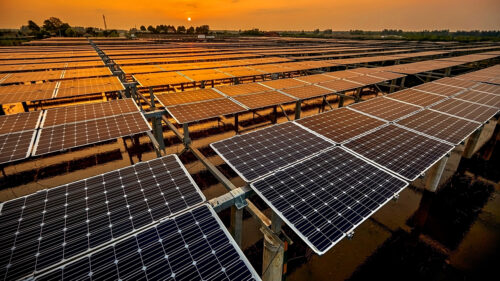
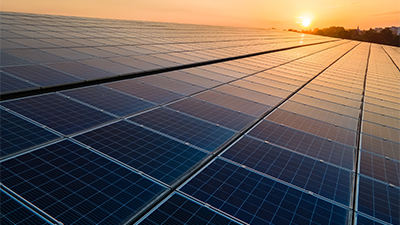
Principles and design of solar energy conversion systems. Quantity and availability of solar energy from our Sun compared to other solar systems. Physics and chemistry of solar energy conversion: solar optics, optical excitation, capture of excited energy, and transport of excitations or electronic charge. Conversion methods: thermal, wind, photoelectric, photoelectrochemical, photosynthetic, biomass. Solar energy systems: low and high temperature conversion, photovoltaics. Storage of solar energy. Conversion efficiency, systems cost, and lifecycle considerations. Hands-on experiences testing solar panels, touring campus solar farm, etc.
Introduction to the Electricity Sector-Engineering, Economics, and Regulation
 Jesse Jenkins
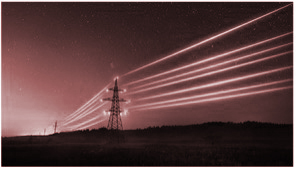
This course provides an introduction to the electricity sector drawing on engineering, economics, and regulatory policy perspectives. It introduces the engineering principles behind various power generation technologies and transmission and distribution networks; the economics of electricity markets; and the regulation of electricity generation, transmission, distribution, and retail sales. Open challenges related to the growth of distributed energy resources, the transition to low-carbon electricity sources, and the role of the electricity sector in mitigating global climate change are also discussed.
Special Topics in Energy & the Environment: Water, Brines, Minerals-Paths to Decarbonized Extraction
 Angela Fasnacht
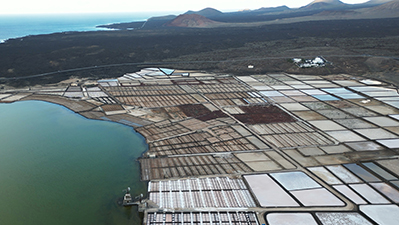
This course explores the intersections of water science, mineral geochemistry, and decarbonization strategies. Students study the fundamentals of brine chemistry, global case studies of water-intensive extraction, and innovative approaches that minimize water demand, increase efficiency, and align mineral recovery with sustainability and climate goals. The course intentionally centers the water-energy-carbon nexus and draws on emerging standards from industry and policy, including work by the International Lithium Association (ILiA).
Spring 2026 ENE cross-listed courses
Currents of Power: The Anthropology of Energy
 Staff
Staff
The energy transition (or perhaps transitions) has begun. Where are they going? And what does anthropology have to do with energy anyway? In this class we will take these questions as central, looking at how energy systems shape culture, and how culture shapes the energy systems that shape it. We will deal with topics like solarization, microgrids, NIMBY-ism, green grabbing, and electric vehicles from the ground up. We will also take up a historical perspective that will help us to understand how earlier coal and oil-powered energy transitions shape our everyday lifeworlds.
The Complexities of the Energy Transition
 Lynn Loo
This elective seminar will examine the complexities of the energy transition. Through case studies, a survey of current affairs and interviews with industry leaders, students will appreciate the scale of the challenge and the factors that limit the pace of the transition. This seminar will specifically focus on the decarbonization challenges of difficult-to-abate sectors, like international shipping, in which upcoming policy negotiations will impact whether its transition will keep up with its stated ambition to reduce emissions by 20%, striving for 30%, by 2030; 70%, striving for 80%, by 2040; and net zero around 2050.
Energy and Environmental Engineering
 Catherine Peters
In our sustainable future, the world’s energy needs will be met while protecting natural resources and minimizing risks to human health. The course covers the environmental and geological engineering principles relevant to the entire energy supply chain from mining and extraction of fuels, to power production, to disposal of wastes and sequestration of greenhouse gases. Both conventional and renewable energy are considered. Students will learn the engineering principles and practices to address environmental challenges and to find the best ways to utilize earth systems to our advantage.
Global Air Pollution
 Mark Zondlo
CEE 311/CHM 311/GEO 311/ENE 311
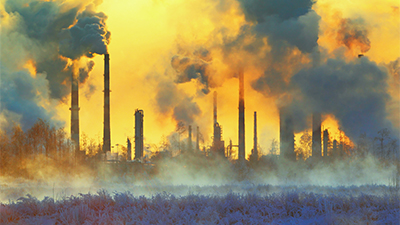
Students will study the chemical and physical processes involved in the sources, transformation, transport, and sinks of air pollutants on local to global scales. Societal problems such as photochemical smog, particulate matter, greenhouse gases, and stratospheric ozone depletion will be investigated using fundamental concepts in chemistry, physics, and engineering. Environments to be studied include very clean, remote portions of the globe to urban air quality.
Global Environmental Issues
 Denise Mauzerall
CEE 334/SPI 452/Env 334 /ENE 334
This course examines a collection of critical global environmental issues. For each issue the scientific basis is covered first, and the past, present and possible future policy responses follow. Topics include global population growth, climate change, stratospheric ozone depletion, air pollution, energy supply and demand, biodiversity and sustainable development. Problem sets, policy memos, projects, news blogs, and presentations are included.
Optical Materials for Thermoregulation of the Built Environment and Beyond
 Jyotirmoy Mandal
This course explores material and optical design strategies for thermal management of buildings. In the first part of the course, we cover fundamental aspects of thermal radiation and light-matter interactions in built and natural environments. The second part covers traditional and emerging materials and strategies for radiative thermoregulation of buildings. Specific topics include traditional designs such as cool-roof films and low-E coatings, emerging materials like radiative coolers, and adaptive coolers/heaters, and their impact within buildings and the broader environment.
Special Topics in Environmental Engineering and Water Resources: Pathways to Water Sector Decarbonization
 Z. Jason Ren
This course explores the One Water framework, focusing on decarbonization and building resilient, circular, and equitable water/wastewater systems.
Solar Cells: Physics, Materials, and Technology
 Barry Rand
Photovoltaic materials and devices are discussed. Topics covered: solar flux distribution & spectra, photovoltaic parameters, loss mechanisms, Shockley-Queisser detailed balance approach, stability, light management, module design & various solar cell technologies, drawing distinctions between heterojunction & homojunction devices including crystalline Si and III-V, & thin film cells such as CIGS, CdTe, perovskite, & organic. We present methods to go beyond classical limits, such as intermediate band solar cells & multijunction devices.
Introductory Seismology
 Jeroen Trump
Fundamentals of seismology and seismic wave propagation. Introduction to acoustic and elastic wave propagation concepts, observational methods, and inferences that can be drawn from seismic data about the deep planetary structure of the Earth, as well as about the occurrence of oil and gas deposits in the crust. Offered every other year.
Energy Technologies for the 21st Century
 Alexander Glaser, Jesse Jenkins
MAE 228/EGR 228/CBE 228/ENE 228
This course introduces the fundamental physical mechanisms behind sustainable energy technologies and the basic concepts to evaluate and compare their efficiency, environmental impact, and costs. Among others, we will examine the potential of wind energy, photovoltaics, geothermal energy, biofuels, and nuclear energy. We will also examine the concepts of intermittency and dispatchability of energy sources and discuss the relevance of the electric grid, energy storage, energy efficiency, and green buildings. Taken together, this will help us assess energy scenarios and possible pathways to a net-zero carbon energy future.
Energy Conversion and the Environment: Transportation Applications
 Alison Ferris
Overview of energy utilization in and environmental impacts of propulsion systems for ground and air transportation. Roughly half of the course will be devoted to reciprocating engines for ground transportation, and the other half of the course will be devoted to gas turbine engines for air transportation. The course will focus on device efficiency/performance and emissions with future outlooks for improvements in these areas including alternative fuels and alternative device concepts. Relevant thermodynamics, chemistry, fluid mechanics, and combustion fundamentals will be reviewed or introduced and will permeate the course material.
Oil, Energy and The Middle East
 Bernard Haykel
Overview of the issues surrounding global energy supplies, oil’s unique physical and economic properties, and its role in shaping the political economy of the Middle East and U.S. strategic interests in the region. Discuss availability of energy sources, the state of technology, the functioning of energy markets, the challenges of coping with global climate change and the key role of the oil reserves in the Middle East. Then focus on the history of oil and gas in the Middle East and its impact on societies in the region.