Andlinger Center supports projects to increase building energy efficiency and remove atmospheric carbon dioxide
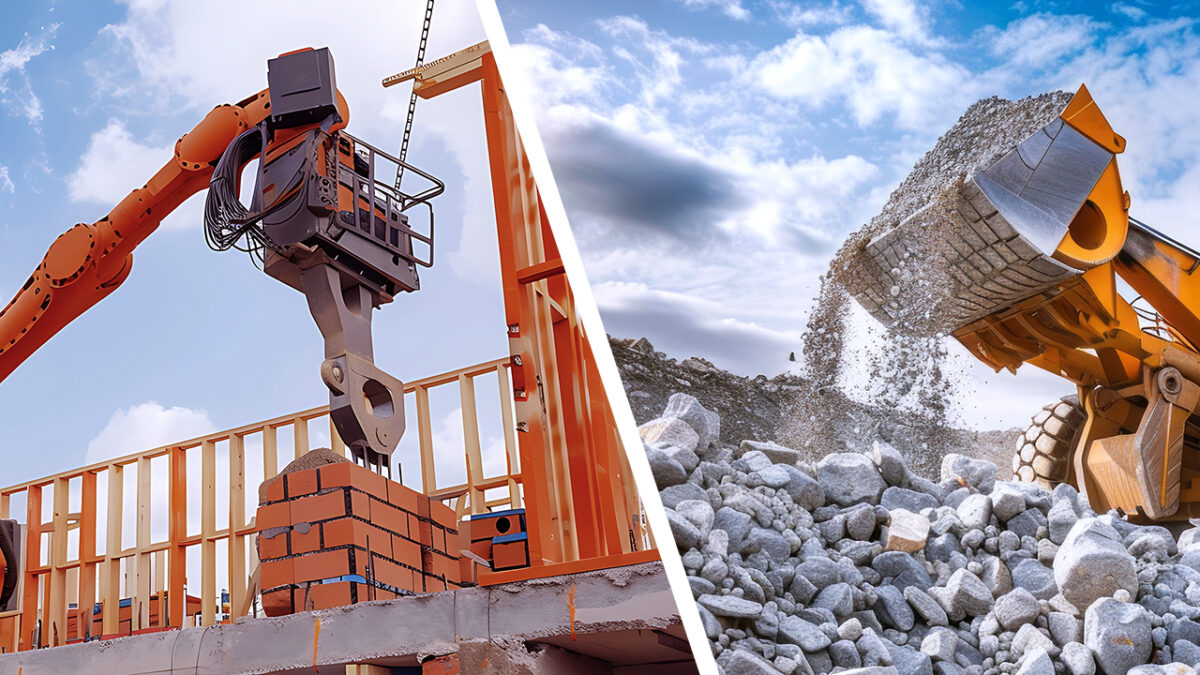
Aiming to draw together interdisciplinary teams that seek to address a multi-dimensional energy and environmental challenge, the Andlinger Center for Energy and the Environment has chosen two projects for funding through the Grants for Innovative Research in Energy and the Environment.
Since the inception of the program in 2016, the projects awarded have addressed key topics in energy production, use, and management, prioritizing work with the potential to lead to sustained research efforts. Those topics have ranged from solid-state batteries to offshore windfarm design and critical mineral extraction.
Two tiers of funding have been awarded this year: the Convergence Project receives up to $428k of support over two years and the Seed Project receives up to $143k.
Convergence project
Increased energy efficiency for existing buildings using AI-driven design and robotics-enabled manufacturing for targeted retrofits
 Retrofitting insulation to the outside of existing buildings can save enormous amounts of energy and carbon dioxide emissions, but currently each building needs to be individually assessed and have unique panels made. A team led by Arash Adel, assistant professor at the school of architecture, aims to apply artificial intelligence (AI) and robotic manufacturing to radically improve the process of designing and manufacturing the external insulation panels.
Existing buildings in the U.S., including homes, consumed roughly 40% of the nation’s energy and generated around 35% of its carbon dioxide emissions in 2023. However, it is estimated that up to 30% of this energy consumption is due to inefficiencies in existing buildings’ design and construction, such as the lack of proper insulation in single- and multiple-family homes. Retrofitting homes with external insulating panels can drastically cut this wastage.
Whilst retrofitting exterior panels eliminates the need to open walls, minimizes disruption to occupants, and significantly reduces construction time on-site, the panels are time-consuming and costly to produce since they are usually one-off designs. The designs are often driven by budget constraints and aesthetic choices rather than energy performance requirements, and this outdated design-to-production approach makes it practically impossible to achieve the scalable impact needed to upgrade aging U.S. housing infrastructure.
“By developing easy-to-install mass-customized insulated retrofit panels that can be made using robotic manufacturing we can ensure that solutions can be tailored to diverse building types and conditions while maintaining high quality and affordability,” says Adel. “This will make it feasible to implement widespread improvements across low-income, aging, and diverse housing stock.
In practice, the project will involve developing AI models to make digital reconstructions of building exteriors, using these models to design cost- and performance-optimized retrofit panels, and developing a robotics platform coupled with AI to create adaptive manufacturing of insulating panels from custom materials.
Adel explains that, assuming all goes to plan, after optimizing the workflow the team would run a demonstration project on Princeton campus, with the building’s energy efficiency then monitored to measure the performance of the retrofit designed and created using this method.
“Our aim is to eventually enable scalable and affordable implementation of high-performance building retrofits across the U.S.,” says Adel. “Given the potential for energy savings we could make an impact on greenhouse gas emissions of even quite old housing infrastructure.”
The project will receive $428k for two years and kick off in January 2026. In addition to Adel several co-PIs will be involved: Sigrid Adriaenssens, a professor in the department of civil and environmental engineering; Jia Deng, a professor in the department of computer science; Paul Lewis, a professor and associate dean in the school of architecture and principal architect at LTL Architects; and Forrest Meggers, an associate professor in the school of Architecture and the Andlinger Center for Energy and the Environment.
Seed project
Enhanced rock weathering can remove carbon dioxide from the atmosphere and assist farming
 Reaching net zero emissions is a complex process that will involve many strategies, with atmospheric carbon dioxide removal likely to play a key role. This project, led by Satish Myneni, professor of geosciences, will examine enhanced rock weathering (ERW) to better quantify its ability to provide long-term carbon dioxide removal and evaluate possible drawbacks and obstacles to its implementation.
Rock weathering is a natural process that removes carbon dioxide from the atmosphere; this natural process can be enhanced to increase the amount of carbon dioxide absorbed to help address climate change. For ERW, fine rock particles are created from silicate rocks, increasing their reactive surface area. This rock dust is then spread over land, and when it reacts with dissolved carbon dioxide in rainwater or soil pore waters, it converts to carbonate and bicarbonate and releases numerous ions essential for plant growth into the soil. Over time, these dissolved products may be taken up by plants, remain in the soil, or be transported to a sink such as the ocean where they can remain stable for 10,000 years.
Studies suggest that ERW has the potential to remove up to 30 million tons of carbon dioxide from the atmosphere per year, but several uncertainties remain. A better understanding of the rate of carbon dioxide removal and how this is impacted by different conditions is needed. ERW also has potential benefits for agriculture and may increase crop and forestry yields because of the additional minerals released into the soil, but more information would help take advantage of this benefit.
Myneni’s project aims to investigate both carbon dioxide capture efficiency and its relation to organic carbon retention within the soil, as well as exploring chemical modifications that could improve ERW performance. With a better understanding of the overall process, the potential impact of ERW on atmospheric carbon dioxide and agriculture could be more accurately quantified.
“We aim to both increase carbon dioxide uptake by better understanding ERW parameters such as which form of the rock performs best and enhance the stability of the carbon within the soil so it’s not re-emitted,” explains Myneni. “With this seed grant we hope to help make ERW a crucial tool in the pursuit of net-zero emissions.”
As a seed project, Myneni’s work will receive $143k over two years.
Related articles:
- Andlinger Center announces a call for proposals for Grants for Innovative Research in Energy and the Environment
- Andlinger Center supports investigations into green steelmaking, solid-state batteries, and geologic hydrogen production
- Andlinger Center Announces Call for Proposals for Innovative Research in Energy and the Environment