Andlinger Center supports 22 undergraduate students from material synthesis to public policy
The Andlinger Center is supporting 22 undergraduate students with funding for 16 different internship projects focused on energy and the environment. Working with Princeton University faculty and non-profit organizations, these summer interns will dive into research encompassing a range of topics, including materials synthesis, machine learning, and public policy.
The Andlinger Center’s student internship program is supported by the Peter B. Lewis Fund for Student Innovation in Energy and the Environment, the Dede T. Bartlett P03 Fund for Student Research in Energy and the Environment, the deCarvalho-Heineken Family Fund for Environmental Studies, and an anonymous gift. The program is also supported by Learning and Education in Service (LENS), a Princeton University initiative to expand access for undergraduates to summer internships in service and social impact.
The students’ projects are described briefly below:
Internships with Faculty
Biotechnological Solutions to Challenges in Sustainable Energy and the Environment
 Moulya Sayana (AST ’29)
Advised by José Avalos
Researchers in the Avalos lab engineer microbes with novel desirable traits to tackle pressing challenges in sustainable energy, human health, sustainable manufacturing, and the environment. A significant focus of the lab is on sargassum, an abundant biomass feedstock resource for biorefining and bioproducts manufacturing. Recent research has centered on yeast as a stepping stone for characterizing and optimizing optogenetic tools. The intern will engage in metabolic, genetic, and protein engineering to develop biocatalysts capable of generating fuels and chemicals from inexpensive renewable sources.
Modeling Magnesium-Carbonate Ion Pairing in Water with Machine-Learning-Accelerated Molecular Dynamics Based on Density Functional Theory and Beyond
 Amelie Sillitoe (PHY ’28)
Advised by Emily Carter
Researchers within the Carter group employ quantum-based simulation methodologies to identify and design materials for the sustainable production of fuels and chemicals. This project will employ machine-learning potential molecular dynamics (MLP-MD) to investigate Mg²⁺-CO₃²⁻ ion pairing in aqueous solution. The MLPs will be trained on density functional theory (DFT) data and further refined with embedded correlated wavefunction (ECW) theory for higher-level accuracy. The intern will analyze free-energy surfaces and the structural characteristics to determine how hydration governs magnesium–carbonate interactions.
Solid Horizons: Advanced Solid-State Batteries for Next-Generation Electric Mobility
Nathan Lee (CBE ’29) and Eli Swerdloff (MAE ’29)
 Advised by Kelsey Hatzell
The Materials for Energy and Climate lab is dedicated to developing novel technologies that can replace fossil fuel-dependent systems and engineering materials, enhancing their performance and longevity. Specifically, the lab’s research focuses on the chemo-mechanical properties of lithium metal solid-state batteries and aims to improve our understanding of battery performance in outer space and cryogenic temperatures. Interns will engage in various activities, including materials synthesis, structural and electrochemical analysis, and performance testing to create safer, lighter, and higher‑capacity batteries that support the future of electric mobility.
Bridging Building Energy Models and Capacity Expansion for Climate-Resilient Electrification
Khadija Ndiaye (ECE ’28)
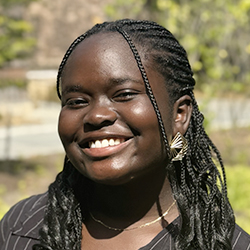 Advised by Jesse Jenkins and Forrest Meggers
While the CHAOS (Cooling and Heating for Architecturally Optimized Systems) laboratory utilizes architectural design to enhance the efficiency of building systems, the ZERO laboratory (Zero-carbon Energy systems Research and Optimization Laboratory) employs optimization-based macro-energy systems models to generate insights for energy improvement. This project seeks to capture the grid value of building thermal mass, comfort flexibility, and advanced controls by developing tools that efficiently integrate detailed building energy models (BEM) into capacity-expansion models (CEM). Utilizing the experimental facilities of both the ZERO and CHAOS labs, the intern will develop and validate a scalable, physics-informed resistor–capacitor (RC) modeling framework that incorporates building-scale thermal storage, radiant-system effects, and human comfort dynamics directly into CEM.
Plasma Assisted CO2 Reduction
Kleiber Castanon (MAE ’27) and Kevin Tsao (MAE ’28)
 Advised by Yiguang Ju
The conversion of greenhouse gases, predominantly carbon dioxide, into solid form is a carbon capture and utilization strategy aimed at mitigating atmospheric emissions and facilitating long-term storage. This project seeks to convert CO2 into a solid, high-value material for reinforcing construction, such as cement. The reduction of CO2 to carbon fibers through non-equilibrium methods entails the dissociation of stable CO2 molecules using high-energy electrons (plasma). The interns will design the reactor and characterize the carbon materials and chemicals in their work.
AI Foundation Models for Understanding and Controlling Fusion Plasmas
David Lee (ORF ’27) and Vishrut Thoutam (COS ’29)
Advised by Egemen Kolemen
Advanced AI frameworks, PyTorch and TensorFlow, integrate prototyping and deployment workflows to analyze intricate plasma dynamics in real-time. These frameworks are frequently employed in a “research-to-production” pipeline, contributing to open research that aligns with the Department of Energy’s objective of expediting fusion energy development. Interns will engage in practical work with time-series and spectrogram data, applying machine learning techniques such as transformers or autoencoders.
Designing Optical and Thermal Strategies for Thermoregulating Buildings and the Broader Environment
Toroti Jolaosho (MAE ’28) and Seth Markey (MAE ’28)
 Advised by Jyotirmoy Mandal
Researchers in the Mandal group focus on the design of optical components for infrared heat detection and characterization, as well as the development of scalable materials that can regulate their temperature through radiative heat transfer. This research aims to enhance human environments’ sustainability and climate resilience by employing passive cooling, heating, and lighting. Interns will develop “zero-carbon, zero-energy” materials from readily available and inexpensive resources that manipulate light and heat flows in novel ways to thermoregulate buildings and the surrounding environment. These materials will be characterized during outdoor field tests.
Novel Control and Operation of Heat Pumps
Arshad Persaud (ECE ’29)
 Advised by Forrest Meggers
Ground-source heat pumps facilitate the transfer of heat between buildings and the earth, rather than solely generating it. Additionally, they function as thermal batteries, storing summer heat in the earth to provide warmth to buildings during winter months. The intern will construct bespoke heat pump systems from the ground up and assess control mechanisms that can be scaled up and utilized to translate thermal storage in water tanks, similar to those employed in our own Princeton campus geoexchange system. The work will entail extensive hands-on experimentation, data collection, and quantitative analysis.
Controlling the Orientation of Organic Emitters in Thin-Film Host Matrices
Minli Guo (ECE ’28) and Sarah Rinzan (ECE ’27)
 Advised by Barry Rand
A deeper understanding of structure-property relationships could inform new design rules for enhancing light outcoupling in conventional OLEDs and optimizing emitter-surface plasmon coupling in upconversion systems. However, achieving controlled molecular orientation within a host matrix remains challenging. Factors such as deposition conditions, substrate treatment, film morphology, and thermal properties of the host matrix can significantly influence emitter alignment. The interns will systematically investigate how processing parameters and host properties affect emitter orientation in organic thin films.
Aqueous Pollutant Degradation Using Microporous Sponges
Ashley Jimenez (CBE ’28) and Gianna Maltbie (CBE ’29)
 Advised by Michele Sarazen
In the face of growing water consumption and pollution of water resources around the world, finding more effective ways to treat wastewater remains paramount. The material properties of microporous materials like zeolites or metal-organic frameworks (MOFs) can result in high selectivity and capacity for environmental contaminants found in ground or wastewater. This research project aims to understand mechanisms for species uptake and to improve their recyclability for potential use in environmental remediation.The interns will synthesize these materials and followed by pollutant degradation testing and characterization.
AI-Aided Electricity Grid Digital Twins
Cole Kawaja (Undecided ’29)
 Advised by Ronnie Sircar
It would be of enormous benefit to electricity grid planning and capacity expansion if researchers could run simulations through digital twins of existing and future grids. These digital twins could be used to understand things such as the impact of increased demand from data centers driven by AI usage, and mitigation by increased battery storage. The ARPA-E funded ORFEUS project did this using a model of the Texas ERCOT grid created by researchers at Texas A&M over several years. The intern will construct facsimile grids for New York, California and other states and generate results as were obtained for Texas, while training on the groundwork of the Texas grid.
Internships with Non-profit Organizations
BEAR Hub Initiative Intern
Roy Kariuki (ECO ’28)
 American Council for an Energy-Efficient Economy
The BEAR Hub initiative (Behavior, Energy, Action, Research) of the ACEEE provides no-cost behavioral science assistance to cities and other organizations implementing programs aimed at reducing energy consumption. The program will conduct research and provide assistance to professionals encouraging energy efficiency and climate action across economic sectors.The intern will contribute to various aspects of the initiative, including administration and planning for applicants, conducting background literature reviews, providing behavioral science advising, managing and distributing surveys, and engaging in other research activities.
Global Engagement and Partnerships Intern
Sastha Tripathi (SPI ’28)
 Environmental Defense Fund
The Global Engagement and Partnerships (GEP) team facilitates EDF’s global presence, advocacy, and policy work, while building strong relationships with stakeholders. GEP team members conduct and publish original research and regularly give presentations to international stakeholders. The work ensures the EDF’s activities and communications are culturally relevant and effective. The intern will support the GEP team on research, writing, and advocacy projects focused on international climate negotiations and global environmental governance.
Water Utility Research Intern
AJ Harris (CBE ’28)
 Moonshot Missions
Moonshot Missions is focused on ensuring safe, clean water is delivered to the people who need it most. In addition to improving drinking water quality and wastewater services, the non-profit is also focused on affordability and resiliency for under-resourced communities nationwide. Working alongside veteran water leaders, the intern will address environmental equity topics, such as optimizing and making water affordable, ensuring clean water access across the United States.
International Internship Programs
Global Centre for Maritime Decarbonisation (GCMD)
Andrew Zhou ’29
The Global Centre for Maritime Decarbonisation (GCMD) was set up as a non-profit organisation to support decarbonisation of the maritime industry to meet or exceed the International Maritime Organization’s (IMO) goals for 2030 and 2050. GCMD helps to shape standards, deploy solutions, finance projects, and foster collaboration across sectors. The organization conducts pilots and trials to address specific gaps or barriers to decarbonisation in the maritime sector. The intern will conduct in-depth data analysis on Energy-Efficiency Technologies (EET) performance estimation using data collected onboard ships and set up a data pipeline and management plan, with standardized scripts to replicate analysis across different EETs.
Instituto SENAI de Inovacao em Eletroquimica, Brazil
Caitlyn B. Rodrigues ’29
SENAI launched the first Institute of Innovation in Electrochemistry in Brazil, with laboratory infrastructure and highly trained human resources. With the support of the Fraunhofer Institute in Germany, it conducts research applied to industry, developing innovative products and processes, resulting in greater competitiveness and sustainability for various industrial segments. The intern will execute environmental tests through the six laboratories of the Senai Institute and perform electroanalytical measurements to help develop fundamental understanding of processes.