Princeton study reveals need for domestic efforts and international sourcing to secure future of electric vehicle batteries in the U.S.
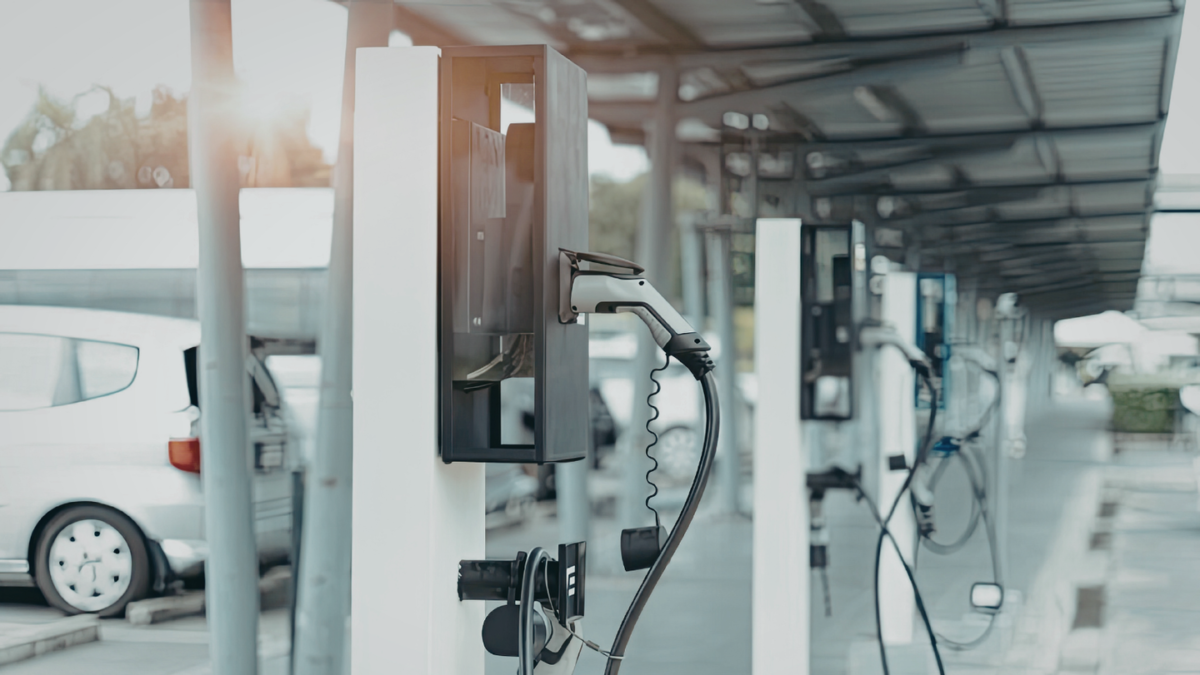
A Princeton study projects persistent shortfalls for critical EV battery materials if domestic production expansion, demand-side strategies, and international sourcing are not strategically aligned.
As electric vehicle (EV) adoption grows in the United States and globally, the demand for EV batteries and their critical materials – such as lithium, nickel, cobalt, and graphite – is expected to surge dramatically. This makes the resilience of the supply chain underpinning battery production increasingly important.
However, the U.S. has limited capacity across key stages of the battery supply chain, leaving it vulnerable to supply disruptions. In a new study published in Nature Energy, Princeton researchers explore how domestic production expansion and demand-side strategies can help meet future EV battery material demand and identify where shortages may persist across the supply chain.
Background: The Policy Problem
Recent U.S. policy has emphasized the expansion of domestic EV battery production and associated materials, using measures such as sourcing requirements, tax credits, and tariffs to reduce supply disruptions and import dependence. However, domestic expansion will not be enough to ensure sufficient materials across the supply chain, especially following the recent repeal of federal incentives for EV adoption and changes to battery supply investment via the One Big Beautiful Bill Act (OBBBA) of 2025.
Jieyi Lu and her colleagues address this issue in their study, evaluating how domestic production expansion, together with demand-side strategies (e.g., improved vehicle efficiency, battery energy density, recycling, and chemistry shifts), affect projected U.S. EV battery material demand and supply.
“Addressing material supply shortfalls is crucial for building a resilient EV battery supply chain,” says Jieyi Lu, a STEP Ph.D. candidate at Princeton’s School of Public and International Affairs. “If these shortfalls persist, the US will become more vulnerable to supply shocks that slow EV deployment and weaken its position in the global transition to EVs.”
The Data and Method
For their study, Lu and her team developed a modeling framework that estimates material demand and supply across the EV battery supply chain, including upstream mining, midstream refining, and downstream battery component production and cell manufacturing. On the demand side, the model traces material needs from projected EV sales through each stage of the supply chain. On the supply side, it accounts for existing production, planned capacity, and imports of each material, with planned capacity reflecting project development status following OBBBA. This framework evaluates how supply expansion and demand-side strategies affect projected material shortfalls.
The authors also developed an optimization model to estimate the maximum EV battery production achievable under U.S. sourcing constraints and the resulting battery chemistry shares. The analysis draws on a wide range of data – such as supply chain investment, trade, and material requirements – to provide results that can be reassessed as conditions evolve.
“Prior studies have often focused on part of the battery supply chain or on a limited set of materials, and evaluated strategies separately,” explains Lu. “What makes this study different is that we bring multiple materials, supply chain stages, and strategies together in one framework, while also accounting for post-OBBBA project development conditions. This allows us to see more clearly how different strategies can reduce or shift material constraints, and where important gaps are likely to persist.”
The Findings
The study finds that expanding domestic production can meet projected 2035 demand for several key materials used in major EV batteries, including upstream lithium, midstream lithium carbonate and lithium hydroxide, and downstream components such as electrolytes and separators. However, even with demand-side strategies that improve vehicle efficiency and battery energy density, enhance recycling, and switch to alternative battery chemistries, persistent and substantial shortfalls remain. Notably, the models project a 30-70% shortfall for upstream cobalt, nickel, graphite and their midstream refined materials and a 15-75% shortfall for downstream cathode and anode active materials.
The study also finds that the projected domestic supply depends heavily on early-stage projects that may not advance on schedule. For some upstream and midstream materials, such as cobalt sulfate and nickel sulfate, approximately 30-100% of their projected supplies rely on early-stage mining and processing projects, adding uncertainty to future supply if these projects face delays or fail to materialize.
“Domestic expansion is subject to significant uncertainty, particularly in upstream and midstream stages where projects are capital-intensive and require long development timelines,” says Lu. “This is one reason why domestic expansion alone may not be sufficient to close the material gaps.”
Demand-side strategies help narrow material supply shortfalls, but they also face obstacles and involve trade-offs. For example, transitioning to lithium iron phosphate (LFP) batteries reduces reliance on cobalt, manganese, and nickel. However, doing so introduces new supply constraints related to LFP-specific components.
Furthermore, the risk of material shortfalls intensifies under higher EV adoption and larger vehicle sizes, meaning the shortfalls identified here may understate the challenge if those trends continue.
“Our results show that demand-side strategies do not affect all material gaps in the same way,” explains Lu. “They can substantially reduce some shortfalls, but their impacts vary across materials and stages of the supply chain, which is why important constraints can still remain.”
The Implications
From a policy perspective, the findings of the study emphasize the need for a coordinated approach that expands domestic production capacity, implements demand-side strategies, and increases international sourcing to meet future U.S. EV battery material demand. The findings also underscore the need to align trade and industrial policies so that efforts to strengthen domestic supply do not undermine access to the materials still needed from abroad.
The researchers advocate for policies that would encourage investment not only in upstream mineral extraction but also in midstream processing and downstream manufacturing. In addition, because much of the projected future supply has yet to materialize, delays in permitting, financing, construction, or ramp-up could widen future material shortages. The authors therefore suggest that policymakers streamline environmentally responsible permitting, provide financial and technical support for viable projects, and offer clear long-term policy signals to improve confidence in investment decisions.
Policies to reduce supply chain risks should also include stronger support for end-of-life battery collection and advanced recycling technologies, improvements in vehicle efficiency and battery energy density, exploration of alternative battery chemistries, and coordinated planning to ensure that shifts in battery chemistry do not simply move supply pressure from one set of materials to another.
“As demand increases for electric vehicles, our work highlights the need for U.S. policies that reduce future supply chain risks,” says co-author Denise L. Mauzerall, a professor in Princeton’s School of Public and International Affairs and in the Civil and Environmental Engineering department. “We find that securing U.S. battery materials will require investment across the domestic supply chain, reducing and shifting material demand, and continued international sourcing. Without such efforts, the U.S. auto industry risks falling behind in the global transition to electric vehicles and reducing choices for U.S. consumers.”
The paper, “Evaluating strategies to address material supply–demand gaps in the U.S. electric vehicle battery supply chain,” was published in Nature Energy on May 19th, 2026. The co-authors include Jieyi Lu (School of Public and International Affairs, Princeton University), Jesse D. Jenkins (Department of Mechanical and Aerospace Engineering and Andlinger Center for Energy and the Environment, Princeton University), Chris Greig (Andlinger Center for Energy and the Environment, Princeton University), and Denise L. Mauzerall (School of Public and International Affairs and the Department of Civil and Environmental Engineering, Princeton University). This research was supported by the Princeton School of Public and International Affairs and the Prize Fellowship in the Social Sciences at Princeton University for graduate fellowship support for J.L.
This article originally appeared on the Center for Policy Research in Energy and the Environment website.
Related Articles: