Andlinger Center grants explore new approaches to cooling chips and capturing carbon
Industrial decarbonization has emerged as a major focus at the Andlinger Center for Energy and the Environment. It was front and center at our recent E-ffiliates Retreat, and is reflected in one of the center’s six new research initiatives, which aims to develop clean energy solutions for cutting emissions across energy-intensive sectors, including manufacturing, chemical production, and emerging digital infrastructure.
That initiative is now backing new work. Through its Grants for Innovative Research in Energy and the Environment program, the center has selected two projects for funding, both aligned with the Industrial Decarbonization initiative’s goal of powering industrial processes with clean energy. Each project will receive an award of $140,000 over two years.
Projects funded
Extreme Cooling at the Microscale
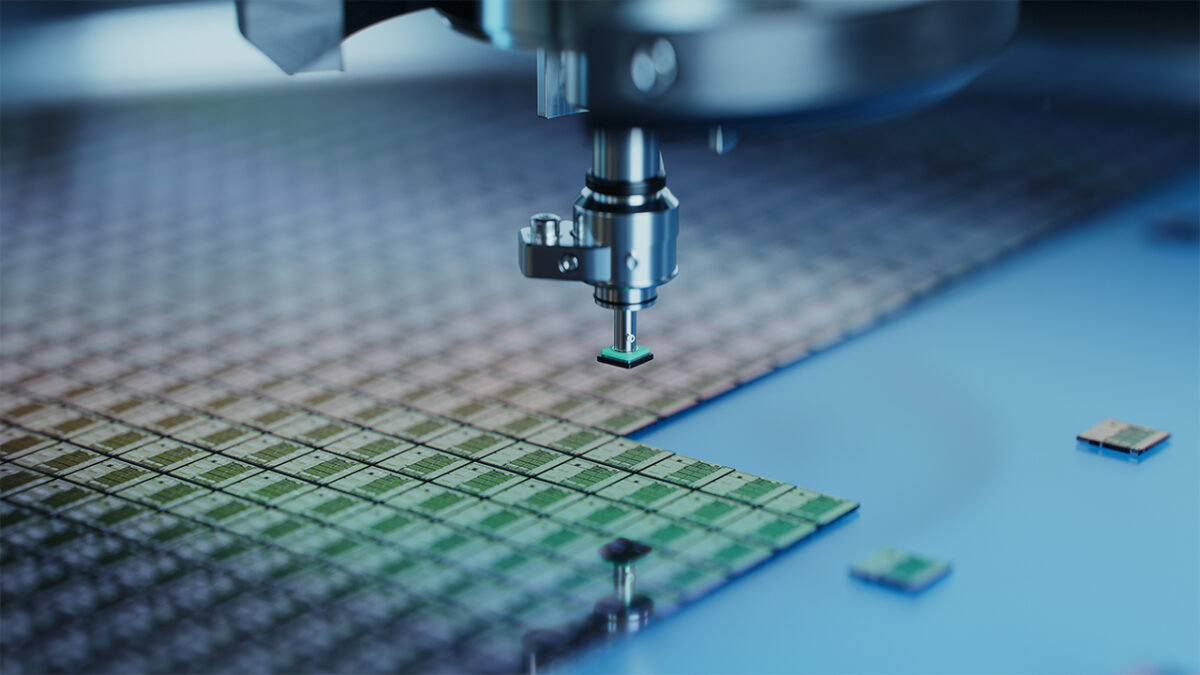
GPUs and other processing chips found in AI data centers and supercomputers generate intense heat loads in a small space. Packing chips more tightly, or stacking them, can promote faster communication between chips, more energy efficient data transfer, and more space-efficient computing power. However, stacking also makes it harder to remove heat from the narrow spaces inside the package. Marcus Hultmark, a professor in the mechanical and aerospace engineering department and an Andlinger Center associated faculty member, is seeking to address this problem by exploring a new way to cool channels between stacked chips.
Advanced computing systems already use liquid cooling to remove heat from GPUs and AI accelerators. This project explores whether the properties of gases can be manipulated such that they can cool chips packed closer together than what is possible using liquid cooling. The team will test whether dense gases can absorb and carry away intense heat while flowing through gaps so small – roughly the width of a human hair – that conventional air and water cooling become impractical.
Capturing CO₂ from Air Using Industrial Wastes in an Enclosed Foam-Based Reactor
Direct air capture removes carbon dioxide from the atmosphere, helping address past industrial emissions and balance out emissions that are difficult to eliminate. Dr. Mohsen Yeganeh, a senior research scholar at Princeton and Howard Stone, the Neil A. Omenn ’68 University Professor of Mechanical and Aerospace Engineering and an associated faculty member at the Andlinger Center, are exploring how foam could help capture this carbon dioxide and turn it into stable solids.
The approach, called Foam-Enhanced Negative Carbon Emission (FENCE), uses water-based foam to create a large surface area where air and liquid meet, helping carbon dioxide react with calcium and magnesium in industrial wastes such as cement kiln dust to form stable solid carbonates. The team will also study how to keep the foam stable during capture, then collapse it at an optimal stage so that the liquid can be recycled and the solids collected while maintaining a continuous process.