New AI enhances the view inside fusion energy systems
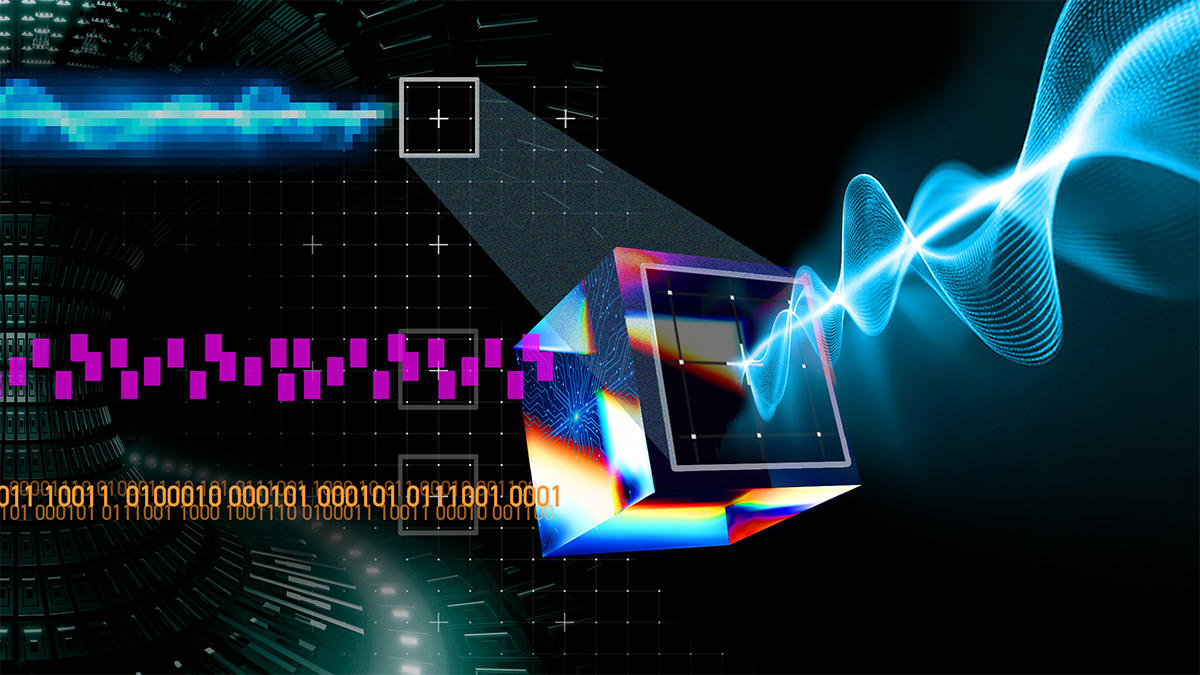
If a sensor fails, this system could provide the missing data and even greater detail.
Imagine watching a favorite movie when suddenly the sound stops. The data representing the audio is missing. All that’s left are images. What if artificial intelligence (AI) could analyze each frame of the video and provide the audio automatically based on the pictures, reading lips and noting each time a foot hits the ground?

That’s the general concept behind a new AI that fills in missing data about plasma, the fuel of fusion, according to Azarakhsh Jalalvand of Princeton University. Jalalvand is the lead author on a paper about the AI, known as Diag2Diag, that was recently published in Nature Communications. “We have found a way to take the data from a bunch of sensors in a system and generate a synthetic version of the data for a different kind of sensor in that system,” he said. The synthetic data aligns with real-world data and is more detailed than what an actual sensor could provide. This could increase the robustness of control while reducing the complexity and cost of future fusion systems. “Diag2Diag could also have applications in other systems such as spacecraft and robotic surgery by enhancing detail and recovering data from failing or degraded sensors, ensuring reliability in critical environments.”
The research is the result of an international collaboration between scientists at Princeton University, the U.S. Department of Energy’s (DOE) Princeton Plasma Physics Laboratory (PPPL), Chung-Ang University, Columbia University and Seoul National University. All of the sensor data used in the research to develop the AI was gathered from experiments at the DIII-D National Fusion Facility, a DOE user facility.
The new AI enhances the way scientists can monitor and control the plasma inside a fusion system and could help keep future commercial fusion systems a reliable source of electricity. “Fusion devices today are all experimental laboratory machines, so if something happens to a sensor, the worst thing that can happen is that we lose time before we can restart the experiment. But if we are thinking about fusion as a source of energy, it needs to work 24/7, without interruption,” Jalalvand said.
AI could lead to compact, economical fusion systems
The name Diag2Diag originates from the word “diagnostic,” which refers to the technique used to analyze a plasma and includes sensors that measure the plasma. Diagnostics take measurements at regular intervals, often as fast as a fraction of a second apart. But some don’t measure the plasma often enough to detect particularly fast-evolving plasma instabilities: sudden changes in the plasma that can make it hard to produce power reliably.
There are many diagnostics in a fusion system that measure different characteristics of the plasma. Thomson scattering, for example, is a diagnostic technique used in doughnut-shaped fusion systems called tokamaks. The Thomson scattering diagnostic measures the temperature of negatively charged particles known as electrons, as well as the density: the number of electrons packed into a unit of space. It takes measurements quickly but not fast enough to provide details that plasma physicists need to keep the plasma stable and at peak performance.
“Diag2Diag is kind of giving your diagnostics a boost without spending hardware money,” said Egemen Kolemen, principal investigator of the research who is jointly appointed at PPPL and the Andlinger Center for Energy and the Environment and the Department of Mechanical and Aerospace Engineering.
This is particularly important for Thomson scattering because the other diagnostics can’t take measurements at the edge of the plasma, which is also known as the pedestal. It is the most important part of the plasma to monitor, but it’s very hard to measure. Carefully monitoring the pedestal helps scientists enhance plasma performance so they can learn the best ways to get the most energy out of the fusion reaction efficiently.
For fusion energy to be a major part of the U.S. power system, it must be both economical and reliable. PPPL Staff Research Scientist SangKyeun Kim, who was part of the Diag2Diag research team, said the AI moves the U.S. toward those goals. “Today’s experimental tokamaks have a lot of diagnostics, but future commercial systems will likely need to have far fewer,” Kim said. “This will help make fusion reactors more compact by minimizing components not directly involved in producing energy.” Fewer diagnostics also frees up valuable space inside the machine, and simplifying the system also makes it more robust and reliable, with fewer chances for error. Plus, it lowers maintenance costs.
This story is an abridged version that originally appeared on the Princeton Plasma Physics Laboratory website.