Date: February 25, 2026
Time: 12:00 p.m. -
Location: Maeder 103
Balancing energy conservation and building conservation
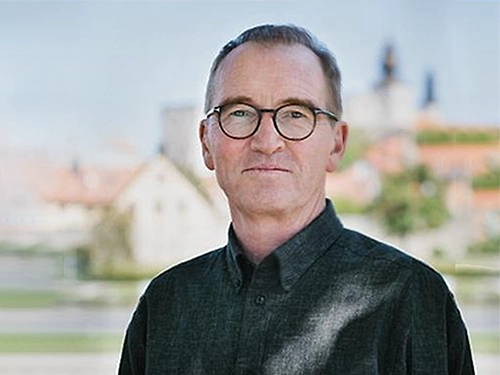
Tor Brostrom
Gerhard R. Andlinger Visiting Fellow
Bio
Tor Brostrom is a visiting fellow at the Andlinger Center for Energy and the Environment. He is a professor in building conservation at Uppsala University, Sweden. He earned his Bachelor of Science in Engineering from Princeton (1980), a Licentiate from Chalmers (1984), and a Ph.D. from the KTH Royal Institute of Technology (1996), His research centers on energy efficiency in historic buildings. Brostrom served as the scientific coordinator of Sweden’s national R&D program on energy efficiency in historic buildings (2007–2024), led European standardization efforts (CEN EN16883) and is currently the president of the International Scientific Committee on Energy and Sustainability within the International Council on Monuments and Sites (ICOMOS).
Abstract
A life cycle analysis of the cost and carbon footprint on the historic buildings on the Princeton Campus, for example, might lead us to radically transform or even replace these buildings. In practice, however, this rarely happens because we want to preserve the built heritage for present and future generations. Globally, there is a consensus for preserving the oldest and most valuable buildings. For the more modern built heritage, such as that of the 20th century, the balance between building conservation and energy conservation is more contested.
This seminar introduces an interdisciplinary field of research and practice that seeks ways to reduce the carbon footprint in the existing building stock without sacrificing historical, architectural or cultural values. It applies to a wide range of buildings where special considerations are required in order to achieve a sustainable balance between building use, energy performance and preservation.
Much of the controversy surrounding energy efficiency in historic buildings has focused on improvements to the building envelope, such as external insulation and window replacement. Supply-side solutions, such as heat pumps and district heating, can reduce carbon footprints with little or no impact on the historic values of buildings.
Appropriate technical solutions are necessary but not sufficient. Supporting systematic planning and informed decisions is of fundamental importance. The European guidelines for improving energy performance in historic buildings provide a systematic approach to facilitate the best decision for each individual building. Urban building modelling on historic districts is an emerging field of research and practice.
Leading up to the discussion, the presentation concludes with two cases: the implementation of The Energy Performance of Buildings Directive (EPBD) in Europe and Princeton’s plan for a net zero campus by 2046.
Lunch will be served at 12 noon. Talk will begin at 12:30 p.m.