Date: November 19, 2026
Time: 12:30 p.m. - 1:30 p.m.
Location: Maeder Hall Auditorium
HIGHLIGHT SEMINAR SERIES
Investment Decision-Making in Critical Mineral Supply Chains under Geological, Economic, Regulatory and Geopolitical Uncertainty
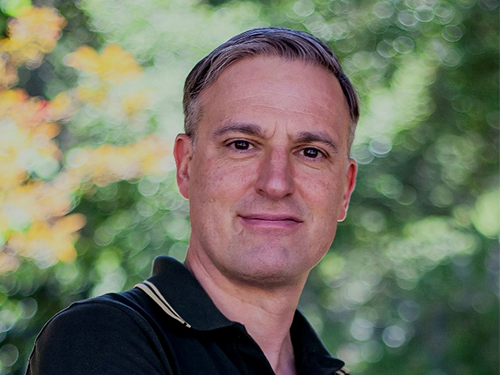
Jef Caers
Professor of Earth and Planetary Sciences and, by courtesy, of Geophysics at Stanford University, and
founder and director of Mineral-X
Abstract
Every battery supply chain depends on mines and processing facilities sanctioned on an engineering estimate. Yet, the public record of mining and mineral processing shows that about four out of five recent projects did not deliver the returns predicted at their feasibility studies. Mining alone is documented to be the most capital destroying industry, on average, one dollar earns back only 67 cents. Capital cost forecasting has not improved in 50 years. Typically, schedules slip past the promised date. Plants take years to reach full capacity where months were promised. Any investor, private or government entering is questioning why they should be investing at all, regardless of the consequences for the energy transition.
To address these issues, I present a comprehensive workflow that prices this failure from the public record on completed projects, allowing for future projects to be contracted and staged differently. First, a reference class, the outcomes of completed projects known before the sanction date, corrects a process-based cost model. The corrected model then prices a project under four uncertainties: 1) geological and engineering uncertainty in cost and ramp-up, 2) economic uncertainty in price and demand, 3) regulatory uncertainty in the levers a host government may introduce, and 4) geopolitical uncertainty in the conduct of a possibly adversarysupplier. The workflow applies to any mineral with a public record of completed projects.
I tested the workflow where lithium involves a corporate investor and graphite governments. I back-tested completed Argentinian and Chilean lithium and copper projects, each scored with the information available at its sanction date. The reference-class capital bands covered 19 of 21 realized outcomes, against 12 of 21 for the engineering bands. The decision rule avoided the two largest value-destroying cases in the copper cohort. The same workflow is applied to a graphite anode program in Australia. I show that using packages of grants, loans with added declining, expiring price floor whose maximum public cost is fixed at signing, safeguards against China’s interventions. Flooding the market to kill the program would cost China about $36 billion, 200 times more than an investment from the U.S.-Australia compact into Australia’s graphite industry.
Bio
Jef Caers is Professor of Earth and Planetary Sciences and, by courtesy, of Geophysics at Stanford University, and founder and director of Mineral-X. His research develops methods for decision making under uncertainty across the critical mineral supply, spanning geostatistics, Bayesian geophysical inversion, uncertainty quantification, and sequential data-acquisition planning from exploration to supply chains. He has published roughly 200 papers across mathematics, statistics, the Earth sciences, engineering, and computer science, and authored or co-authored six books, most recently Decision-Making Under Uncertainty in Developing Earth Resources (AGU-Wiley). He received the Krumbein Medal of the International Association for Mathematical Geosciences for career achievement, and earned his PhD in mining engineering from KU Leuven, Belgium.
About this seminar
All seminars are held from 12:30 p.m. to 1:30 p.m. Lunch is provided at 12:00 noon. Contributions to and/or sponsorship of any event does not constitute departmental or institutional endorsement of the specific program, speakers or views presented. Visit our Main Highlight Seminar Series page for more info.