Date: October 2, 2025
Time: 12:30 p.m. - 1:30 p.m.
Location: Maeder Hall Auditorium
Highlight Seminar Series
From Step Edges to Shipping: How We Are Using the Accelerated Dissolution of Limestone to Reduce CO2 Emissions
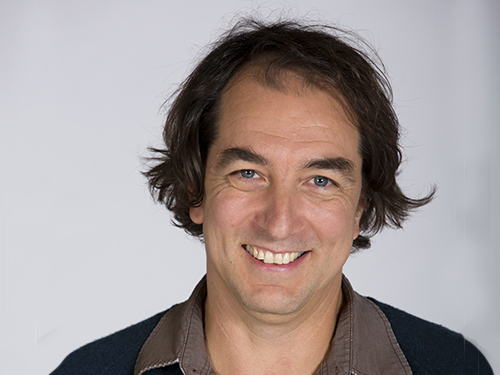
Jess Adkins
Smits Family Professor of Geochemistry and Global Environmental Science, California Institute of Technology
Abstract
The dissolution of calcium carbonate in seawater is controlled by a blend of surface physics, surface chemical speciation, and classic aqueous chemistry. We have been trying to unpack these contributions to the overall rate law using a variety of techniques. Pure 13C tracer in the solid allows us to probe the reaction rate both close to and far from equilibrium with a signal:noise ratio about 200 times more sensitively than previous work. Atomic Force Microscopy has shown us the solid compliment to the theories we have developed from the solution side data. Changing the major ion composition of artificial seawater has allowed us to relate the well understood freshwater rate law to the seawater system. All of this is now in service of a new effort, and a new company, to use this natural buffering reaction to decarbonize marine shipping at scale. We will show how fundamental insights from chemical kinetics can be harnessed to design reactors that can safely and permanently sequester CO2 as bicarbonate ions in the ocean.
Bio
Jess Adkins is the Smits Family Professor of Geochemistry and Global Environmental Science in the Department of Geological and Planetary Sciences at Caltech. He is a member of the Linde Center for Global Environmental Sciences and on the faculty of the Department of Engineering and Applied Science. Jess started at Caltech in 2000 after receiving a BS in Chemistry from Haverford College in 1990 and a PhD in Chemical Oceanography from the MIT/WHOI Joint Program in 1998. The Adkins lab studies the history of earth’s climate on a variety of timescalesand biogeochemical cycles in the modern ocean. They use stable isotopes and trace metals indeep-sea corals to understand the mechanisms of rapid climate change during the last glacial cycle. Uranium series and radiocarbon dating provide constraints on the rate of the ocean’s overturning circulation in the past. Pore water measurements from sediments retrieved by the IODP constrain the temperature and salinity of the glacial deep ocean and lead to theories and models of the density structure of the past deep ocean. The group has also worked on stalagmite records of tropical climate change, biomineralization mechanisms in corals, and iron isotopes in the modern ocean. With Alex Sessions at Caltech the group has lowered the detection limit for sulfur isotopes by 1,000x and has led to work on the sulfur cycle more generally, investigating the modern budget of river sulfur isotopes, ice core records of volcanic eruptions, and measuring the history of marine sulfate isotopic change from the Archean to the Cenozoic. With Will Berelson at USC, the Adkins lab has measured the dissolution rate of calcite in seawater with a new technique that is very precise even close to equilibrium. They have unpacked the dual effects of solution chemistry and surface energy on carbonate dissolution in the lab and in the ocean water column, leading to the first physical chemistry-based understanding of carbonate dissolution mechanisms in seawater. This work pushed Jess to start a company, Calcarea, that is focused on using the accelerated weathering of limestone to decarbonize the marine shipping industry and participate in the larger decarbonization economy.
Jess was awarded the Houtermans medal from the European Association of Geochemistry in 2003. He received the Ruth and Paul Fye MIT/WHOI and the Geochemical Society Best Paper Awards in 2005 and 2009 respectively. He was the Chow Lecturer at The Scripps Institute of Oceanography in 2017. Adkins won the Shackleton Medal of the EAG and was named a fellow of the AGU and Geochemical Societies in 2018. He was named the Emiliani Lecturer of the Paleoclimate section of the AGU in 2024.
All seminars are held from 12:30 p.m. to 1:30 p.m. Lunch is provided at 12:00 noon.
Contributions to and/or sponsorship of any event does not constitute departmental or institutional endorsement of the specific program, speakers or views presented.
Visit our Main Highlight Seminar Series page at acee.princeton.edu/highlight-seminar-series for more info.