2026 Annual Meeting
Energy Security in an Era of Recurring Geopolitical Shocks
Keynote Speaker
Michael Cembalest
Chairman of Market and Investment Strategy, J.P. Morgan Asset and Wealth Management
Michael Cembalest is the Chairman of Market and Investment Strategy for J.P. Morgan Asset and Wealth Management, a global leader in investment management and private banking. He is responsible for leading the strategic market and investment insights across the firm’s Institutional, Funds and Private Banking businesses. He is also a member of the J.P. Morgan Asset and Wealth Management Investment Committee and previously served on the Investment Committee for the J.P. Morgan Retirement Plan. Most recently, Cembalest acted as Chief Investment Officer for the firm’s Global Private Bank, a role he held for eight years. He was previously head of a fixed income division of Investment Management, with responsibility for high grade, high yield, emerging markets and municipal bonds. Before joining Asset Management, Cembalest served as head strategist for Emerging Markets Fixed Income at J.P. Morgan Securities. He joined J.P. Morgan in 1987 as a member of the firm’s Corporate Finance division. Cembalest earned an M.A. from the Columbia School of International and Public Affairs and a B.A. from Tufts University.

Moderators and Panelists
Bim Adisa
Founder and Chief Executive Officer, Beacon Power Services
Abimbola “Bim” Adisa is the founder and chief executive officer of Beacon Power Services (BPS), an energy technology company transforming electricity distribution through data-driven grid management solutions. Before founding BPS, Adisa worked as an investment banker at Deutsche Bank, advising some of the largest utilities in the U.S. and leading global electrical equipment suppliers. He played a lead role in what was then the world’s largest utility merger and advised on corporate and project financing transactions. Under his leadership, BPS has expanded across multiple markets, helping utilities reduce energy losses, increase revenue and improve electricity reliability through technology and innovation. With a background in aerospace engineering and an M.B.A. from Northwestern University’s Kellogg School of Management, Adisa is passionate about leveraging technology to build more efficient and sustainable energy systems worldwide.

Steven Cowley
Director, Princeton Plasma Physics Laboratory; Professor of Astrophysical Sciences, Princeton University
Steven Cowley, a theoretical physicist and international authority on fusion energy, became the seventh Director of the Princeton Plasma Physics Laboratory (PPPL) on July 1, 2018 and a professor of astrophysical sciences at Princeton University on September 1, 2018. Prior to that he was president of Corpus Christi College and professor of physics at the University of Oxford in the United Kingdom (2016-2018). Cowley also acted as chief executive officer of the United Kingdom Atomic Energy Authority and head of the Culham Centre for Fusion Energy from 2008-2016. He earned his doctorate at Princeton University in astrophysical sciences in 1985 and was a staff scientist at PPPL from 1987 to 1993. From 2011-2016 he was a member of the UK Prime Minister’s Council on Science and Technology.

Erica Downs
Senior Research Scholar, Center on Global Energy Policy, Columbia University
Erica Downs is a senior research scholar at the Center on Global Energy Policy at Columbia University, focusing on Chinese energy markets and geopolitics. She has a distinguished career in Eurasian energy policy with a focus on China. She has over 20 years of experience working in the public and non-profit sectors. She previously worked as a senior research scientist in the China Studies program of the CNA Corporation, a senior analyst in the Asia practice at Eurasia Group, a fellow in the John L. Thornton China Center at the Brookings Institution, an energy analyst at the Central Intelligence Agency, and a lecturer at the Foreign Affairs College in Beijing, China. Downs has published extensively in the areas of Chinese energy policy and geopolitics. She holds a Ph.D. and an M.A. from Princeton University and a B.S. from the Edmund A. Walsh School of Foreign Service at Georgetown University.

Chris Greig
Associate Director for External Partnerships, Theodora D. ’78 and William H. Walton III ’74 Senior Research Scientist at the Andlinger Center for Energy and the Environment, Princeton University
Chris Greig holds a Ph.D. in chemical engineering from The University of Queensland and is a fellow of the Australian Academy of Technological Sciences and Engineering. He also serves on the Sustainability Advisory Council for Dow Chemical Company, and the Board of Australia’s Future Energy Exports CRC. His research on energy and industrial transitions is interdisciplinary and deeply collaborative with industry, focusing on critical non-engineering challenges to mobilizing decarbonization infrastructure at speed and scale, including supply chains, finance, and social license. He co-led Princeton’s influential Net-Zero America study and is leading collaborations on similar studies in Australia, and rapidly growing Asian countries. Prior to academia, Chris spent three decades working in the private sector, first as a successful company founder, and then as a senior executive and director in the energy and resources sectors.

Erika Gupta
Global Head of Sustainability, Siemens Financial Services
Erika Gupta is the Global Head of Sustainability at Siemens Financial Services (SFS), where she defines and drives the overarching sustainability strategy across SFS’s debt, equity, and leasing businesses worldwide. Prior to her global appointment, Gupta served as Head of Sustainability for SFS Americas and as Research Group Head for Sustainable Buildings and Grids at Siemens Technology, where she oversaw Siemens’ U.S. research portfolio. She also brings a decade of invaluable public sector expertise from the U.S. Department of Energy’s Office of Energy Efficiency and Renewable Energy. Demonstrating her commitment to governance and impact, Gupta recently served as a board member for the national non-profit, The Center for Sustainable Energy. Gupta holds a B.S. in mechanical engineering from Boston University and a M.S. degree in mechanical engineering with a focus in control system design from Worcester Polytechnic Institute as well as a professional graduate-level certificate in cybersecurity from Harvard University.

Kate Hardin
Executive Director, Deloitte Research Center for Energy and Industrials, Deloitte
Kate Hardin is the current leader of Deloitte research across energy and industrial manufacturing and has worked in the global energy industry for 30 years. Before Deloitte, Hardin led global energy research for institutional investors and analysis of electrification’s impact on the oil and gas sector at IHS Markit. At Cambridge Energy Research Associates, she led the firm’s coverage of Russian and Caspian energy development. She is a member of the Council on Foreign Relations and the U.S.-Japan Foundation fellows program. Hardin received both an M.A .and M.B.A. from Yale University.

Bernard Haykel
Professor of Near Eastern Studies, Princeton University
Bernard Haykel is a scholar of the Arabian Peninsula, focusing on the politics, economics, cultures and history of the Gulf Cooperation Council states and Yemen. He is professor of near eastern studies at Princeton University where he teaches courses on energy, history and politics. Haykel is completing a book titled “The Realm: Muhammad bin Salman and the Transformation of Saudi Arabia” that will be published by Penguin Press. The book is about the modern political history of the Kingdom and the rise to power of its crown prince. Haykel is also considered an authority on Islamist political movements and Islamic law. He earned his doctorate in Oriental Studies from the University of Oxford.

Andrew Houck
Dean, School of Engineering and Applied Science; Anthony H.P. Lee ’79 P11 P14 Professor of Electrical and Computer Engineering, Princeton University
Andrew Houck, the dean of Princeton’s school of engineering and applied science, has been on Princeton’s faculty since 2008. His research focuses on the intersection of quantum mechanics and computer science. He has played a leading role in developing one of the most promising approaches to building a quantum computer, a machine capable of solving problems that are impossible on classical devices. He served as the inaugural co-director of the Princeton Quantum Initiative and director of the Co-Design Center for Quantum, which is one of five Department of Energy research centers established in support of the National Quantum Initiative. Houck is a recipient of the Presidential Early Career Award for Scientists and Engineers and is a fellow of the American Physical Society. A 2013 recipient of Princeton’s President’s Award for Distinguished Teaching and the valedictorian of Princeton’s Class of 2000, Houck is also a leader in educational initiatives, spearheading the creation of the University’s first-year engineering curriculum. He earned his Ph.D. in physics at Harvard University.
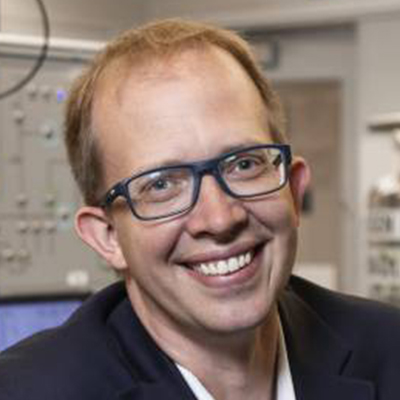

Jesse Jenkins
Moderator, Associate Professor of Mechanical and Aerospace Engineering and the Andlinger Center for Energy and the Environment, Princeton University
Jesse D. Jenkins is an associate professor of energy systems engineering and policy at Princeton University with a joint appointment in the Department of Mechanical and Aerospace Engineering and the Andlinger Center for Energy and the Environment. He leads the Princeton ZERO Lab, which focuses on improving and applying energy systems models to evaluate and optimize low-carbon energy technologies, guide investment and research in innovative energy technologies, and generate insights to improve energy and climate policy and planning. His scholarship and teaching have been recognized with multiple awards, including the Howard B. Wentz, Jr. Junior Faculty Award. Dr. Jenkins’ public impact on American energy policy has also been honored by inclusion on the TIME100 Next, TIME100 Climate and Vox.com Future Perfect 50 lists. He advises several clean energy technology companies and is the co-founder and CTO of Firma Power, which assembles portfolios of ready-to-build assets to supply load-enabling clean firm power to data centers and other large loads.
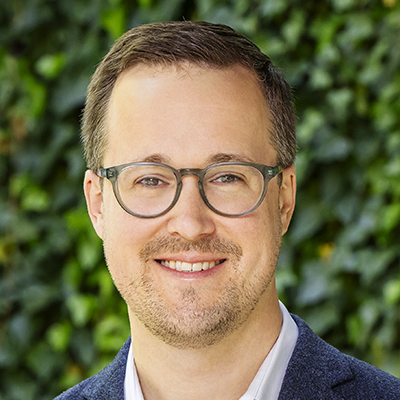
Yoshikazu Kobayashi
Chief Economist, The Institute of Energy Economics, Japan
Yoshikazu Kobayashi is chief economist and director for research strategy and energy security at the Institute of Energy Economics, Japan (IEEJ). He has extensive professional and research experience in international energy markets and the energy industry. Prior to joining IEEJ, he worked as an analyst at ExxonMobil’s refining subsidiary in Japan. Since joining IEEJ, he has conducted extensive research on Asian energy markets, energy and climate policies, and energy security issues in Asia. Since 2020, his research has focused on policy solutions for the deployment of next-generation clean energy technologies, including CCUS, hydrogen, and ammonia. Kobayashi became chief economist of IEEJ in 2026. He holds a B.A. in social sciences from Hitotsubashi University, an M.A. in international economics and relations from the Johns Hopkins School of Advanced International Studies (SAIS), and a Ph.D. in international relations from the National Graduate Institute for Policy Studies.

Lynn Loo
Chief Executive Officer, Global Centre for Maritime Decarbonisation, Singapore; Theodora D. ’78 and William H. Walton III ’74 Professor in Engineering, Professor of Chemical and Biological Engineering, Princeton University
Lynn Loo is chief executive officer of the Global Centre for Maritime Decarbonisation (GCMD), an independent international action tank working with industry to accelerate shipping’s fuel transition. She has led GCMD to run large-scale, pre-competitive initiatives in real-world settings, including the world’s first ship-to-ship ammonia transfer at anchorage, biofuel supply-chain trials, onboard carbon capture offloading, and the launch of shipping’s first retrofit fund for energy-efficiency technologies. GCMD now works with over 130 partners globally. At Princeton, her work spans fundamental materials science through technology commercialisation. Her group pioneered see-through solar cells that wirelessly power smart windows to reduce energy use and improve occupant comfort. This work is being advanced through Andluca Technologies, a startup she co-founded. A member of the National Academy of Engineering, Loo is a Fellow of AIChE, APS, and MRS, a World Economic Forum Young Global Leader, and was named to Lloyd’s List’s Top 100 People in Shipping in 2022.

Joseph Majkut
Director, Energy Security and Climate Change Program, Center for Strategic and International Studies
Joseph Majkut is director of the Energy Security and Climate Change Program at the Center for Strategic and International Studies (CSIS). In this role, he leads the program’s work understanding the geopolitics of energy and climate change and working to ensure a global energy transition that is responsive to the risks of climate change and the economic and strategic priorities of the United States and the world. Majkut is an expert in climate science, climate policy, and risk and uncertainty analysis for decision-making. He is frequently cited in trade and national media on the politics of climate change and has testified before Congress on climate change and science.

Iain McCulloch
Director, Andlinger Center for Energy and the Environment; Gerhard R. Andlinger Professor in Energy and the Environment; Professor of Electrical and Computer Engineering and the Andlinger Center for Energy and the Environment, Princeton University
Iain McCulloch is director of the Andlinger Center for Energy and the Environment, Gerhard R. Andlinger ’52 Professor in Energy and the Environment and professor of electrical and computer engineering and the Andlinger Center at Princeton University. He also holds a visiting professor position in the Department of Chemistry at the University of Oxford. He previously held joint appointments as professor of chemical science and director of KAUST Solar Center at KAUST, as well as a chair in polymer materials in the chemistry department at Imperial College. Before joining academia, he spent 18 years managing industrial research groups at Hoechst in the US and Merck in the UK. He is a Fellow of the Royal Society, the Royal Society of Chemistry, the European Academy of Sciences and a member of Academia Europaea. He is the recipient of the 2022 Royal Society Armourers and Brasiers Prize, the 2020 Blaise Pascal Medal for Materials Science, the Royal Society of Chemistry 2020 Interdisciplinary Prize, 2014 Tilden Medal for Advances in Chemistry and the 2009 Creativity in Industry Prize. His interests are in the design and investigation of organic semiconducting materials.
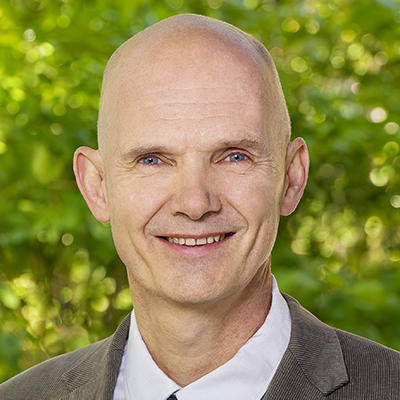
Widhyawan Prawiraatmadja
Sustainability Advisor, PT Pertamina (Persero), Indonesia
Widhyawan Prawiraatmadja is sustainability advisor to PT Pertamina (Persero) and senior practitioner lecturer at the School of Business and Management, Institut Teknologi Bandung (ITB). He has more than three decades of experience in the energy sector, spanning government, state-owned enterprises, industry, consulting, and academia. He previously served as special advisor to Indonesia’s Minister of Energy and Mineral Resources, a member of the Board of Commissioners of Pertamina, and Indonesia’s Governor to OPEC. He also held senior leadership positions at SKK Migas, including deputy chairman for Commercial and Deputy Chairman for Planning, and earlier served as senior vice president for Corporate Planning, Business Development, and Corporate-wide Transformation at Pertamina. Widhyawan holds a bachelor’s degree in industrial engineering from ITB and an M.A. and Ph.D. in economics from the University of Hawaiʻi at Mānoa.
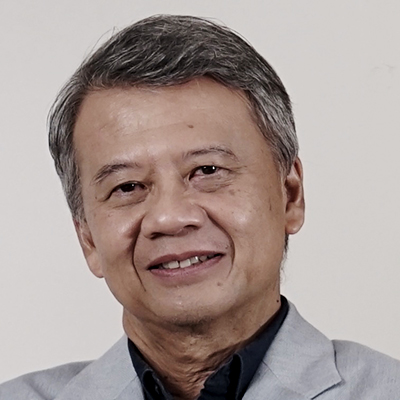
Costa Samaras
Director, Scott Institute for Energy Innovation; Trustee Professor of Civil and Environmental Engineering, Carnegie Mellon University
Costa Samaras is the director of Carnegie Mellon University’s Scott Institute for Energy Innovation, and the Trustee Professor of Civil and Environmental Engineering. He previously served in the White House Office of Science and Technology Policy as Principal Assistant Director for Energy, OSTP Chief Advisor for Energy Policy, and then OSTP Chief Advisor for the Clean Energy Transition. While there, he led the climate and energy efforts of the President’s Executive Order on Artificial Intelligence, led the White House report on the climate and energy implications of digital assets, and co-led the White House report “U.S. Innovation to Meet 2050 Climate Goals.” Earlier, he worked as a senior researcher at the RAND Corporation as well as a megaprojects engineer in New York City. He received a joint Ph.D. in civil and environmental engineering and engineering and public policy from Carnegie Mellon, and an M.P.A. in public policy from New York University.

Michael Schwartz
Chief Executive Officer, New Wave Energy Capital Partners
Michael Schwartz is a seasoned energy executive with a career across the oil, natural gas, coal, utilities, alternative fuels/hydrogen, renewable energy, EV and CCS sectors. He has deep experience developing and implementing actionable business strategies and managing project-based energy businesses including commercial structuring, project financing, governmental affairs, technology commercialization and environmental policy. He has held senior management roles with major energy companies, including Duke Energy Corp., where he was chief commercial strategy officer. He has also served as senior advisor to McKinsey & Company and over the years has had several visiting roles at Princeton University. He is advising members of the U.S. Congress on climate/energy and energy security policy. More recently, he has co-founded companies focused on thermal electric generation, large-scale carbon capture and storage and EV infrastructure. He earned his M.S. and Ph.D. in chemical engineering from Princeton University and holds B.S. and M.S. degrees in chemical engineering from the Tandon School of Engineering at New York University.
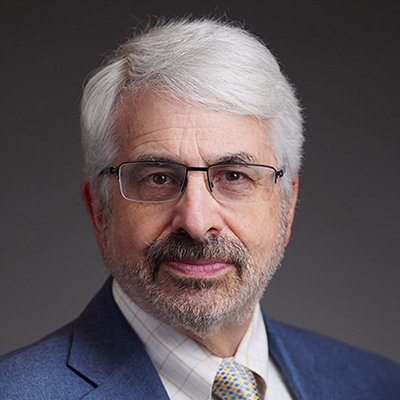
Elke Weber
Moderator, Gerhard R. Andlinger Professor in Energy and the Environment and Professor of Psychology, Princeton School of Public Affairs and International Affairs, Princeton University
Elke Weber is a cognitive psychologist and behavioral decision theorist whose research examines how individuals and organizations deal with uncertainty and trade-offs in complex decisions with long time horizons, including societal challenges like climate change and pandemics. A member of both the U.S. National Academy of Sciences and the German National Academy of Sciences, she has served on National Academy of Sciences advisory committees on the Human Dimensions of Global Change, on the U.S. Environmental Protection Agency’s (EPA) Science Advisory Board, and a Committee on Carbon Neutrality to the German government. Weber has been a lead author on the United Nations Intergovernmental Panel on Climate Change (IPCC) Fifth and Sixth Assessment Reports. In 2016, she received the Distinguished Achievement Award from the Society for Risk Analysis, in 2023 the Patrick Suppes Prize from the American Philosophical Society, in 2024 the BBVA Frontiers of Knowledge Award in the Social Sciences, in 2025 the Howard Crosby Warren Medal from Society for Experimental Psychology and the INSPIRE Award from University of Lausanne.

Cindy Yeilding
Gerhard R. Andlinger Visiting Fellow, Andlinger Center for Energy and the Environment, Princeton University
Cindy Yeilding is a geoscientist with over 35 years of technical and leadership experience in the energy industry, specializing in business development, operations, research, and technological innovation. A leader in sustainability and the energy transition, her recent work focuses on developing and implementing carbon capture, utilization, and storage solutions. She possesses deep expertise in both corporate and nonprofit governance, most recently serving as a member of the Board of Directors for Denbury Inc. and as chair of The Center for Houston’s Future. At the Andlinger Center, Yeilding is exploring an intersectional suite of interests that bridge technology applications with policy, economics, and strategic decision-making. Collaborating with faculty sponsors Chris Greig and Elke Weber, she is helping investigate how trust and collaboration impact the deployment of energy infrastructure. Her work also advances broader conversations surrounding energy awareness, climate challenges, and clean energy initiatives. Dedicated to mentorship, she also enjoys helping students and professionals explore and prepare for careers across the energy sector.