
Research Description:
Sustainable building construction; energy efficiency retrofits; human-robot collaboration; automated building assembly; additive manufacturing; construction robotics; computational design; extended reality


Sigrid Adriaenssens
Ritter Professor of Civil and Environmental Engineering
Director, Program in Mechanics, Materials and Structures
Director of the Keller Center
Andlinger Center Associated Faculty
Research Description:
Design of adaptive structural systems for building energy efficiency; design of large span complex curved structures for minimum material use; reclaimed material construction; circular economy
Craig Arnold
Susan Dod Brown Professor of Mechanical and Aerospace Engineering
Vice Dean for Innovation, Office of the Dean for Research
Andlinger Center Executive Committee
Research Description:
Improved batteries, energy storage; materials recycling and sustainability; water purification; catalysis; advanced manufacturing; light-matter interactions


Joshua Atkinson
Assistant Professor of Civil and Environmental Engineering and the Omenn-Darling Bioengineering Institute
Andlinger Center Associated Faculty
Research Description:
Microbial electron transport; bioelectronic materials; biogeochemistry; synthetic biology; protein engineering; biophysics; electrochemistry
Research Description:
Directed evolution of algae for biofuel production; reduction in need for external nutrients such as nitrogen for biofuel production

José Avalos
Associate Professor of Chemical and Biological Engineering and Bioengineering
Andlinger Center Executive Committee
Research Description:
Optogenetics; synthetic biology; metabolic engineering; microorganisms for advanced biofuels, commodity chemicals, specialty chemicals, and bioplastics; biosensor and metabolic engineering for bioremediation
Research Description:
Glacial-interglacial climate change; photosynthesis and respiration in phytoplankton and plants
Research Description:
Fuel cells ; hydrogen production; electrochemical hydrogen purification; gasification to produce fuels from organic materials
Research Description:
Fuel cells; proton exchange polymer membranes; charge transfer processes and materials chemistry for solar photochemistry and electrochemistry; electrochemical and photoelectrochemical conversion of CO2 to liquid fuels and syngas; water splitting for hydrogen production
Research Description:
Heat and water exchanges between buildings and atmosphere; urban microclimatology and hydrology; boundary layer meteorology; environmental fluid mechanics and turbulence; wind energy forecasting and wind farm design, urban and agricultural photovoltaic applications
Ian Bourg
Associate Professor of Civil and Environmental Engineering and the High Meadows Environmental Institute
Andlinger Center Associated Faculty
Research Description:
Interfacial water dynamics; geochemistry; mineral weathering; soils and sedimentary environments; fate and transport of organic compounds


M. Christine Boyer
Professor, Urbanism
William R. Kenan, Jr. Professor of Architecture and Urbanism
Director, Undergraduate Urban Studies Certificate Program
Andlinger Center Associated Faculty
Research Description:
Urban history; city planning and preservation planning
Research Description:
General energy studies; fission and fusion; climate change; battery technology; policy
Rene Carmona
Paul M. Wythes '55 Professor of Engineering and Finance
Professor of Operations Research and Financial Engineering
Andlinger Center Executive Committee
Research Description:
Commodity and energy markets (e.g. oil, electricity, natural gas, coal); market mechanisms to control greenhouse gas emissions; game theoretic analyses of energy/emissions market designs with emphasis on the policy implications


Emily A. Carter
Gerhard R. Andlinger Professor in Energy and the Environment
Senior Strategic Advisor and Associate Laboratory Director for Applied Materials and Sustainability Sciences at the Princeton Plasma Physics Laboratory
Founding Director, Andlinger Center for Energy and the Environment (2010-2016)
Professor of Mechanical and Aerospace Engineering, the Andlinger Center for Energy and the Environment, and Applied and Computational Mathematics
Andlinger Center Executive Committee
Research Description:
Development of efficient and accurate quantum mechanics simulation techniques, including embedded correlated wave function and orbital-free density functional theories; discovery and design of materials and processes for eletrical production of chemicals, materials, and fuels; carbon dioxide utilization; ammonia/hydrogen conversion.

Research Description:
Synthesis, discovery and characterization of new superconducting, thermoelectric, and semiconducting materials.

Michael A. Celia
Theodora Shelton Pitney Professor of Environmental Studies, Emeritus
Professor of Civil and Environmental Engineering
Research Description:
Ground-water hydrology; gF17eological sequestration of CO2; simulation methods for multi-phase flow in porous media; ecohydrology; contaminant transport simulation

Minjie Chen
Associate Professor of Electrical and Computer Engineering and the Andlinger Center for Energy and the Environment
Andlinger Center Executive Committee
Research Description:
Design of power conversion and management systems; high performance power conversion systems for smart grid, renewable generation, energy storage, telecom, data centers, electric vehicles, and robotics.

Research Description:
Design and synthesis of earth abundant catalysts (particularly iron & cobalt) for applications in pharmaceutical, fine, commodity and petrochemical industries; Reduction of N2 and CO2 compatible with renewable hydrogen and alternative energy sources.
Stephen Chou
Joseph C. Elgin Professor of Engineering
Professor of Electrical Engineering
Andlinger Center Associated Faculty
Research Description:
Design and synthesis of earth abundant catalysts (particularly iron & cobalt) for applications in pharmaceutical, fine, commodity and petrochemical industries; Reduction of N2 and CO2 compatible with renewable hydrogen and alternative energy sources.

Edgar Choueiri
Professor of Mechanical and Aerospace Engineering
Andlinger Center Associated Faculty
Research Description:
Plasma physics and dynamics applied to space power and propulsion, plasma gasification for waste disposal, environmental acoustics
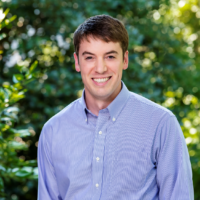
Jonathan Conway
Assistant Professor of Chemical and Biological Engineering
Andlinger Center Associated Faculty
Research Description:
Mechanisms of plant-microbe interactions at plant-microbe interfaces; engineered bacteria, plants, and/or interactions for applications in bio-agriculture or bio-energy industries.

Sir Steven C. Cowley
Director, Princeton Plasma Physics Laboratory (PPPL)
Professor of Astrophysical Sciences
Andlinger Center Executive Committee
Research Description:
Fusion energy research, theoretical plasma physics, nuclear reactor physics, astrophysical plasmas.

Research Description:
Economics and regulation of energy markets to account for environmental and reliability needs; understand incentives created under various regulatory schemes and trade-offs inherent in policy decision-making.
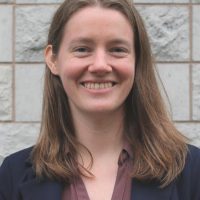
Emily Davidson
Assistant Professor of Chemical and Biological Engineering
Andlinger Center Associated Faculty
Research Description:
Functional, hierarchical materials featuring structural control; molecular-level polymer design, controlled local self-assembly, and structural integration and alignment; polymer synthesis, characterization, physics and self-assembly, and additive manufacturing; stimuli-responsive and actuating elastomers and gels; sustainable and degradable polymers and block copolymers.