Net-Zero Initiative holds first global gathering at Princeton
The road to net-zero carbon emissions by mid-century will require collaboration among researchers, policymakers, industry partners, and stakeholders across borders. Princeton’s Net-Zero Initiative, led by faculty and researchers at the Andlinger Center for Energy and the Environment, is bringing these groups from various countries together to explore the pathways suited to different national contexts.
In the original Net-Zero America report released five years ago, Princeton researchers outlined technological pathways to reach net-zero emissions by mid-century. The success of Net-Zero America, and its impact in policy, inspired the team to take their framework global. Now, Net-Zero projects are underway all over the world, including in Australia, India, China, Brazil, Poland, South Korea, and, more recently, Pakistan. Further projects are forming in Mexico, Indonesia, and Southern Africa.
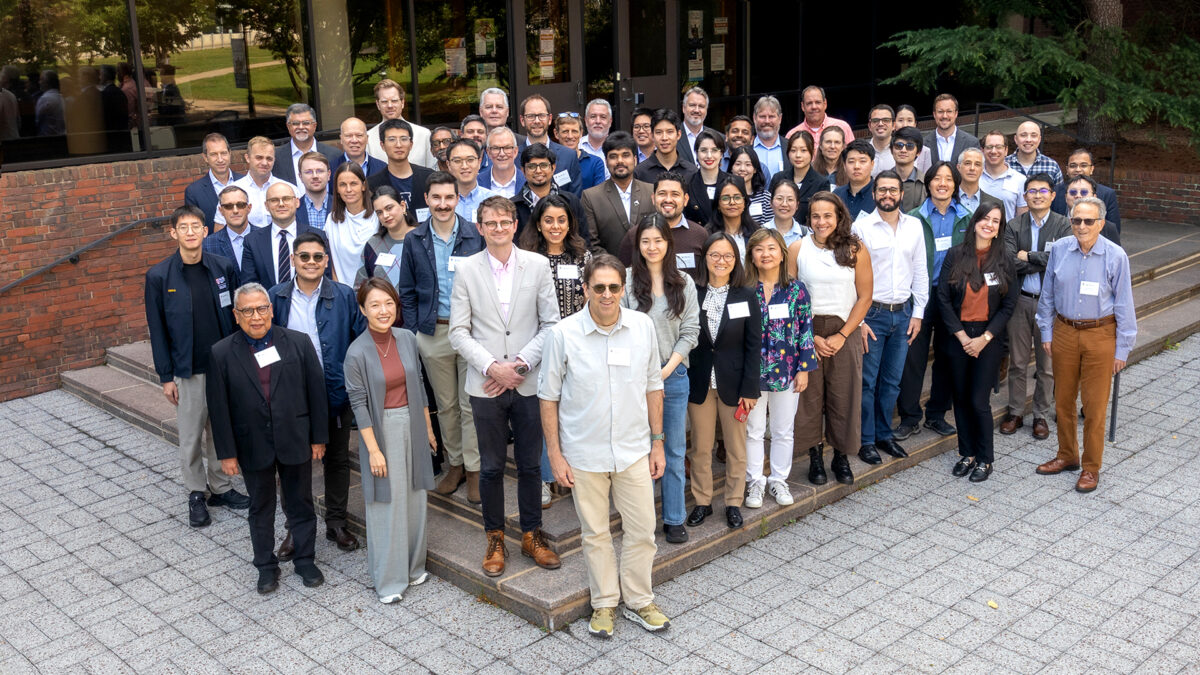
Each project approaches the net-zero goal through the lens of its own country’s unique context, while sharing methods and tools across the board. Collectively, the projects represent the Net-Zero Initiative, with Eric Larson, Chris Greig, Jesse Jenkins, and Wei Peng leading Princeton involvement in each project. From September 29 to October 1, 2026, researchers from the Net-Zero projects across the world gathered together in person on the Princeton campus for the first global workshop.
The three-day workshop was an opportunity for the country studies to share their results and explore potential collaborations with other researchers. “While methods and analytical tools can travel across borders, local realities and assumptions do not travel quite so easily,” said Andrew Houck, the dean of Princeton’s School of Engineering and Applied Science in his opening remarks on Sept. 29. “That is what makes this international gathering so valuable: the opportunity to learn from one another about how different contexts can shape the world.”
Even among the diversity of national contexts and pathway modeling represented at the workshop, the gathering affirmed that everyone was working toward a unified goal. “We want to focus on collaboration and exchange among Net-Zero Initiative teams in order to build a community,” said Wei Peng, assistant professor of public and international affairs and the Andlinger Center for Energy and the Environment.
Here are the experiences of a handful of countries that participated in the workshop.
Net-Zero India
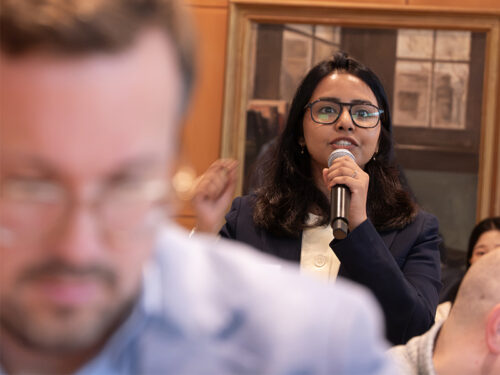
Somya Srivastava, senior project scientist at the Indian Institute of Technology, Delhi and member of the Net-Zero India team, said their project stands out for its “participatory scenario building process” in which stakeholder perspectives are included from the outset. The team will be undertaking surveys across India to understand the community perspectives on the renewable energy infrastructure location choices.
“We are not just envisioning least-cost maps of energy infrastructure,” said Srivastava. “We are also envisioning least conflicted maps where communities and their priorities are taken into account.”
She said the workshop presented a useful opportunity to interact with other teams and draw inspiration from approaches that differ from India’s—she found Net-Zero Brazil’s work on land visualization and Net-Zero South Korea’s air pollution maps to be particularly notable. “It feels good to be part of this group,” said Srivastava. “We are learning so much.”
Net-Zero Brazil
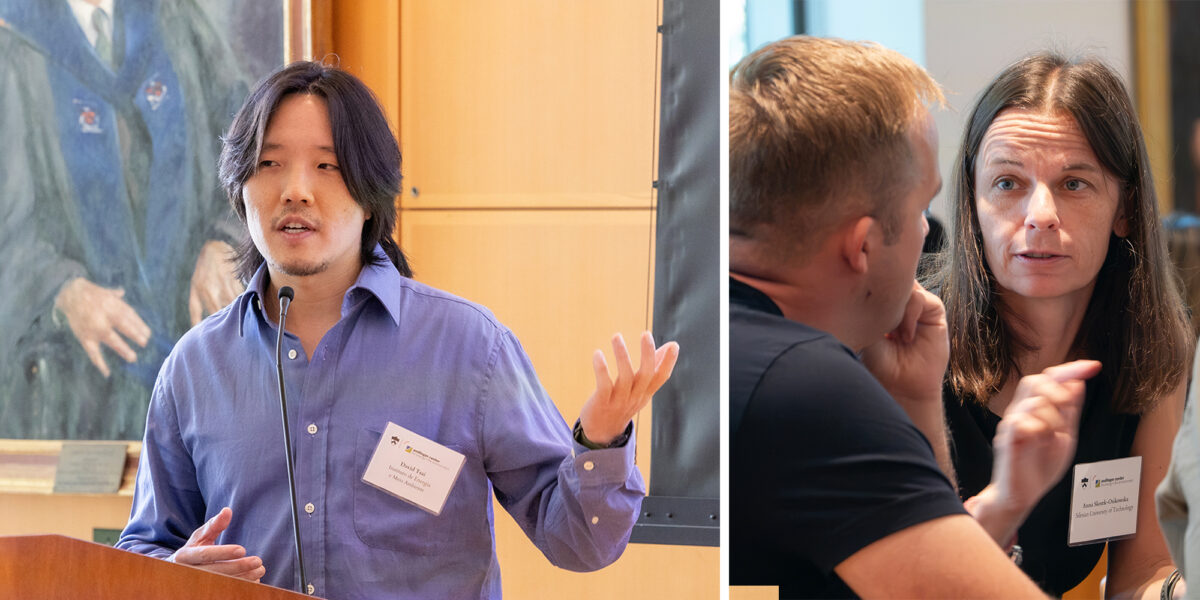
David Tsai, project manager at the Brazilian Institute for Energy and the Environment and researcher for Net-Zero Brazil, said he feels their project can contribute to the international community of researchers via a broad modeling platform they built. In the platform, all the models and methods are totally transparent. “So that people can interact with the model and suggest changes for how we model things,” said Tsai.
He said the platform works especially well for Brazil because the country has different carbon sources that are equally important—not just from industry but also, for example, from deforestation. “Our idea was to make a tool that is flexible,” said Tsai. “As the other projects also believe, there is not one scenario that is right, but different scenarios give you different insights.”
The workshop also was valuable as a venue to hear how other countries are approaching the question of reaching net-zero in their contexts, spurring new directions for Brazil to consider. “We haven’t really dealt with the issue of development in Net-Zero Brazil so far and that’s a topic that the Indian team is very keen on,” said Tsai. “The conversation we had was very thought-provoking.”
Net-Zero Poland
Unlike other European countries, Poland still generates half of its electricity from hard coal and lignite, said Anna Skorek-Osikowska, professor at the Silesian University of Technology and leader of the Net-Zero Poland team. The result is a mining workforce that is large with entire regions of the country dependent on the industry. “Moving away from coal is therefore not just a technical or economic challenge, but also a major social issue,” she said.
While Net-Zero Poland is relatively new compared with some other countries that attended the workshop, Skorek-Osikowska felt the team offered a valuable perspective for other countries that may face challenges of similar complexity. On the other hand, she felt her team could learn from others in terms of modelling approaches and how to engage with stakeholders. “This exchange of knowledge and experience can help us shorten the learning curve, avoid reinventing the wheel, and make faster progress in our own research,” she said.
Though the international collaborations have interacted over Zoom, Skorek-Osikowska also said she enjoyed the ability to have spontaneous discussions through the in-person workshop. “Sometimes the most interesting discussions happen over coffee or dinner, when you discover unexpected connections between your work and someone else’s,” she said. “I think these personal interactions help build trust and a real sense of community.”
Net-Zero Pakistan
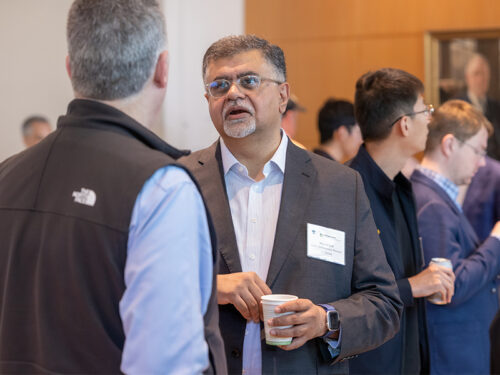
Pakistan, one of the newest countries to join the Net-Zero Initiative, has a unique context for its vulnerability to climate change—the country has the largest number of glaciers anywhere outside of the Earth’s poles—and for its rapidly growing population—currently fifth in the world but projected to be third by 2050. There’s still a long road ahead for the Net-Zero Pakistan team to figure out the best ways to address these challenges.
Maroof Ali Syed, president and CEO of the Centre for Economic Research in Pakistan (CERP) and Net-Zero Pakistan team member, said the most useful part of the workshop was seeing the choices various other countries had made in approaching their contexts. “We could actually see both their choices—the products that they chose to build as part of the net-zero work—and some of the challenges that they experienced,” said Syed. “We can learn from that.”
He said that watching the progression of other projects has given Net-Zero Pakistan the foresight to take a jumpstart on certain things, such as hiring a modeler and postdoctoral researcher earlier in the process than other countries did.
“While our contexts are very different, there’s a lot of learning across the NetZero X network. Above all, we are unified through our shared purpose,” said Syed. “Being part of a global community gives you strength.”