Energy, Environment, and Emerging Industries: Biomanufacturing
Date and Time: | – 6
Location: Convocation Room at the Friend Center
Overview
Held at Princeton’s Andlinger Center for Energy and the Environment, this workshop will engage stakeholders across the discovery-to-commercialization pipeline in drafting a framework to inform a data-driven biomanufacturing strategy reflecting the future of industrial infrastructure in the United States. Speakers and moderators will facilitate structured conversation and breakout sessions around three domains that are shaping the future of biomanufacturing in the United States: 1) feedstocks, 2) technology, and 3) renewable power. Together, the group will address critical knowledge, data, and analysis gaps that need to be addressed in creating a national biomanufacturing strategy.
Organizer
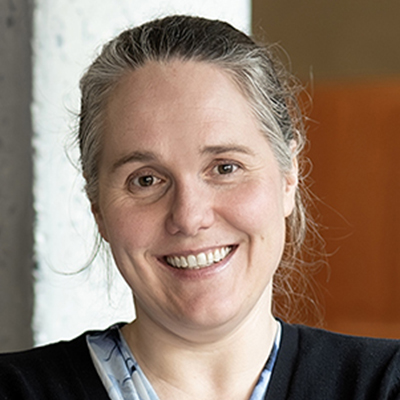
Sarah Glaven
Gerhard R. Andlinger Visiting Fellow at the Andlinger Center for Energy and the Environment
Sarah Glaven is a leading biotechnology and biomanufacturing expert and senior biologist at the U.S. Naval Research Laboratory, known for pioneering electromicrobiology and advancing microbe–electronics research; she has published extensively, holds multiple patents, and collaborated widely with industry. She modernized biotechnology across the Department of Defense, partnering with MIT on synthetic biology for ocean sensing, leading cross‑service teams, and directing the $300‑million Tri‑Service Biotechnology for a Resilient Supply Chain program to upgrade infrastructure and build public‑private partnerships. A former Branch Chief overseeing more than 20 scientists, mentor to numerous trainees including the first U.S. Naval Academy iGEM team, and past president of the International Society for Microbial Electrochemistry and Technology, she most recently served as Principal Assistant Director for Biotechnology and Biomanufacturing at the White House OSTP, where she led the National Biotechnology and Biomanufacturing Initiative and coordinated over $15 billion in federal bioeconomy investments.

Speakers
Eric Larson
Senior Research Engineer, Andlinger Center for Energy and the Environment, Princeton University
Larson’s research intersects engineering, environmental science, economics, and public policy. His energy systems modeling and analyses aim at identifying sustainable, engineering-based solutions to major energy-related problems. His work assesses resource, economic, and environmental implications of prospective technology developments and helps inform public and private decision-making in the U.S. and elsewhere. He has published extensively on the design and analysis of advanced biomass and fossil fuel conversion technologies with CO2 capture and storage. He was part of the Princeton team contributing to the National Research Council report, America’s Energy Future: Technology and Transformation (2009). He was a Co-Convening Lead Author of the fossil energy chapter of the major international study, The Global Energy Assessment (2012). He co-led Princeton’s Net-Zero America study (2021), and he plays a leading role in the Andlinger Center’s Net-Zero “X” Initiative involving collaborations with local researchers leading similar Net-Zero transition studies for Australia, Brazil, China, India, Korea, and Poland. Larson is an Affiliated Faculty member with the High Meadows Environmental Institute and the Center for Policy Research on Energy and Environment in the School of Public and International Affairs at Princeton.
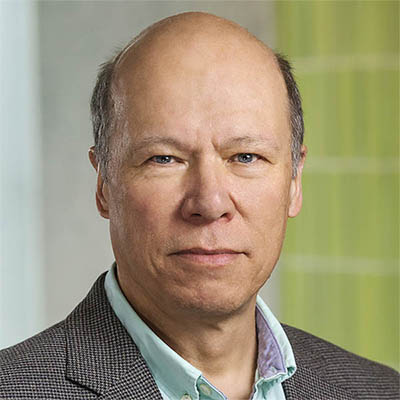
Prateek Mahalwar
Founder and CEO of BIOWEG
Prateek Mahalwar is Founder and CEO of BIOWEG based in Germany, a biotech company scaling circular biomanufacturing solutions for FMCG, agriculture, and mining. His work is centered on translating deep tech science into industrial-scale impact solutions, with a strong focus on biotech commercialization and scale-up. Before founding BIOWEG, he worked in strategy consulting, M&A, policy making, and innovation. He earned his Ph.D. from the Max Planck Society in Germany under the supervision of Nobel laureate Prof. Christiane Nüsslein-Volhard.
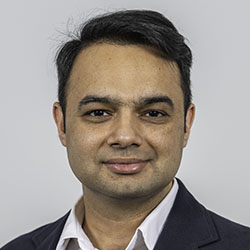
Iain McCulloch
Director, Andlinger Center for Energy and the Environment; Gerhard R. Andlinger ’52 Professor in Energy and the Environment; Professor of Electrical and Computer Engineering and the Andlinger Center for Energy and the Environment, Princeton University
Iain McCulloch is the director of the Andlinger Center for Energy and the Environment, the Gerhard. R. Andlinger Professor in Energy and the Environment, and a professor of electrical and computer engineering at Princeton University. He is also a visiting professor at the University of Oxford. His research focuses on the design and investigation of organic semiconducting materials.
Prior to leading the Andlinger Center, McCulloch held appointments as a professor of chemical science and director of KAUST Solar Center at King Abdullah University of Science and Technology (KAUST), and a chair in polymer materials in the Department of Chemistry at Imperial College. He moved to academia after 18 years managing industrial research groups at Hoechst in the U.S. and Merck in the U.K.
McCulloch is a fellow of the Royal Society, the Royal Society of Chemistry, the European Academy of Sciences, and a member of Academia Europaea. He is the recipient of the 2022 Royal Society Armourers and Brasiers Prize, 2020 Blaise Pascal Medal for Materials Science, and the Royal Society of Chemistry 2020 Interdisciplinary Prize. He earned his Ph.D. in chemistry at the University of Strathclyde.
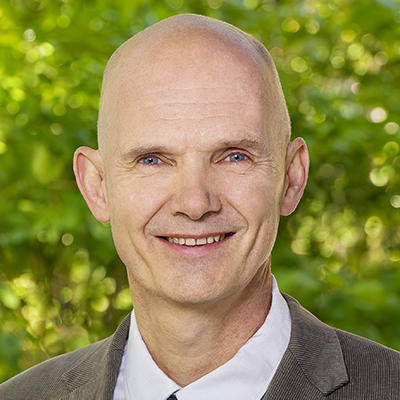
Valerie Reed
Director, Alternative Fuels and Feedstocks Office, Office of Critical Minerals and Energy Innovation, Department of Energy
Dr. Valerie Sarisky-Reed is the Director of the Alternative Fuels and Feedstocks Office (previously the Bioenergy Technologies Office) in the Office of Critical Minerals and Energy Innovation. In this role, she manages efforts to improve performance, lower costs and accelerate market entry of bioenergy technologies. She assists in overseeing strategic planning to meet aggressive goals with an annual budget of approximately $250M, working with DOE’s national laboratories, academia, and industry.
She has more than 32 years of experience in addressing energy and environmental issues faced by the United States and globally. In addition to her programmatic activities, she leads the Operations Committee of the Interagency Biomass Research and Development Board and is a government subject matter expert within the USDRIVE partnership. In addition, she spent two years serving under the Chief Scientist at the U.S. Department of Agriculture, helping to build bridges between DOE and USDA in support of the Bioeconomy.
Dr. Sarisky-Reed holds a Ph.D. in biochemistry from Georgetown University and is a graduate of the Department of Commerce’s Senior Executive Service Career Development Program.

Mark Warner
Co-Founder and CTO of Liberation Bioindustries
Mark Warner is a seasoned leader in the biotechnology sector and currently serves as the Co-Founder and CTO of Liberation Bioindustries. With extensive experience in scaling precision fermentation processes, he has held significant positions such as Chief Engineering Officer at Impossible Foods, where he contributed to the development of plant-based meat alternatives. Prior to that, he was the Senior Vice President of Engineering at Solazyme, specializing in algae-based biofuels and bioproducts. Additionally, Warner is the founder and president of Warner Advisors, a consultancy that has assisted over 100 fermentation companies in process development and scale-up efforts. He is also the author of How to Make Proteins Without Animals and Fuels and Chemicals Without Crude Oil, a handbook on industrial biotechnology commercialization. His expertise lies in bridging innovative biotech concepts with large-scale manufacturing, making him a pivotal figure in the field of precision fermentation.

Claire White
Professor of Civil and Environmental Engineering and the Andlinger Center for Energy and the Environment, Princeton University
White’s research focuses on understanding and optimizing engineering and environmental materials, with an emphasis on controlling the chemical mechanisms responsible for formation and long-term degradation of sustainable cements. Other areas of research include conventional cements, new materials for carbon dioxide capture and utilization, industrial waste recycling, and fundamentals of silicates dissolution. This research spans multiple length and time scales, utilizing advanced synchrotron and neutron-based experimental techniques, and simulation methodologies founded at the nanoscale. A component of White’s research involves technique development (experiment and simulation) and advanced data analysis methods.