
Pablo Debenedetti
Class of 1950 Professor in Engineering and Applied Science, Emeritus
Professor of Chemical and Biological Engineering, Emeritus
Research Description:
Molecular modeling and computational chemistry; hydrate melting and formation in carbon sequestration; heterogeneous ice nucleation for improved weather and climate models; phase behavior of water, carbon dioxide and salt mixtures for carbon capture and storage and geothermal energy production; water in nafion membranes for fuel cells; desalination with gas hydrates for improved fresh water production and greater energy efficiency

Luc Deike
Associate Professor of Mechanical and Aerospace Engineering and the High Meadows Environmental Institute
Andlinger Center Associated Faculty
Research Description:
Numerical and experimental studies of turbulent multi-phase flows in environmental systems, air-sea interaction, waves and breaking waves, drops and bubbles


Michelle DiBenedetto
Assistant Professor of Mechanical and Aerospace Engineering
Andlinger Center Associated Faculty
Research Description:
Experimental and computational fluid mechanics with applications towards oceanography, biology, environmental contaminants, and renewable energy.

Adji Bousso Dieng
Assistant Professor of Computer Science
Associated Faculty Department of Chemical and Biological Engineering
Andlinger Center Associated Faculty
Research Description:
AI models and algorithms for design and discovery of materials and chemicals for energy and sustainability; statistical machine learning and deep learning; nanoporous materials, metal-organic frameworks (MOFs), NH3.

Research Description:
Synthesis of novel organic-inorganic hybrid materials; electrochemistry and photophysics; microporous materials; electronically and ionically conductive metal-organic and covalent organic frameworks (MOFs and COFs) for energy storage, sensing, separations, and catalysis; alternative battery chemistries to Li.
Leo Donner
Lecturer in Geosciences and Atmospheric and Oceanic Sciences
Physical Scientist, Geophysical Fluid Dynamics Laboratory
Research Description:
Climate-model development; cloud and convective processes in the atmospheric general circulation; role of clouds in climate and climate change

Frederick Dryer
Professor of Mechanical and Aerospace Engineering, Emeritus
Engineering Foundation Distinguished Research Professor, Department of Mechanical Engineering, University of South Carolina
Research Description:
Petroleum and non-petroleum derived transportation fuels and fuel blends, their production, chemical kinetics, energy security, and net carbon cycle emission impacts; ignition, combustion, and air pollutant emissions generation/abatement; syngas/high-hydrogen content fuels for advanced gas turbine power generation; fire safety related issues on earth and in micro gravity environments
Jianqing Fan
Frederick L. Moore, Class of 1918, Professor in Finance
Professor of Operations Research and Financial Engineering
Andlinger Center Associated Faculty
Research Description:
Risk modeling, statistics, financial econometrics, analysis of big data, computational biology, machine learning, probabilistic tropical cyclone risk modeling

Alison M. Ferris
Assistant Professor of Mechanical and Aerospace Engineering
Andlinger Center Associated Faculty
Research Description:
Chemical kinetics, optical diagnostics, and fuel science; high-temperature, gas-phase reaction chemistry; laser spectroscopy; sustainable, low-carbon fuels; sustainable aviation fuel; combustion particulates and contrail formation; predictive chemical modeling.
Research Description:
Plasma physics with applications to nuclear fusion energy: plasma waves, current drive, laser/plasma interaction; atomic radiation in plasmas; petroleum refining; statistical inference and pattern recognition, modified Otto-cycle engines


Michael Ford
Associate Laboratory Director for Engineering, Princeton Plasma Physics Laboratory (PPPL)
Research Description:
Technology development and engineering risk; assessment of technologies to support decarbonization of the energy system; fission and fusion systems R&D; reactor safeguards, regulatory policy and proliferation risk; process modeling, systems engineering, engineering economics, and quantitative risk and decision analysis.


Dimitrios Fraggedakis
Assistant Professor of Chemical and Biological Engineering
Andlinger Center Associated Faculty
Research Description:
Fundamental transport and reaction processes in electrochemical systems relevant to energy storage and environmental applications (Li-ion batteries, electrochemical CO2 capture, water treatment); theoretical non-equilibrium thermodynamics; stochastic processes; statistical mechanics; condensed matter physics; quantum dynamics; continuum and molecular computations (finite element , molecular dynamics, Monte Carlo, free-energy calculations).
Research Description:
IoT platforms and applications; energy-efficient; cloud and mobile systems; distributed systems and geo-replicated applications

Mario Gandelsonas
Professor of Architecture
Class of 1913 Lecturer in Architecture
Andlinger Center Associated Faculty
Research Description:
Urban planning and development of sustainable infrastructures for the 21st century


Maria Garlock
Professor of Civil and Environmental Engineering
Co-Director, Program in Architecture and Engineering
Andlinger Center Associated Faculty
Research Description:
Resilient and sustainable structural design, and efficient structural systems and forms that minimize construction materials.
David Gates
Managing Research Physicist, Advanced Projects Department Head, Princeton Plasma Physics Laboratory (PPPL)
Research Description:
Fusion science; stellerator design and construction.
Alexander Glaser
Professor of Mechanical and Aerospace Engineering and International Affairs, Princeton School of Public and International Affairs
Co-Director, Program in Science and Global Security
Andlinger Center Associated Faculty
Research Description:
Nuclear power (fission/fusion); nuclear fuel cycle/nonproliferation; neutronics calculations for new systems (e.g. small modular reactors; safeguards and verification; energy policy)

Branko Glišić
Chair, Department of Civil and Environmental Engineering
Professor of Civil and Environmental Engineering
Andlinger Center Associated Faculty
Research Description:
Built environment, structural health monitoring (SHM), advanced SHM technologies, physics- and data-based diagnostics and prognostic, decision making, smart adaptable and deployable structures, heritage and historic structures.

Claire Gmachl
Eugene Higgins Professor of Electrical and Computer Engineering
Chair, Department of Electrical and Computer Engineering
Andlinger Center Executive Committee
Head of Whitman College
Research Description:
Built environment, structural health monitoring (SHM), advanced SHM technologies, physics- and data-based diagnostics and prognostic, decision making, smart adaptable and deployable structures, heritage and historic structures.
Noreen Goldman
Hughes-Rogers Professor of Demography and Public Affairs, Princeton School of Public and International Affairs
Andlinger Center Associated Faculty
Research Description:
Role of environment in human health; social and economic factors on adult health and the physiological pathways through which these factors operate


Research Description:
Experimental plasma physics, plasma heating and transport for fusion energy. Edge power handling. Fusion reactor and power plant designs, including tokamak, spherical torus, and stellarator configurations. Socio-economic aspects of nuclear energy, particularly nuclear proliferation risks
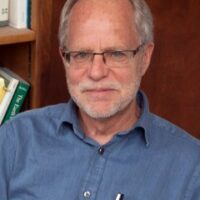
David B. Graves
Professor of Chemical and Biological Engineering
Andlinger Center Associated Faculty
Research Description:
Science of non-equilibrium, or ‘low temperature,’ ionized gas plasma for applications in materials production via industrial electrification.

Christopher Greig
Theodora D. ’78 and William H. Walton III ’74 Senior Research Scientist at the Andlinger Center for Energy and the Environment
Gerhard R. Andlinger Visiting Fellow in Energy and the Environment (2018-2020)
Research Description:
Understanding and mitigating social and economic barriers to scaling up clean energy and fuels production, carbon capture and storage (CCS), industrial decarbonization; climate finance; energy infrastructure delivery innovation. Leadership in the Rapid Switch initiative and Net‑Zero America.
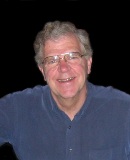
John T. Groves
Hugh Stott Taylor Chair of Chemistry
Professor of Chemistry
Andlinger Center Associated Faculty
Research Description:
Chemical catalysis and biocataysis of hydrocarbon oxidation and functionalization

Research Description:
Control of surface structures for multiple applications, including catalysis and evolving microstructures in solid oxide fuel cells and battery materials