Simon Levin
James S. McDonnell Distinguished University Professor in Ecology and Evolutionary Biology
Andlinger Center Associated Faculty
Research Description:
Ecosystem and biosphere-level maintenance of macroscopic patterns and processes; evolution of diversification; mathematical modeling; evolution and ecology of dispersal; strain structure in influenza; public goods problems and environmental economics



Research Description:
Design of new intersections between land and water in urban environments in response to rising sea levels; new building forms and organizations based integrated systems and energy flows.


Research Description:
Natural hazards and risk assessment, stochastic modeling, wind engineering, coastal engineering, climate change impact and adaptation, and built environment and sustainability; the study of tropical cyclones and associated weather extremes (e.g., strong winds, heavy rainfall, and storm surge), how they change with climate, and how their impact on the natural and built environment can be mitigated

Research Description:
Protein engineering and synthetic biology with applications in natural product biosynthesis. Chemical basis of microbial communication and bioremediation, especially for metals in the environment.



Yueh-Lin (Lynn) Loo
Theodora D. '78 and William H. Walton III '74 Professor in Engineering
Professor of Chemical and Biological Engineering
Former Director, Andlinger Center for Energy and the Environment (2016-2021)
Andlinger Center Associated Faculty
Research Description:
Thin-film photovoltaics, including polymer and molecular solar cells, hybrid perovskite solar cells and transparent solar cells, printable conductive inks, processing-structure-function relationships of electrically-active plastics, macro-scale energy systems analysis of biomass-derived liquid transportation fuels.


Marcella Lusardi
Assistant Professor of Chemical and Biological Engineering and Princeton Materials Institute
Andlinger Center Associated Faculty
Research Description:
Our group’s research centers on molecular-scale materials design to address pressing challenges in sustainable chemistry, with a primary focus in catalytic and adsorption applications. Synthetic methods to prepare these materials largely involve tuning coarse-grained parameters (e.g., concentration, temperature), often resulting in structures with poorly controlled distributions of molecular architectures. Since these architectures dictate the physicochemical and optoelectronic properties that govern performance in a given application, controlling them is paramount. To achieve this control, our work takes a molecular-scale approach to materials synthesis. By manipulating molecular precursors and their interactions early in the synthetic process (i.e., prior to nucleation), we can introduce new control parameters that influence the assembly of building units across length scales, and address a key bottleneck – the synthesis-structure component – in the iterative synthesis-structure-function elucidation process that guides rational materials design.
This approach enables us to develop the fundamentally new, multifunctional materials required to solve critical sustainability problems, ranging from CO2 capture and conversion to nanoplastic removal from water systems to green pharmaceutical synthesis. To satisfy the complex design criteria mandated by these diverse application domains, we work with equally diverse classes of materials to achieve the required flexibility in physicochemical and optoelectronic properties, including organic nanomaterials, nanostructured metals/metal oxides, molecular sieves, and quantum dots. Our efforts in synthesis are complemented by a wealth of advanced spectroscopic techniques, in addition to scattering and microscopy methods, and coupled with catalytic and surface studies in diverse reaction environments. In this way, we not only gain insight into the required molecular structures for effective catalysis/photocatalysis/etc., but also outline pathways to engineering them in practice.
Sharad Malik
George Van Ness Lothrop Professor in Engineering
Professor of Electrical and Computer Engineering
Andlinger Center Associated Faculty
Research Description:
Design and programming of low-energy computing systems
Jyotirmoy Mandal
Assistant Professor of Civil and Environmental Engineering
Andlinger Center Associated Faculty
Research Description:
My group designs of optical materials across geometric to metamaterial scales for control of thermal radiation, with applications in building and environmental thermal management as a major goal.
Christos Maravelias
Anderson Family Professor in Energy and the Environment
Professor of Chemical and Biological Engineering and the Andlinger Center for Energy and the Environment
Chair, Department of Chemical and Biological Engineering
Andlinger Center Executive Committee
Research Description:
The goal of research in the group of Christos Maravelias is to develop theory, models, and solution algorithms for problems in the general area of Process Systems Engineering (PSE). Current projects include (1) chemical production scheduling, planning, and supply chain optimization; (2) chemical process synthesis; and (3) energy systems modeling, optimization, and analysis, with special emphasis on biomass-to-fuels/chemicals and solar fuel and power technologies.

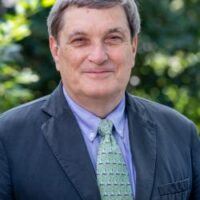
Luigi Martinelli
Professor of Mechanical and Aerospace Engineering
Andlinger Center Associated Faculty
Research Description:
Sustainable aviation through advanced multidisciplinary design optimization of airframes and air traffic management systems; design optimization of ship hulls for maximum efficiency; aerodynamic design optimization of wind turbines, propellers, fans, compressors and turbines; computational fluid dynamics of compressible reactive flows
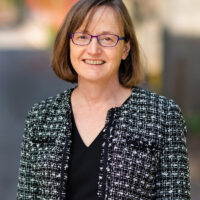
Margaret Martonosi
Hugh Trumbull Adams '35 Professor of Computer Science
Andlinger Center Associated Faculty
Research Description:
Energy-efficient computer servers, including optimization frameworks for improving green energy usage in multi-data-center internet services and power-performance optimizations for improving energy-proportionality within data centers

Douglas Massey
Henry G. Bryant Professor of Sociology and Public Affairs, Woodrow Wilson School
Director, Office of Population Research
Director, Program in Population Studies
Research Description:
Issues of international migration caused by environmental change

William Massey
Edwin S. Wilsey Professor of Operations Research and Financial Engineering
Research Description:
Application of queueing theory to optimize the use of individual energy storage components. Stochastic networks; dynamic optimization; dynamical systems

Denise Mauzerall
Professor of Civil and Environmental Engineering and Public and International Affairs, Princeton School of Public and International Affairs and CEE
Andlinger Center Associated Faculty
Research Description:
Analysis of air quality and climate impacts of various energy technologies (coal, gas, solar, wind) with the goal of identifying options with maximum co-benefits. Analysis of China’s energy future and options for air quality, health, and climate co-benefits. Effect of nitrogen, ozone, and water on sustainable intensification of crop production. Measurement of methane leakage from older U.S. natural gas infrastructure

Reed M. Maxwell
William and Edna Macaleer Professor of Engineering and Applied Science
Professor of Civil and Environmental Engineering and the High Meadows Environmental Institute
Director of Integrated Groundwater Modeling Center
Andlinger Center Associated Faculty
Research Description:
Dr. Reed Maxwell’s research interests center on understanding how much terrestrial freshwater we have on earth and how fast this is being replenished or depleted. This focuses on hard problems in hydrology that include groundwater, evapotranspiration and snow. His research focus on understanding connections within the hydrologic cycle and how they relate to water quantity and quality under anthropogenic stresses. His research group uses a broad range of approaches to study these questions, including integrated hydrologic modeling, field observations and remote sensing products.
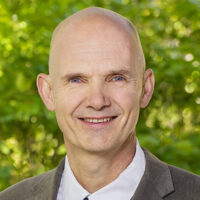
Iain McCulloch
Director, Andlinger Center for Energy and the Environment
Gerhard R. Andlinger '52 Professor in Energy and Environment
Professor of Electrical and Computer Engineering and Andlinger Center for Energy and the Environment
Andlinger Center Executive Committee
Research Description:
Iain McCulloch’s research involves the design, synthesis and development of semiconducting small molecules and polymers for use as transistors for display, solar cells and most recently biological sensing. His efforts have focused on the understanding and control of microstructure and energy levels in conjugated aromatic semiconducting polymers and the subsequent impact on device properties. This has resulted in several commercial products including lithographic formulations and printable semiconducting inks. His research continues to broaden in scope, including making important contributions in organic photovoltaics, where he is exploring new electron acceptor materials, doping effects, and fundamental optical absorption phenomena. In addition, he is developing biological sensing and electrochemical devices, which have resulted in the first demonstration of solid-state optical semiconducting sensors for measurement of cations, as well as fundamental molecular design rules of semiconducting polymers for organic electrochemical transistors. Most recently, he has discovered that organic semiconducting nanoparticle blends are efficient photocatalysts for the production of hydrogen from water and the reduction of carbon dioxide.
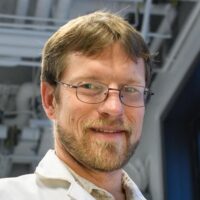
Forrest Meggers
Associate Professor of Architecture and the Andlinger Center for Energy and the Environment
Associate Director for Education, Andlinger Center for Energy and the Environment
Andlinger Center Executive Committee
Research Description:
Building systems design and integration; radiant heating and cooling sensors and systems; desiccant dehumidification, geothermal systems; heat pumps; renewable energy; optimization of energy systems; exergy analysis; building materials; thermodynamics and heat transfer

Julia Mikhailova
Associate Professor, Mechanical & Aerospace Engineering
Andlinger Center Associated Faculty
Research Description:
Attosecond science, high-harmonic and attosecond‐pulse generation and application. High-field physics, high-power lasers, relativistic laser‐plasma interaction, synchrotron‐type intense x‐ray radiation from solids, laser‐driven particle acceleration. Ultrafast and nonlinear optics, few-cycle optical pulse generation, optical parametric chirped pulse amplification, femtosecond laser filamentation, nonlinear fiber optics. Quantum optics, entanglement of quantum states, biphoton states in spontaneous parametric light scattering.
Richard Miles
Robert Porter Patterson Professor of Mechanical and Aerospace Engineering, Emeritus
TEES Distinguished Research Professor of Aerospace Engineering, Texas A&M University
Research Description:
High-sensitivity detection of pollutants and environmental contaminants (CO, NO, etc); combustion and aerodynamic control by lasers and microwaves, and plasma based energy conversion.

Research Description:
The design and development of privacy-preserving and secure systems, including the domains of (1) privacy-enhancing technologies such as anonymous communication and statistical data privacy, (2) adversarial machine learning, and (3) Internet/network security
Reza Moini
Assistant Professor of Civil and Environmental Engineering
Andlinger Center Associated Faculty
Research Description:
Research is focused on bio-inspired approaches to the design of civil and renewable energy materials and structures and advancing the automated robotic fabrication as an enabling technology to thread such designs with novel and enhanced performance characteristics.

Michael Mueller
Professor of Mechanical and Aerospace Engineering
Associate Chair, Department of Mechanical and Aerospace Engineering
Andlinger Center Associated Faculty
Research Description:
Predictive computational simulation and modeling of multi-physics turbulent flows. Integration of computational science, data science, and uncertainty quantification. High-performance algorithms for large-scale heterogeneous parallel computing. Application areas of interest include combustion energy conversion for electricity generation and transportation (including pollutant emissions and the environmental impacts of combustion), offshore wind energy, and fusion energy.
Research Description:
Guy Nordenson
Professor of Architecture and Structural Engineering
Andlinger Center Associated Faculty
Research Description:
Climate adaptation design and engineering, particularly in coastal urban regions
Research Description:
Thermoelectrics, fundamental studies of superconductivity, novel superconducting and magnetic materials, topological insulators, Dirac-Weyl metals