
Jürgen Hackl
Assistant Professor of Civil and Environmental Engineering
Andlinger Center Associated Faculty
Research Description:
Scalable data analytics (graph & network theory) and machine learning techniques for spatial-temporal networks applied to dynamic processes in complex multiscale civil engineered infrastructure (e.g., water, energy); risk and resilience assessments in socio-technical systems for climate change and future challenges facing cities and society; integrating data-driven approaches with physics-based models to create digital twins of their physical counterparts.


Kelsey Hatzell
Associate Professor of Mechanical and Aerospace Engineering and the Andlinger Center for Energy and the Environment
Andlinger Center Executive Committee
Research Description:
Solid ion conductors for advanced energy storage and conversion applications; solid state devices for electrochemical fuel production and energy storage systems for electric vehicles; thermal energy storage systems for concentrated solar power integration and production; carbon capture materials and processes.


Bernard Haykel
Professor of Near Eastern Studies
Director, The Institute for Transregional Studies
Andlinger Center Associated Faculty
Research Description:
Research focuses on the political economy and energy policies of oil producing states in the Persian Gulf.
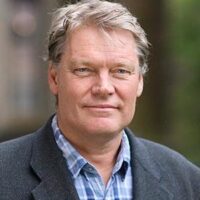
Lars Hedin
George M. Moffett Professor of Biology
Professor of Ecology and Evolutionary Biology and the High Meadows Environmental Institute
Andlinger Center Associated Faculty
Research Description:
Seeks to understand the biosphere’s dynamics by developing a new family of theories, and quantitative analyses


Research Description:
Computational imaging at the intersection of computer vision, AI, computer graphics, optics and sensing. Computational optics and holographic displays. Optical computing and computational photonics. Generative AI and neural rendering. Vision and sensing for autonomous robots.

Marcus Hultmark
Professor of Mechanical and Aerospace Engineering
Andlinger Center Associated Faculty
Research Description:
Wind turbine aerodynamics, turbulent drag reduction, turbulent heat transfer, atmospheric fluid mechanics, and instrumentation.
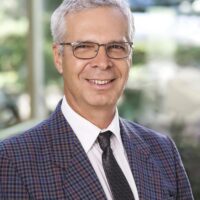
Peter Jaffé
William L. Knapp '47 Professor of Civil and Environmental Engineering
Professor of Civil and Environmental Engineering
Andlinger Center Executive Committee
Research Description:
Biogeochemical cycles applied to environmental remediation, especially water quality and soils. Bioremediation of uranium-contaminated groundwater; biogeochemical cycling in wetlands including immobilization of toxic metals; methane emissions from rice paddies; nitrogen transformation in urban streams and hydrological infrastructure; linking water quality models with climate change models; bioremediation of recalcitrant pollutants, including PFAS; energy efficient methods for nitrification and denitrification.

Jesse Jenkins
Associate Professor of Mechanical and Aerospace Engineering and Andlinger Center for Energy and the Environment
Research Description:
Developing optimization-based energy systems models to evaluate and optimize low-carbon energy technologies, guide investment and research in innovative energy technologies, and generate insights to improve energy and climate policy and planning decisions.

Research Description:
Sensors to reduce electricity and heating costs in buildings; power/thermal analysis and optimization of integrated circuits and systems


Jerrelle A. Joseph
Assistant Professor of Chemical and Biological Engineering and the Omenn-Darling Bioengineering Institute
Andlinger Center Associated Faculty
Research Description:
Development of molecular simulation approaches for applications in synthetic biology and metabolic engineering; Sustainable chemical synthesis; Thermoresponsive biomaterials; Biosensor engineering.

Yiguang Ju
Robert Porter Patterson Professor of Mechanical and Aerospace Engineering
Director, Program in Sustainable Energy
Andlinger Center Associated Faculty
Research Description:
Sustainable energy, green fuels (e.g. H2, NH3, e-fuels), CO2 reduction and utilization, and energy materials; high pressure combustion, plasma assisted combustion and material synthesis, H2/NH3 production, and thermal chemical and electrochemical energy storage materials, in situ laser diagnostics, and machine learning modeling of interfacial plasma catalysis.
Igor Kaganovich
Principal Research Physicist, Princeton Plasma Physics Laboratory (PPPL)
Research Description:
Theoretical plasma physics; plasma-surface interactions; plasma-based synthesis and processing of nanomaterials; cross-field discharges; physics of plasma thrusters; nuclear fusion (heavy ion fusion); magnetohydrodynamics; quantum mechanics.

Antoine Kahn
Professor of Electrical & Computer Engineering
Andlinger Center Executive Committee (ex officio)
Research Description:
Organic thin films and organic electronics for photovoltaics: organic/organic heterojunctions that constitute the core of organic photovoltaic cells; interfaces between organic films and conducting oxides or polymer-functionalized surfaces that constitute the high and low work function anode and cathode of these solar cells; hybrid organic/inorganic semiconductor solar cells; metal halide perovskites and their two-dimensional analogs; chemical doping that increases carrier mobility for improved charge collection
Research Description:
The politics of climate change at various scales, including analysis of individual attitudes, national policies, and international institutions. How characteristics of individuals, states, and multilateral institutions affect climate policy outcomes.
Yannis G Kevrekidis
Pomeroy and Betty Perry Smith Professor in Engineering, Emeritus
Professor of Chemical and Biological Engineering and Applied and Computational Mathematics, Emeritus
Research Description:
Nonlinear dynamics tools and multiphase flow modeling are used to understand the interplay of reaction and transport in PEM fuel cells. Multiscale modeling of complex systems with applications to chemical reactions, transport processes, and agent-based models of behavioral dynamics and urban growth
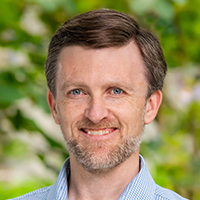
Ryan Kingsbury
Assistant Professor of Civil and Environmental Engineering and the Andlinger Center for Energy and the Environment
Research Description:
Development of electrochemical technologies for water treatment and energy storage; ion-selective materials such as membranes and electrodes; electrochemical and thermodynamic materials characterization; electrodialysis; ion separations.

Research Description:
Surface and interfacial processes; plasma-materials interactions in fusion reactors; plasma-enhanced catalysis; photoelectrocatalysis for water splitting and carbon dioxide reduction; alloy catalysis; chemistry of the battery solid electrolyte interphase
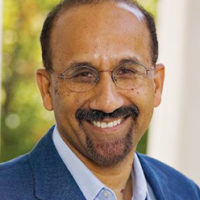
Atul Kohli
David K. E. Bruce Professor of Internationl Affairs
Professor of Politics and International Affairs, Princeton School of Public and International Affairs
Research Description:
Politics and policy making that impact environmental outcomes in poor countries, especially India.

Egemen Kolemen
Professor of Mechanical and Aerospace Engineering and the Andlinger Center for Energy and the Environment
Director, Program in Sustainable Energy
Andlinger Center Executive Committee
Research Description:
Engineering and physics analysis to enable economically feasible fusion reactors; machine learning, real-time diagnostics and control at KSTAR, NSTX-U, and DIII-D; liquid metal divertor and low temperature diagnostics; software for stellarator optimization and economical analysis of fusion reactors.

Alain Kornhauser
Professor of Operations Research and Financial Engineering
Director, Program in Transportation
Andlinger Center Associated Faculty
Research Description:
Autonomous vehicle control systems; dynamic resource management; traveler information and decision support; traveler information systems; personal rapid transit
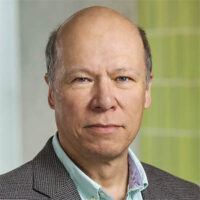
Eric D. Larson
Senior Research Engineer, Energy Systems Analysis Group Head (ESAG)
Research Description:
Energy systems modeling and analyses to identify sustainable, engineering-based solutions to major energy-related problems; advanced biomass and fossil fuel conversion technologies with CO2 capture and storage. Leadership in the Rapid Switch initiative and Net‑Zero America.
Chung Law
Robert H. Goddard Professor of Mechanical and Aerospace Engineering
Andlinger Center Associated Faculty
Research Description:
Fundamentals of combustion, with applications in propulsion, energy and environmental issues; combustion of fuel droplets and sprays; incineration of hazardous wastes; chemistry of flame-generated pollutants; formulation of high-performance propulsion fuels
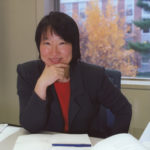
Ruby B. Lee
Forrest G. Hamrick Professor in Engineering, Emeritus
Professor of Electrical and Computer Engineering, Emeritus
Research Description:
Deep-learning based anomaly detection. Security of critical infrastructures and cyber-physical systems, including the powergrid. Security of processors, computers, controllers, smartphones, cloud computing, and IOT networks. Side-channel and covert channel attacks.
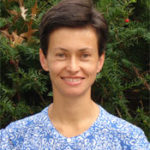
Research Description:
Ocean turbulence and mixing; understanding small-scale turbulent mixing processes through high-resolution numerical simulations combined with theoretical analysis; deriving new physically-based parameterizations to help improve climate simulations

Naomi Leonard
Edwin S. Wilsey Professor of Mechanical and Aerospace Engineering
Chair, Department of Mechanical and Aerospace Engineering
Research Description:
Design/control of new kinds of sustainable and adaptive environmental sensing and observation systems (special focus on marine environments/ocean)