
Michael Oppenheimer
Director of the Center for Policy Research on Energy and Environment
Albert G. Milbank Professor of Geosciences and International Affairs and the High Meadows Environmental Institute
Andlinger Center Associated Faculty
Research Description:
Climate change science and policy, sea-level rise, adaptation, climate-driven migration

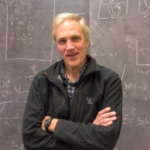
Stephen Pacala
Frederick D. Petrie Professor Emeritus, Ecology and Evolutionary Biology
Research Description:
Interactions between the global biosphere and climate; carbon mitigation; effects of global vegetation on climate; large-scale measurement of natural and anthropogenic greenhouse gas emissions

Athanassios Panagiotopoulos
Susan Dod Brown Professor of Chemical and Biological Engineering
Andlinger Center Associated Faculty
Research Description:
Molecular modeling of phase behavior and transport properties of aqueous electrolytes which are of fundamental importance in understanding the long-term fate of CO2 injected in underground rock formations for carbon capture and storage; computational studies of molten carbonate fuel cells, which can be used for simultaneous electricity production and CO2 purification; liquid metals as plasma-facing components for fusion energy systems

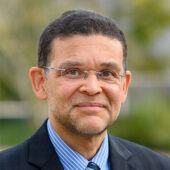
Glaucio H. Paulino
Margareta Engman Augustine Professor of Engineering
Professor of Civil and Environmental Engineering and the Princeton Materials Institute
Andlinger Center Associated Faculty
Research Description:
Development of methodologies to characterize deformation and fracture behavior of existing and emerging materials and structural systems, topology optimization for large-scale and multiscale/multiphysics problems, and origami applications to structures and robotics.


Wei Peng
Assistant Professor of Public and International Affairs and the Andlinger Center for Energy and the Environment
Research Description:
Developing integrated energy and environmental systems models to improve representation of institutional and political factors and inform practical climate policies and decarbonization strategies.


Catherine Peters
Professor of Civil and Environmental Engineering
George J. Magee Professor of Geological Engineering
Andlinger Center Associated Faculty
Research Description:
Environmental water quality and industrial wastewater treatment. Geochemical reactions in energy resources engineering including geologic sequestration of CO2, hydrofracking, and geothermal energy production. Reactive flows in porous, permeable, and fractured media


H. Vincent Poor
Michael Henry Strater University Professor of Electrical and Computer Engineering
Andlinger Center Associated Faculty
Research Description:
Energy-efficiency in wireless networks; smart grid, Internet of Things, power system resilience
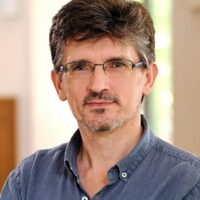
Amilcare Porporato
Thomas J. Wu '94 Professor of Civil and Environmental Engineering
Professor of Civil and Environmental Engineering and the High Meadows Environmental Institute
Andlinger Center Associated Faculty
Research Description:
Hydrology and biogeochemistry, with applications to earth sciences, sustainable resource management, and intersections with energy and civil infrastructure
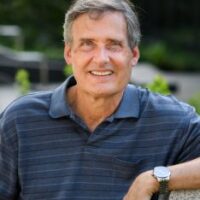
Warren Powell
Professor of Operations Research and Financial Engineering, emeritus
Research Description:
Models for the design and control of a broad range of problems in energy systems, emphasizing problems that involve decisions and uncertainty. A major focus has been the study of high penetrations of renewables, and the design and control of energy storage systems. We are also working on models for driverless fleets of electric vehicles, uncertainty models of wind, solar and electricity prices, and the economics of energy portfolios.


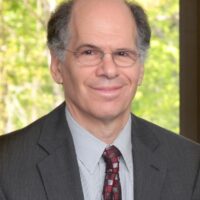
Research Description:
Experimental plasma physics, including study of stability, turbulence, transport, and self-organization in plasmas, for use in fusion energy
Research Description:
Detailed numerical models of coupled multi-phase compositional thermo-poromechanical effects including leaky wells and discrete fracture models to assess the safety of CO2 injection in deep brine aquifers

Rodney Priestley
Dean of the Graduate School
Pomeroy and Betty Perry Smith Professor of Chemical and Biological Engineering
Andlinger Center Associated Faculty
Research Description:
Nanoscale processing and characterization of polymers and soft matter with an emphasis on thin films, colloids, and nanocomposites; glass formation and glassy behavior of polymer thin films and nanocomposites; physical vapor deposition of macromolecules; scalable and sustainable formation, and application of polymer-based colloids.
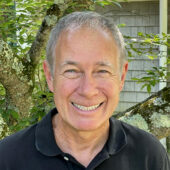
Paul R. Pruncal
Professor of Electrical and Computer Engineering
Andlinger Center Associated Faculty
Research Description:
Ultrafast optical techniques for communication networks and signal processing; physical (optical) layer network security; optical code division multiple access (CDMA); nonlinear optical signal processing for ultrafast networks; optical cancellation; photonic neural networks

Joshua Rabinowitz
Professor of Chemistry and the Lewis-Sigler Institute for Integrative Genomics
Director, Ludwig Princeton Branch
Andlinger Center Associated Faculty
Research Description:
Novel methods for probing metabolism, metabolic flux and regulation in bacteria and yeast, application to metabolic engineering and bioenergy
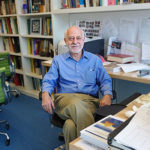
Herschel Rabitz
Charles Phelps Smyth '16 *17 Professor of Chemistry
Andlinger Center Associated Faculty
Research Description:
Accelerated discovery of new materials and radiation-matter interactions expressed in an optimal control context. Theoretical and experimental analysis of control landscape topology to guide the latter control-based perspectives in the energy sciences
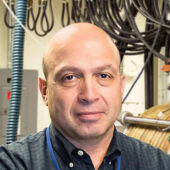
Yevgeny Raitses
Managing Principal Research Physicist, Princeton Plasma Physics Laboratory (PPPL)
Research Description:
Plasma physics; plasma thrusters; plasma-surface interactions; plasma-based synthesis and processing of nanomaterials; plasma diagnostics.

Anu Ramaswami
Sanjay Swani ’87 Professor of India Studies
Professor of Civil and Environmental Engineering, the Princeton Institute for International and Regional Studies, and the High Meadows Environmental Institute
Director, Chadha Center for Global India
Andlinger Center Executive Committee
Research Description:
Environmental science and engineering; industrial ecology; public health and public affairs; sustainable urban infrastructure systems

Venkatachalam Ramaswamy
Lecturer with the rank of Professor in Geosciences and Atmospheric and Oceanic Sciences
Research Description:
Climate modeling; climate variations and change due to natural and human-influenced factors; past, present and future climates; hydrological cycle; satellite remote sensing of climate; climate and air quality
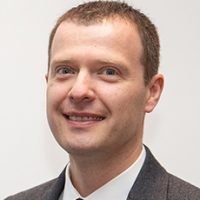
Barry Rand
Professor of Electrical and Computer Engineering and the Andlinger Center for Energy and the Environment
Andlinger Center Executive Committee
Research Description:
Thin film materials for next generation electronic and optoelectronic devices for computing, sensing, and energy applications; optical, electronic, and structural properties of materials and heterogeneous interfaces

Richard Register
Director, Princeton Materials Institute
Eugene Higgins Professor of Chemical and Biological Engineering
Andlinger Center Executive Committee
Research Description:
Synthesis, processing, and reprocessing/recycling of polymeric materials, as part of a larger research effort focused on microstructured and nanostructured polymers
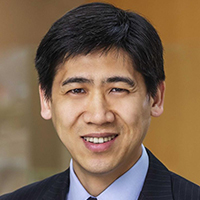
Z. Jason Ren
Professor of Civil and Environmental Engineering and the Andlinger Center for Energy and the Environment
Andlinger Center Executive Committee
Research Description:
Water-Energy Nexus; Environmental Biotechnology; Water Resource Recovery; Carbon Capture and Utilization; Microbial Electrochemistry; Water and Wastewater Treatment; Environmental Remediation; Water Desalination; Membranes

Laure Resplandy
Associate Professor of Geosciences and the High Meadows Environmental Institute
Research Description:
Climate and ocean modeling; carbon cycle; impacts on marine ecosystems; climate-carbon interactions.

Research Description:
Software-defined networking, including techniques for improving the energy efficiency of information technology infrastructure
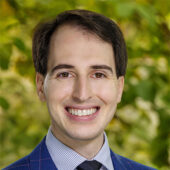
Andrew S. Rosen
Assistant Professor of Chemical and Biological Engineering
Andlinger Center Associated Faculty
Research Description:
Materials for energy-relevant processes, such as heterogeneous catalysis, energy storage, and chemical separations;computational chemistry; high-performance computing; machine learning

Clarence Rowley
Professor of Mechanical and Aerospace Engineering
Sin-I Cheng Professor in Engineering Science
Andlinger Center Associated Faculty
Research Description:
Control of plasmas in nuclear fusion; modeling of fluid flows from a dynamical systems point of view