
Michele L. Sarazen
Assistant Professor of Chemical and Biological Engineering
Andlinger Center Associated Faculty
Research Description:
Mechanistic investigations of heterogeneous catalysis, carbon capture, and environmental separations via combined synthetic, kinetic, and theoretical techniques; improving efficiencies for conversions of conventional feedstocks to fuels and chemicals and developing renewable alternatives to fuels and chemicals

Jorge Sarmiento
George J. Magee Professor of Geoscience and Geological Engineering, Emeritus
Research Description:
Fundamental processes controlling the ocean-atmosphere distribution of climatically important chemicals, particularly carbon dioxide, and how these have changed through time; global carbon cycle, ocean biogeochemical dynamics, the impact of climate change on ocean biology and biogeochemistry, use of chemical tracers to study ocean circulation, paleoceanography


Research Description:
Mechanisms of light harvesting and light-induced charge separation; photosynthesis; organic semiconductors; bioinspiration (learning from novelties in nature), chemistry powered by light, quantum effects in molecular-level function
Research Description:
Interfacial modifiers in organic photovoltaics; interface chemistry; surface modification of polymer or inorganic conductor or semiconductor surfaces as a means to enhance performance of devices as diverse as diodes, organic transistors, or biosensors; strong interfaces between implant or tissue scaffold surfaces and biomolecules in the context of enhancing tissue integration with a prosthetic device


Timothy Searchinger
Senior Research Scholar, Princeton School of Public and International Affairs and the Center for Policy Research on Energy and the Environment
Research Description:
Interplay of ecology, agronomy, and economics in the environmental consequences of agriculture, particularly land use change, greenhouse gas emissions and nitrogen pollution; role of agricultural emissions in climate change and policy interventions for managing such


Research Description:
Simulations of materials, interfaces, and processes in photo- and electro-catalysis

Eldar Shafir
Class of 1987 Professor in Behavioral Science and Public Policy
Professor of Psychology and Public Affairs
Andlinger Center Associated Faculty
Research Description:
Behavioral interventions; reasoning, judgment, and decision-making, and issues related to behavioral economics, with an emphasis on descriptive studies of how people make judgments and decisions in situations of conflict and uncertainty
Daniel Sigman
Dusenbury Professor of Geological and Geophysical Sciences
Professor of Geosciences
Andlinger Center Associated Faculty
Research Description:
Earth’s environmental history; interactions among climate, ocean biogeochemistry, and atmospheric carbon dioxide; the global nitrogen cycle, today and in the past
Frederik Simons
Professor of Geosciences
Associate Chair, Department of Geosciences
Andlinger Center Associated Faculty
Research Description:
Mathematical methods for the localized analysis of scalar and vectorial satellite data, monitoring of ice sheets from time-variable gravity, statistical analysis of multivariate multidimensional stochastic fields, inverse modeling for global and exploration seismology, and design of autonomously floating multi-sensor oceanic platforms.

Jaswinder P. Singh
Professor of Computer Science, Technology and Societal Change
Andlinger Center Associated Faculty
Research Description:
Energy-efficient software in cloud computing and large-scale computing


Ronnie Sircar
Eugene Higgins Professor of Operations Research and Financial Engineering
Andlinger Center Associated Faculty
Research Description:
Game-theoretic models of energy and emissions markets, with emphasis on policy implications; economics of exhaustible resources, including modeling of shifts in energy markets toward intermittent alternative sources such as solar and wind technologies; dynamic models to help design incentives for greener fuel production; financialization of energy and commodities markets; risk quantification of electricity grids under increased stochasticity from renewables penetration.
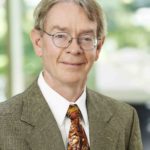
James Smith
William and Edna Macaleer Professor of Engineering and Applied Science, Emeritus
Professor of Civil and Environmental Engineering, Emeritus
Andlinger Center Associated Faculty
Research Description:
Urban environments, hydrology and meteorology; extreme floods, including the impact of urban environments, environmental sensor systems


Research Description:
Global energy system response to global and local environmental and security constraints; carbon dioxide capture from fossil fuels and storage in geological formations; nuclear power; energy efficiency in buildings; advanced technologies in developing countries

Aditya Sood
Assistant Professor of Mechanical and Aerospace Engineering and the Princeton Materials Institute
Andlinger Center Associated Faculty
Research Description:
Ultrafast dynamics; nanoelectronics; nanoscale thermal transport; nergy-efficient computing; energy harvesting; energy storage

Erik Sorensen
Arthur Allen Patchett Professor in Organic Chemistry
Professor of Chemistry
Andlinger Center Associated Faculty
Research Description:
Green methods for achieving efficient chemical syntheses by approximating the efficiency with which nature creates architecturally complex, biologically active natural products
Research Description:
Modeling and experiments related to inertial confinement fusion and high energy density physics

Research Description:
Organic chemistry; photochemistry; inorganic materials; polymer chemistry; materials science; sustainable plastics synthesis; photothermal conversion and catalysis for post-consumer plastic valorization and recycling; photothermal conversion for organic synthesis of biologically significant compounds

Howard Stone
Neil A. Omenn '68 University Professor of Mechanical and Aerospace Engineering
Andlinger Center Associated Faculty
Research Description:
Erosion/corrosion in water flows for cooling in fusion reactors; fluid dynamics of lithium for protecting inner walls of fusion reactors; microfluidic studies relevant to water purification; electrokinetic effects relevant to energy storage devices
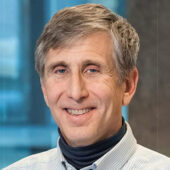
James C. Sturm
Stephen R. Forrest Professor of Electrical and Computer Engineering
Andlinger Center Associated Faculty
Research Description:
Thin-film materials and devices for microelectronics and macroelectronics; silicon-based heterojunctions and three-dimensional integration for VLSI; atomic scale growth of novel materials; materials processing; transistors, FET’s, quantum devices, and optoelectronic devices; rapid thermal chemical vapor deposition, silicon-germanium and silicon-germanium-carbon alloys, silicon-on-insulator, and heterojunction devices.

Sankaran Sundaresan
Norman John Sollenberger Professor in Engineering, Emeritus
Professor of Chemical and Biological Engineering, Emeritus
Research Description:
Carbon capture technology planning through use of large-scale simulations of reacting multiphase flows on large computational platforms; plasma-assisted catalytic reactors for energy-efficient synthesis of chemicals

Research Description:
Cognitive psychology using behavioral, machine learning, and neuroimaging methods
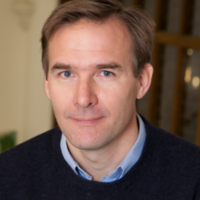
Jeroen Tromp
Professor of Geosciences and Applied and Computational Mathematics
Andlinger Center Associated Faculty
Research Description:
Numerical simulations and inversions of acoustic, elastic and poroelastic waves, with applications ranging from medical imaging and nondestructive testing to exploration geophysics to earthquake seismology.

Robert Vanderbei
Professor Emeritus, Operations Research and Financial Engineering
Research Description:
Statistical modeling to examine evidence for global warming in local weather data
Gabriel A. Vecchi
Knox Taylor Professor of Geosciences
Professor in the High Meadows Environmental Institute
Director, High Meadows Environmental Institute
Andlinger Center Executive Committee
Research Description:
Understanding changes to the oceans and atmosphere, including the monsoons, El Niño, and the impact of climate on tropical cyclones, weather extremes, and global patterns of rainfall and drought. Climate modeling. Climate variability, change and predictability.

Naveen Verma
Ralph H. and Freda I. Augustine Professor of Electrical and Computer Engineering
Andlinger Center Associated Faculty
Research Description:
Environmental sensors and computation platforms (low-power circuits and systems)