
Marcella Lusardi
Assistant Professor of Chemical and Biological Engineering and Princeton Materials Institute
Andlinger Center Associated Faculty
A211 Engineering Quadrangle
609-258-0300
mlusardi@princeton.edu
Research Description:
Our group’s research centers on molecular-scale materials design to address pressing challenges in sustainable chemistry, with a primary focus in catalytic and adsorption applications. Synthetic methods to prepare these materials largely involve tuning coarse-grained parameters (e.g., concentration, temperature), often resulting in structures with poorly controlled distributions of molecular architectures. Since these architectures dictate the physicochemical and optoelectronic properties that govern performance in a given application, controlling them is paramount. To achieve this control, our work takes a molecular-scale approach to materials synthesis. By manipulating molecular precursors and their interactions early in the synthetic process (i.e., prior to nucleation), we can introduce new control parameters that influence the assembly of building units across length scales, and address a key bottleneck – the synthesis-structure component – in the iterative synthesis-structure-function elucidation process that guides rational materials design.
This approach enables us to develop the fundamentally new, multifunctional materials required to solve critical sustainability problems, ranging from CO2 capture and conversion to nanoplastic removal from water systems to green pharmaceutical synthesis. To satisfy the complex design criteria mandated by these diverse application domains, we work with equally diverse classes of materials to achieve the required flexibility in physicochemical and optoelectronic properties, including organic nanomaterials, nanostructured metals/metal oxides, molecular sieves, and quantum dots. Our efforts in synthesis are complemented by a wealth of advanced spectroscopic techniques, in addition to scattering and microscopy methods, and coupled with catalytic and surface studies in diverse reaction environments. In this way, we not only gain insight into the required molecular structures for effective catalysis/photocatalysis/etc., but also outline pathways to engineering them in practice.

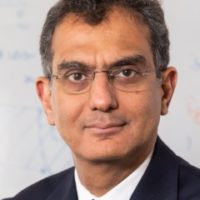
Sharad Malik
George Van Ness Lothrop Professor in Engineering
Professor of Electrical and Computer Engineering
Andlinger Center Associated Faculty
B224 Engineering Quad B-Wing
609-258-4625
sharad@princeton.edu
Research Description:
Design and programming of low-energy computing systems


Jyotirmoy Mandal
Assistant Professor of Civil and Environmental Engineering
Andlinger Center Associated Faculty
E414 Engineering Quadrangle
609-258-4615
jm3136@princeton.edu
Research Description:
My group designs of optical materials across geometric to metamaterial scales for control of thermal radiation, with applications in building and environmental thermal management as a major goal.

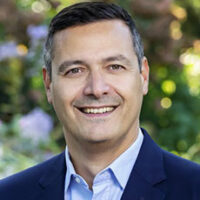
Christos Maravelias
Anderson Family Professor in Energy and the Environment
Professor of Chemical and Biological Engineering and the Andlinger Center for Energy and the Environment
Chair, Department of Chemical and Biological Engineering
Andlinger Center Executive Committee
226 Andlinger Center
609-258-5158
maravelias@princeton.edu
Research Description:
The goal of research in the group of Christos Maravelias is to develop theory, models, and solution algorithms for problems in the general area of Process Systems Engineering (PSE). Current projects include (1) chemical production scheduling, planning, and supply chain optimization; (2) chemical process synthesis; and (3) energy systems modeling, optimization, and analysis, with special emphasis on biomass-to-fuels/chemicals and solar fuel and power technologies.




Luigi Martinelli
Professor of Mechanical and Aerospace Engineering
Andlinger Center Associated Faculty
D302C Engineering Quad
609-258-6652
martinel@princeton.edu
Research Description:
Sustainable aviation through advanced multidisciplinary design optimization of airframes and air traffic management systems; design optimization of ship hulls for maximum efficiency; aerodynamic design optimization of wind turbines, propellers, fans, compressors and turbines; computational fluid dynamics of compressible reactive flows
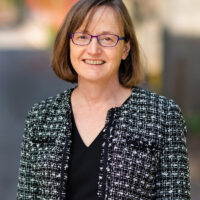
Margaret Martonosi
Hugh Trumbull Adams '35 Professor of Computer Science
Andlinger Center Associated Faculty
204 Computer Science Building
609-258-1912
mrm@princeton.edu
Research Description:
Energy-efficient computer servers, including optimization frameworks for improving green energy usage in multi-data-center internet services and power-performance optimizations for improving energy-proportionality within data centers

Douglas Massey
Henry G. Bryant Professor of Sociology and Public Affairs, Woodrow Wilson School
Director, Office of Population Research
Director, Program in Population Studies
239 Wallace Hall
609-258-4949
dmassey@princeton.edu
Research Description:
Issues of international migration caused by environmental change


William Massey
Edwin S. Wilsey Professor of Operations Research and Financial Engineering
206 Sherrerd Hall
609-258-7384
wmassey@princeton.edu
Research Description:
Application of queueing theory to optimize the use of individual energy storage components. Stochastic networks; dynamic optimization; dynamical systems

Denise Mauzerall
Professor of Civil and Environmental Engineering and Public and International Affairs, Princeton School of Public and International Affairs and CEE
Andlinger Center Associated Faculty
E412 Engineering Quad E-Wing
609-258-2498
mauzeral@princeton.edu
Research Description:
Analysis of air quality and climate impacts of various energy technologies (coal, gas, solar, wind) with the goal of identifying options with maximum co-benefits. Analysis of China’s energy future and options for air quality, health, and climate co-benefits. Effect of nitrogen, ozone, and water on sustainable intensification of crop production. Measurement of methane leakage from older U.S. natural gas infrastructure

Reed M. Maxwell
William and Edna Macaleer Professor of Engineering and Applied Science
Professor of Civil and Environmental Engineering and the High Meadows Environmental Institute
Director of Integrated Groundwater Modeling Center
Andlinger Center Associated Faculty
E415 Engineering Quadrangle
reedmaxwell@princeton.edu
Research Description:
Dr. Reed Maxwell’s research interests center on understanding how much terrestrial freshwater we have on earth and how fast this is being replenished or depleted. This focuses on hard problems in hydrology that include groundwater, evapotranspiration and snow. His research focus on understanding connections within the hydrologic cycle and how they relate to water quantity and quality under anthropogenic stresses. His research group uses a broad range of approaches to study these questions, including integrated hydrologic modeling, field observations and remote sensing products.