New Light: Rising Stars
in Energy and the Environment
Andlinger Center Summer Seminar Series
The New Light summer seminar series features the Andlinger Center’s Distinguished Postdoctoral Fellows and early career researchers. All seminars are in-person only and will be held from 12:00 p.m. to 1:30 p.m. in Maeder 103. Lunch will be served at noon.
July 2026 Line up
July 16: James Trettin and Anita Zhang
James is a fifth-year Ph.D. candidate in the chemical and biological engineering department working with Michele Sarazen and Bruce Koel on non-thermal plasma. Anita is a postdoctoral research associate in the civil and environmental engineering department working with Claire White on alkali-activated calcined clay cements.
-
Mechanistic Insights into Plasma-assisted Catalysis for Sustainable Fuels and Chemicals
 Abstract
Non-thermal plasma (NTP)-assisted catalysis has emerged as a promising method for sustainable, electrified production of valuable chemical/fuel precursors and energy carriers, such as the conversion of methane (CH4) and carbon dioxide (CO2) via dry methane reforming (DMR) into carbon monoxide (CO) and hydrogen (H2) (i.e., syngas). NTP-assisted DMR on supported metal catalysts has been reported to enhance reaction rates and reduce deactivation relative to purely thermal operation. However, complex interactions between the plasma and the solid catalyst under reaction conditions complicate mechanistic interpretation and limit informed catalyst design. This talk will explore plasma-assisted DMR on supported platinum (Pt) nanoparticle catalysts in a coaxial packed-bed dielectric barrier discharge (DBD) reactor to probe these plasma/catalyst interactions. We show that the plasma enhances DMR rates, alters product selectivities, and reduces the apparent activation barriers. In turn, properties of the catalyst (i.e., support identity, Pt nanoparticle size) impact the plasma power and performance. These results advance the mechanistic understanding of plasma-assisted dry methane reforming with implications for informed catalyst design and process optimization in similar plasma-assisted catalytic processes for sustainable fuel and chemical production.Bio
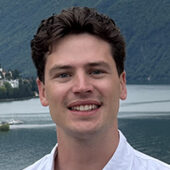
James Trettin is a fifth-year Ph.D. candidate in the chemical and biological engineering department and is advised by Prof. Michele Sarazen and Prof. Bruce Koel. His research aims to elucidate mechanisms of plasma-assisted catalytic C1 conversions through spectroscopic and kinetic investigations. He has collaborated with researchers at the Princeton Plasma Physics Laboratory and the National Laboratory of the Rockies, where he spent five months as a DOE SCGSR fellow.
Augmenting the Reaction Mechanisms of Alkali-activated Calcined Clay Cement Using Alkali Earth Oxide/Hydroxides
 Abstract
Alkali-activated calcined clay is a promising alternative cementitious material, where additional CO2 savings could be realized through lowering the activator concentration compared with standard formulations, but doing so can adversely affect durability-related properties. Here, using a combination of in situ Fourier transform infrared spectroscopy, isothermal conduction calorimetry, X-ray diffraction, and thermogravimetric analysis, we investigate the chemical mechanisms through which a small amount of calcium hydroxide or magnesium oxide partially compensates for a reduced activator concentration in sodium silicate-activated metakaolin. Our work examines how these additives influence early-stage interactions between dissolved cations and silicate species, metakaolin dissolution, and the precipitation of various gel phases, along with their impact on longer-term binder phase assemblage. In addition, the mechanistic insights are linked to observed changes in physical properties. The effects of additive incorporation on pore structure and transport behavior are evaluated using mercury intrusion porosimetry and beam bending permeability measurements. Comparisons between the two cation sources are used to assess differences in their efficiency on a per mole of cation basis and their impacts on the workability of fresh pastes. Overall, the study explores practical routes for optimizing sodium silicate-activated metakaolin formulations at lower activator concentrations through controlling early-age reaction mechanisms.Bio
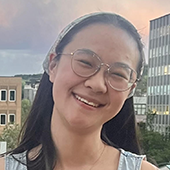
Anita Zhang obtained her bachelor’s degree in civil engineering from Cornell University in December 2020 and her Ph.D. from Princeton University under Dr. Claire White’s supervision in May 2026. Her Ph.D. work focused on optimizing alkali-activated metakaolin formulations for improved durability and lower emissions using alkali-earth cation sources and flash-calcined metakaolin, and she conducted extensive pore structure and permeability characterization of these materials. As a High Meadows Environmental Institute Science, Technology, and Environmental Policy fellow, she also examined the policy-related challenges in cement decarbonization. In her postdoctoral work, she continues to study calcined clay-based cementitious systems by investigating how grinding aids can modify particle dispersion, inter-grinding behavior, and reactivity of calcined clays. In her free time, she enjoys cooking, singing with the Princeton Chapel Choir, running, and exploring nature and nearby towns with her friends.
Previous Talks
July 9: Illya Lyadov and Zhuo Li
lllya is a fourth-year Ph.D. candidate in the chemical and biological engineering department working with Marcella Lusardi on developing zeolite-based sorbents and molecular sieves for gas separations. Zhuo is a postdoctoral researcher at the Andlinger Center working with Kelsey Hatzell on next-generation solid-state batteries.
-
Equilibrium and Dynamic Water Structuring in Zeolites: Impact on Direct Air Capture of CO2
 Abstract
CO2 emissions stemming from the usage of fossil fuels continue to produce adverse effects to human systems and ecosystems. Removing CO2 directly from the air (DAC) is identified as a key strategy to support Net-Zero initiatives, requiring gigaton scale CO2 capture/year by 2050 and a cost of ~100 USD/metric ton of CO2 captured. Realizing this in practice will require significant advancements in adsorbent design. While zeolites show great promise as a candidate material, their performance degradation under humid conditions – which is ubiquitous in DAC environments, even in the driest of climates – presents a major barrier for commercialization, motivating the design of CO2 selective and/or more hydrophobic zeolites. Here, we demonstrate that the framework topology plays a significant role in influencing zeolite hydrophobicity, due to its strong influence on the structure and degree of networking of adsorbed H2O, in comparing two Al-rich zeolites, K-MER (Si/Al = 3.6) and state-of-the-art commercial zeolite sorbent 13X (Na-FAU, Si/Al = 1.2). We report the dry and humid DAC performance of these zeolites under conditions representative of a realistic adsorption process. We show that K-MER demonstrates superior CO2 capacity resilience under cycling conditions with a mild regeneration temperature due to the lack of bulk-like water formation.Bio
lllya Lyadov is a fourth-year Ph.D. student in the Department of Chemical and Biological Engineering studying with Professor Marcella Lusardi. Illya received his bachelor’s degree in chemical engineering from the University of Minnesota. In the Lusardi lab, he is developing next-generation zeolite-based sorbents for energy-efficient carbon capture under realistic conditions. A native of the Twin Cities, Illya enjoys playing tennis and chess, learning Jiu Jitsu, and running in his free time.
Seeing How Lithium Metal Grows: X-ray Insights into Hidden Interfaces in Solid-State Batteries
 Abstract
Solid-state batteries are promising for safer and higher-energy energy storage, but many of the most important processes occur at buried interfaces that are difficult to observe directly. In anode-free solid-state batteries, lithium metal must plate uniformly onto a current collector during charging. When this process is poorly controlled, the battery can lose reversibility or fail. In this talk, I will discuss how high-energy synchrotron X-rays can be used to study the hidden structure of plated lithium metal inside solid-state batteries. By analyzing spotty two-dimensional diffraction patterns, we can determine the crystallographic texture of lithium — that is, whether lithium metal grows randomly or with a preferred orientation. We find that under mild plating conditions, lithium develops a clear ⟨110⟩ fiber texture aligned with the growth direction. However, higher current density and elevated temperature disrupt this preferred orientation and lead to more randomized lithium growth. These results show that battery performance is not only controlled by electrochemistry, but also by how metal crystals grow at the interface.Bio
Zhuo Li is a postdoctoral researcher at the Andlinger Center for Energy and the Environment. He earned his Ph.D. in chemistry from Stony Brook University, where he investigated degradation mechanisms and transport limitations in lithium-ion battery electrodes and cells. His research uses electrochemical testing, synchrotron X-ray diffraction, and computational analysis to connect structural evolution with battery performance and failure. Li works with Professor Kelsey Hatzell on next-generation solid-state batteries, with particular emphasis on metal anodes and operando X-ray characterization. His recent work, published in ACS Energy Letters, developed a synchrotron X-ray diffraction method to measure the crystallographic texture of plated lithium metal in anode-free solid-state batteries, showing how operating conditions such as current density and temperature govern lithium growth. Li’s research seeks to provide materials-level insight for designing safer, more reversible, and higher-energy battery systems.
June 25: Francisco Sáenz and Debbie Zhuang
Francisco is a 2023-2024 Maeder Fellow and a graduate student working with Egemen Kolemen on liquid metals and their applications to nuclear fusion. Debbie is an Andlinger Center Distinguished Postdoctoral Fellow working with Dimitrios Fraggedakis and Michael Webb on probing the dynamics of supercooled water and carbon dioxide.
-
Engineering Magnetic Fields with Scalar-Programmable Manifolds
Abstract
Theory and optimization have produced many candidate stellarator configurations, yet experimental validation remains limited and no clear consensus exists on the optimal design. This motivates coil concepts that support compact, flexible, lower-cost devices that explore multiple magnetic configurations and accelerate feedback between theory, optimization, and experiment.A surface-functional framework is presented that approaches stellarator coil design using a programmable electromagnetic surface wrapping the plasma boundary. Its central object is a scalar function on this surface that determines how currents or fields are generated. While conventional coils are encompassed as one realization, the approach enables flexible interpretations due to the mathematical nature of the scalar, which. As electrical conductivity, it controls current distribution over the surface. This conductivity may be continuous or binary, realized through thickness variation, porosity, or patterned materials that guide prescribed paths. As electric potential, it defines voltage distributions driving surface currents; localized structures correspond to sources and sinks, batteries, capacitors, or electric dipoles. As magnetic permeability, it controls induced magnetization and offers passive shaping. These are realizations of the same surface-functional principle.
This perspective expands the stellarator design space through programmable surfaces. By exploiting non-unique inverse magnetostatic solutions, surface functionals can reproduce target fields while incorporating engineering constraints and reconfigurability.

Bio
Francisco Sáenz is a Ph.D. candidate in Mechanical and Aerospace Engineering at Princeton University and a graduate researcher at the Princeton Plasma Physics Laboratory (PPPL), where he works under the supervision of Professor Egemen Kolemen. His research focuses on advanced magnetic confinement concepts for nuclear fusion, including innovative stellarator design methods, liquid-metal plasma-facing components, and magnetohydrodynamics (MHD). His work combines theory, numerical modeling, optimization, and experiments to develop technologies that improve the performance and economic viability of future fusion power plants. He has developed computational tools for simulating electrically conductive fluid flows and electromagnetic systems under fusion-relevant conditions, while also contributing to the design and experimental validation of novel fusion concepts. His research has been published in journals including Nuclear Fusion and Physics of Plasmas and has contributed to patented technologies for advanced magnetic confinement devices.
Shear Dislocations in Supercooled Water
Abstract
Accurately modeling cloud and ice formation requires a deep understanding of processes that occur across multiple length scales, from atmospheric aerosols to molecular-scale water dynamics. Water droplets and ice-forming particles in the atmosphere play an important role in cloud formation, which affects how much sunlight is reflected or trapped by the Earth. However, the microscopic mechanisms that control how supercooled water relaxes remain poorly understood. In this work, we use molecular dynamics simulations to study how supercooled water rearranges at the molecular scale. By removing thermal fluctuations from these states, we identify localized rearrangements and measure the strain fields they generate in the surrounding liquid. We find that these rearrangements resemble dislocations in solids—localized “defects” appear to drive relaxation while producing long-ranged elastic-like responses. These results suggest that concepts from solid mechanics can help connect molecular-scale water dynamics to larger-scale environmental processes such as cloud and ice formation. Bio
Bio
Debbie Zhuang completed her doctoral studies at MIT in chemical engineering under Martin Z. Bazant, focusing on degradation of lithium-ion batteries using mathematical modeling and theoretical approaches. Her work elucidated the importance of statistical effects in lithium-ion batteries, and helped bridge the gap between microscopic and macroscopic scales to improve the performance and lifetime of lithium-ion batteries. Following this, she worked in R&D at Samsung Semiconductor, aiding materials development from ab-initio to continuum methods for solid state batteries and semiconductor materials. Currently, as an Andlinger Distinguished Postdoctoral Fellow, she studies supercooled water and carbon dioxide for environmental applications using theoretical and computational approaches under the mentorship of Dimitrios Fraggedakis and Mike A. Webb. Her work will be used to understand and mitigate the environmental impacts of excess carbon dioxide in climate change.
June 18: Jinshi Chen and Hansen Tjo
Jinshi is an Andlinger Center Distinguished Postdoctoral Fellow working with Luc Deike and Michael Mueller on exploring wind-wave interactions for offshore wind. Hansen is a fifth-year graduate student working with Jonathan Conway on engineering a bacterium that converts cellulose into fuels and valuable chemical products.
-
 A Peek into Misaligned Oceanic Wind–Wave Interactions with High-Fidelity Models
Abstract
Surface gravity waves traveling at oblique angles to the wind are common in the ocean, particularly during storms. Understanding the physical mechanisms that govern misaligned wind-wave interactions is crucial for improving wave forecasting and for the effective control of offshore wind turbine platforms. In this talk, two-phase (air and water) Direct Numerical Simulations (DNS) with adaptive mesh refinement are employed to directly investigate wind–wave interactions over a range of wind (e.g., wind speed and direction) and wave (e.g., steepness and wave phase speed) conditions without relying on simplified interfacial assumptions. The form (pressure) drag is asymmetric around 𝜃𝑤=𝜋/2 (wind perpendicular to wave), indicating changes in the wave-coherent surface pressure pattern and associated forcing mechanisms when streamwise wind is with or against the wave. The wind energy input via pressure, a primary contributor to wave growth or decay, relates to the relative aligned component of wind velocity with respect to wave phase velocity. Surface wind shear stress that drives ocean surface currents deviates from the far-field wind direction. The effective roughness experienced by the mean airflow is related to the effective wave steepness in the wind direction. Preliminary parametrizations based on the simulation results will also be discussed.Bio
Jinshi Chen is a Distinguished Postdoctoral Fellow at the Andlinger Center for Energy and the Environment. At the Andlinger Center, Jinshi collaborates with Prof. Luc Deike and Prof. Michael Mueller to study the interaction between misaligned ocean wind and waves, with the goal of improving wave forecasting models and optimizing the efficiency of offshore wind turbines. Prior to joining Princeton, Jinshi graduated from Cornell University with a major in physics, and earned his Ph.D. in Physical Oceanography from Massachusetts Institute of Technology – Woods Hole Oceanographic Institution Joint Program, where he studied nearshore breaking-wave dynamics using numerical simulations, field observations, and theoretical analysis.
 Sugar Transport and Engineered Metabolism in Industrial Thermophiles
Abstract
Plant biomass, including agricultural residues such as corn fiber and wheat straw, provides abundant carbon for generating renewable fuels, commodity chemicals, and industrial solvents. Because these products are derived from plant waste, they can displace fossil fuels without competing with food crops and decarbonize hard-to-electrify sectors such as aviation and maritime shipping. However, before microbes can ferment extracellular carbohydrates into alcohols, those sugars must first enter the cell through selective membrane transporters. While transport systems are well characterized for simple monosaccharides like glucose, much less is understood about how microbes recognize and import large, diverse oligosaccharides released from plant material – a vital step in biomass processing. My research investigates sugar transport in Anaerocellum bescii, a bacterium that scavenges plant debris in geothermal hot springs. In this industrially-important thermophile, sugar assimilation depends on a coordinated set of ATP-dependent transporters. Using quantitative biophysical measurements and genetics, I demonstrated that these transporters possess distinct yet complementary specificities that collectively enable broad utilization of plant biomass substrates such as cellulose and xylan. These mechanistic insights directly enable strain co-culturing on distinct carbohydrate substrates, establishing a new framework for engineering microbial transformation of plant biomass to chemicals.Bio
Hansen Tjo is a 5th year Ph.D candidate in chemical and biological engineering advised by Professor Jonathan Conway. Using approaches from biochemistry, genetics, and synthetic biology, his research focuses on understanding and engineering the physiology of non-model microbes important for plant biomass-to-fuel processing.