Annual Report for the Academic Year 2025–2026

Transforming Industry
Tackling carbon emissions from hard-to-abate industries — including chemicals, fuels, and building materials — the Andlinger Center is transforming industrial processes to leverage clean energy and sustainable feedstocks.
2025 ANNUAL MEETING
Conference spotlights the obvious benefits and hidden challenges of a circular economy
The opportunities and complexities facing a circular economy were at the heart of the 2025 Annual Meeting of the Andlinger Center. The conference, “Strategies for Circularity: Prospects and Challenges,” brought together top experts from academia, industry, and non-profit sectors to discuss building greater circularity into our consumer systems.
Circularity refers to the concept of reusing or regenerating products and resources throughout the lifecycle of the products to reduce waste and the need for virgin materials. While there was wide agreement that a circular economy rather than a linear one is good for business and the environment, participants also agreed it will be extremely complicated to shift the current global economy away from consumption-based growth. Conference participants said that meaningful progress toward circularity will require consumers to change their behaviors and corporations to change their business models and value chains.
The conference’s keynote speakers, Andre Argenton from Dow and Shannon Bouton from Delterra, sought to illuminate the systemic challenges to a circular economy. The fractured recycling system in the U.S. makes it difficult to find enough recyclable plastic to create a reliable feedstock for recycled plastics. Less than 9% of plastic waste is recycled in the United States compared to more than 40% in Europe. With a steady stream of recyclables, companies could produce new materials from recycled materials, but they will only do so if it is profitable.
“The biggest challenge is a clear, consistent demand for recycled plastics,” said Adam Gross, senior decarbonization specialist at the Andlinger Center. “It’s very hard to compete with virgin materials.” Governments can play an important role in bringing down the cost of using recycled material by adopting more stringent recycling requirements and mandating the use of recycled materials.
Beyond plastics, a circular economy also includes ways to extract and reuse carbon, metals, and minerals, said Michele Sarazen, associate professor of chemical and biological engineering at Princeton and co-organizer of the conference. For example, “carbon can be removed from urban waste, such as food waste and garbage, and converted to jet fuels, polymers and other products,” said Z. Jason Ren, professor of civil and environmental engineering and the Andlinger Center. Other chemicals can also be removed from wastewater to clean the water and recover valuable substances. A founder of Princeton Critical Minerals, Ren and his students have developed a product called “Lilypad” that can extract lithium from brine such as seawater, saltwater lakes, groundwater or industrial wastewater. Lithium is in increasingly high demand and is crucial for the transition to a clean energy economy, vital for lithium-ion batteries in electric vehicles and renewable energy storage.
“Circularity doesn’t happen in isolation,” said Jennifer Woolfsmith, vice president of sustainability at the petrochemical company NOVA Chemicals. “It requires deliberate effort to de-risk investments and build systems that work.”
Captions: Banner: Illustration by Bumper DeJesus
FUND FOR ENERGY RESEARCH WITH CORPORATE PARTNERS
Decarbonizing chemicals production
Production of chemicals — especially building-block chemicals like the ammonia, methanol, and olefins heavily used in industry, pharmaceuticals, and agriculture — accounts for about five percent of global greenhouse gas emissions, according to the nonprofit Rocky Mountain Institute (RMI). With demand expected to double by 2050, chemical producers have expressed interest in decarbonizing the industry.
Chris Greig, Jesse Jenkins, and Eric Larson are working to inform decision-makers on how to accelerate the decarbonization of the chemicals industry with research supported by the Andlinger Center’s Fund for Energy Research with Corporate Partners. Using a computational model to help generate insights into behaviors of energy and industrial-systems, the researchers plan to explore pathways for achieving net-zero emissions in basic chemical production in the U.S. and China — the world’s two largest producing countries. The modeling will consider how producers might compete for the resources needed to achieve decarbonization and the impact on decarbonization timelines, investments, and infrastructure. E-ffiliates member Deloitte will collaborate on the project as the corporate partner.
2026 E-FFILIATES RETREAT
Experts discuss how to build a more resilient supply of rare earths
Experts from academia, industry, and the public and private sectors joined the Andlinger Center’s thirteenth annual Princeton E-ffiliates Partnership Retreat to discuss potential pathways and bottlenecks for harnessing and scaling the production of rare earth elements in the U.S.
Rare earth elements are a set of 17 critical minerals, including yttrium, neodymium, and cerium, that are critical for use in high-tech electronics, defense systems, and clean energy technologies. Currently, the U.S. imports more than 75 percent of its rare earth elements, leaving industry beholden to price fluctuations, supply restrictions, and geopolitical tensions. Global demand for rare earths is expected to triple by 2035.
Discussions at the E-ffiliates retreat centered on the opportunities to enhance traditional supplies of rare earths, how to harness unconventional sources for extracting these elements, and the potential for electro-processing techniques to be the next frontier of recovery and processing.
Less than two percent of the rare earth elements mined worldwide are extracted in the U.S. and much of the processing after extraction happens abroad. Speakers on the first panel explored how to overcome obstacles to building talent, increasing efficiency, and creating resilience. They agreed that rare earth resilience for the U.S. relies on access to every part of the supply chain, even if a fully domestic mine-to-magnet operation isn’t achieved. “You have to know how to do everything, but how much you actually do is negotiable,” said Anthony Ku, a non-resident fellow at the Andlinger Center.
Another panel touched on critical minerals that are abundant in a number of unconventional and recycled sources, including in wastewater and along the ocean floor. More than 30 million tons of critical minerals are present in industrial wastewaters, according to research from the lab of Ryan Kingsbury, assistant professor of civil and environmental engineering and the Andlinger Center. “Some of those critical minerals are present to a degree that they actually exceed the projected demand for those minerals from clean energy technologies,” said Kingsbury.
Once rare earth elements are extracted, the actual manufacturing and refining processes traditionally rely heavily on fossil fuels. The final panel of the day centered around whether the fuels generating those processes could be replaced with clean electricity.
“I think these opportunities look incredible and they will be a part of the future,” said Chris Greig, who co-chaired the retreat.
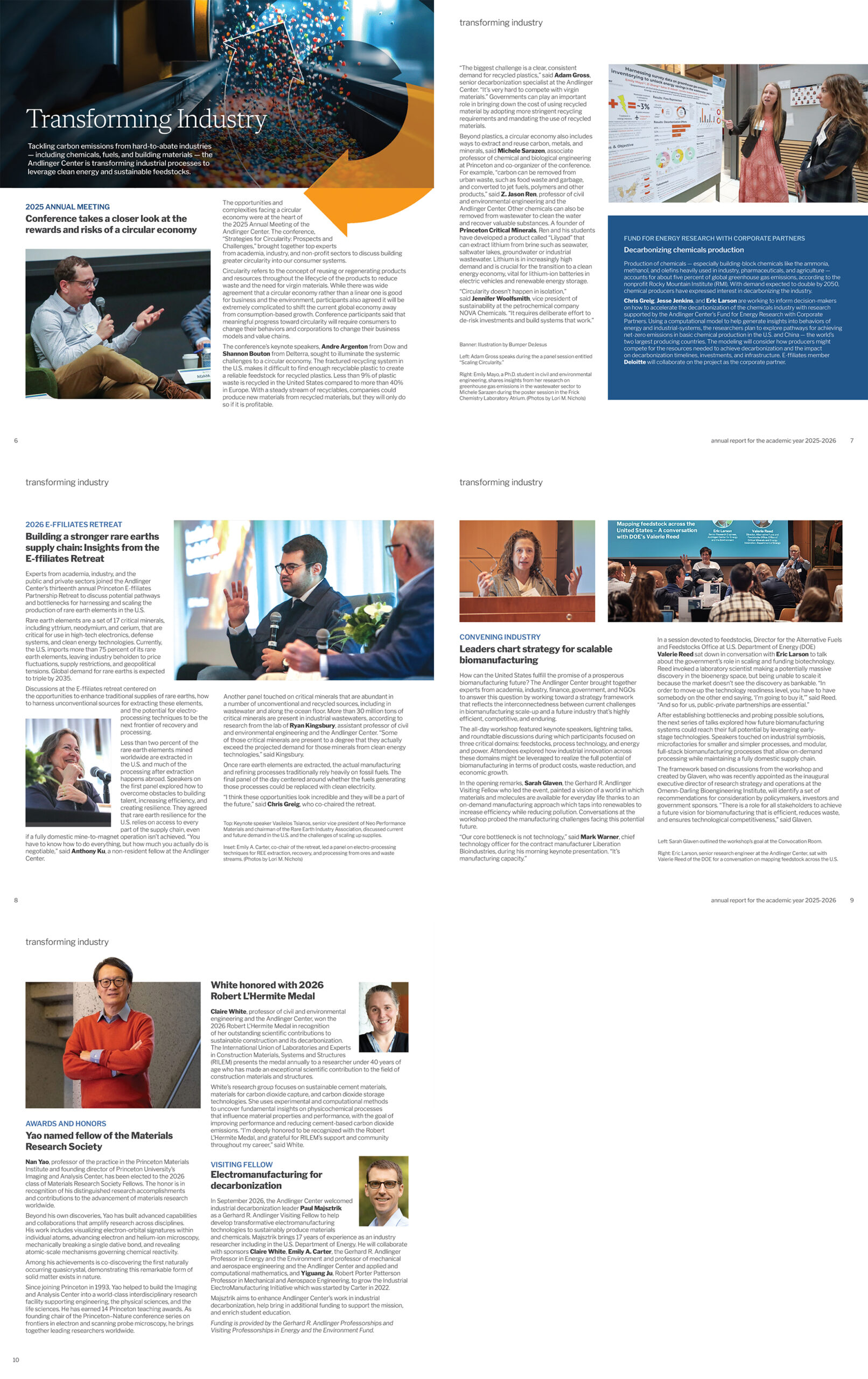
Captions:Top: Keynote speaker Vasileios Tsianos, senior vice president of Neo Performance Materials and chairman of the Rare Earth Industry Association, discussed current and future demand in the U.S. and the challenges of scaling up supplies.
Inset: Emily A. Carter, co-chair of the retreat, led a panel on electro-processing techniques for REE extraction, recovery, and processing from ores and waste streams. (Photos by Lori M. Nichols)
CONVENING INDUSTRY
Industry, academic, government experts convene to work toward biomanufacturing strategy
How can the United States fulfill the promise of a prosperous biomanufacturing future? The Andlinger Center brought together experts from academia, industry, finance, government, and NGOs to answer this question by working toward a strategy framework that reflects the interconnectedness between current challenges in biomanufacturing scale-up and a future industry that’s highly efficient, competitive, and enduring.
The all-day workshop featured keynote speakers, lightning talks, and roundtable discussions during which participants focused on three critical domains: feedstocks, process technology, and energy and power. Attendees explored how industrial innovation across these domains might be leveraged to realize the full potential of biomanufacturing in terms of product costs, waste reduction, and economic growth.
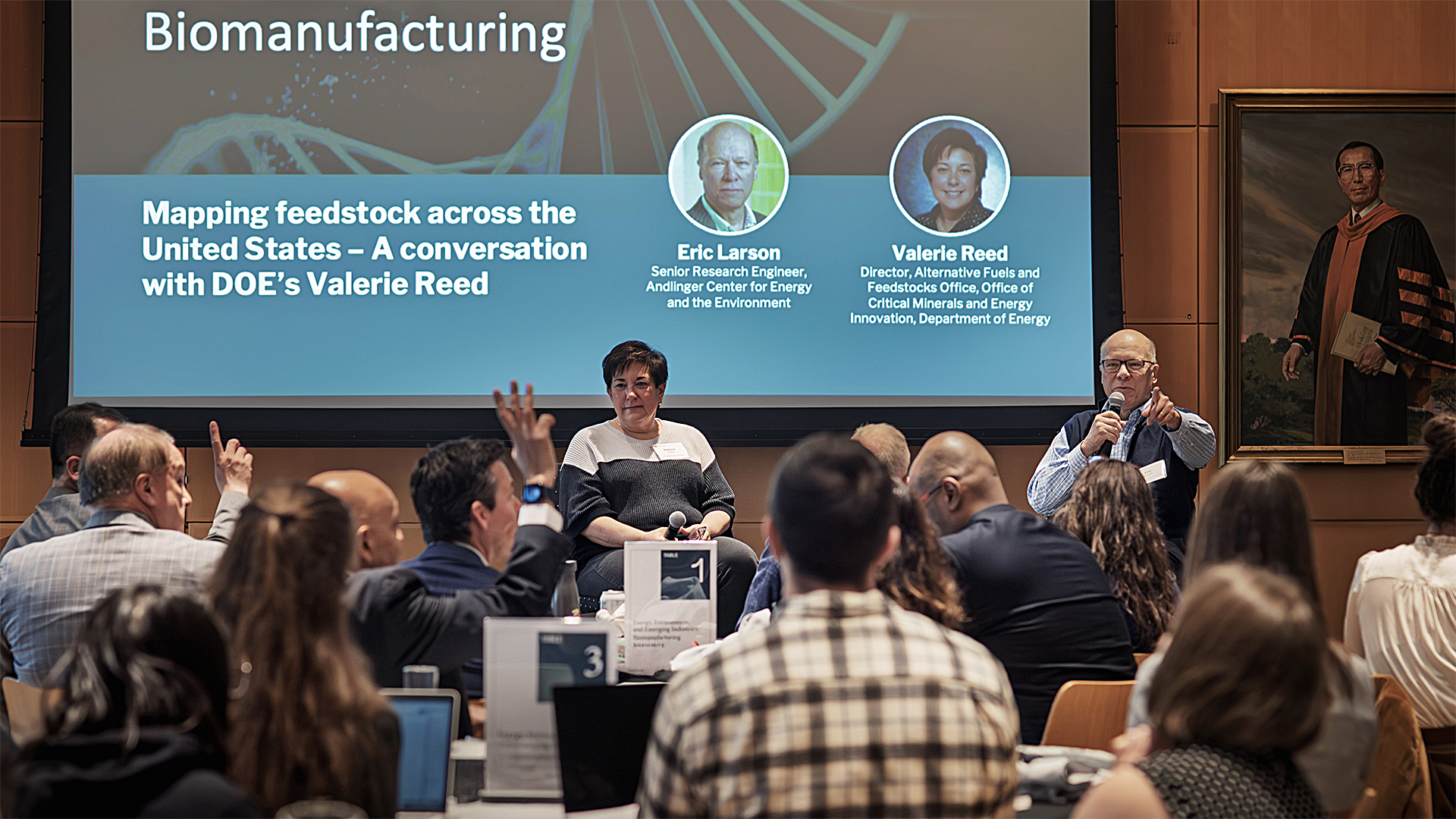
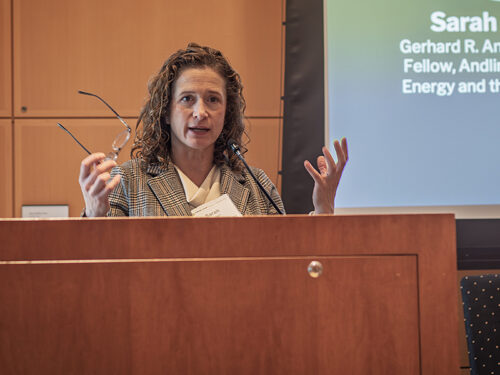 In the opening remarks, Sarah Glaven, the Gerhard R. Andlinger Visiting Fellow who led the event, painted a vision of a world in which materials and molecules are available for everyday life thanks to an on-demand manufacturing approach which taps into renewables to increase efficiency while reducing pollution. Conversations at the workshop probed the manufacturing challenges facing this potential future.
“Our core bottleneck is not technology,” said Mark Warner, chief technology officer for the contract manufacturer Liberation Bioindustries, during his morning keynote presentation. “It’s manufacturing capacity.”
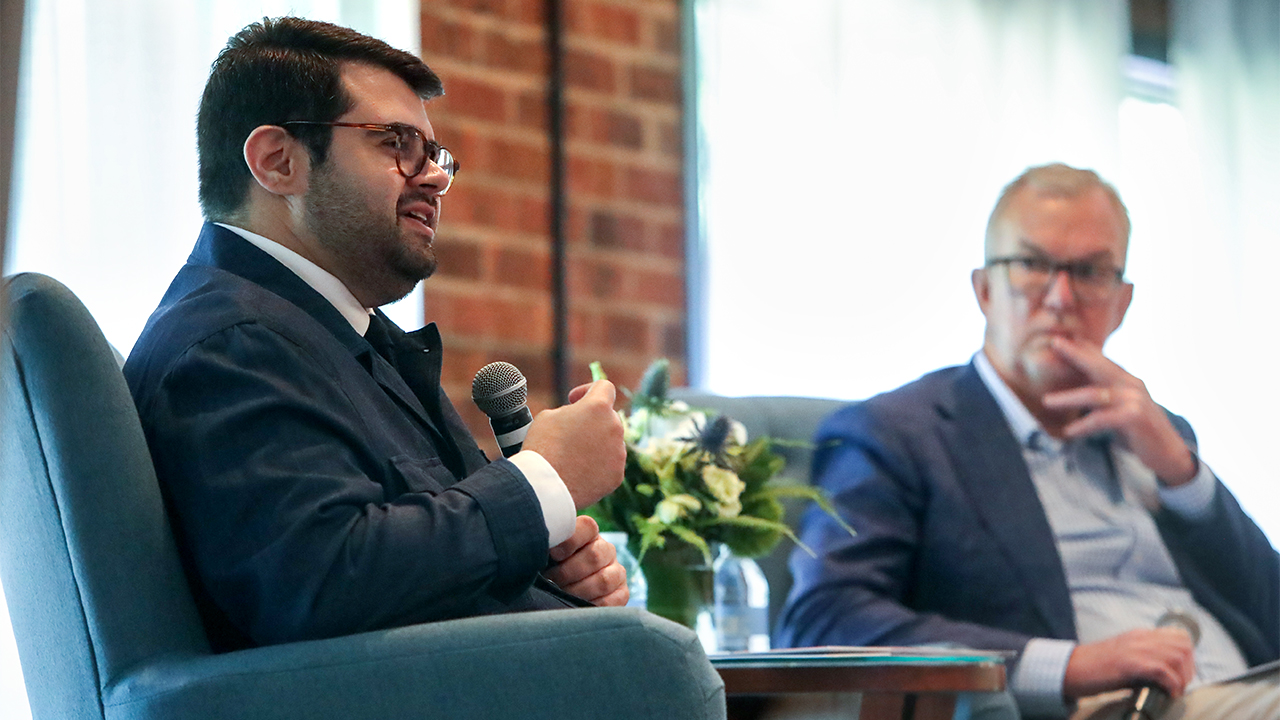
In a session devoted to feedstocks, Director for the Alternative Fuels and Feedstocks Office at U.S. Department of Energy (DOE) Valerie Reed sat down in conversation with Eric Larson, senior research engineer at the Andlinger Center, to talk about the government’s role in scaling and funding biotechnology. Reed invoked a laboratory scientist making a potentially massive discovery in the bioenergy space, but being unable to scale it because the market doesn’t see the discovery as bankable. “In order to move up the technology readiness level, you have to have somebody on the other end saying, ‘I’m going to buy it,’” said Reed. “And so for us, public-private partnerships are essential.”
After establishing bottlenecks and probing possible solutions, the next series of talks explored how future biomanufacturing systems could reach their full potential by leveraging early-stage technologies. Speakers touched on industrial symbiosis, microfactories for smaller and simpler processes, and modular, full-stack biomanufacturing processes that allow on-demand processing while maintaining a fully domestic supply chain.
The framework based on discussions from the workshop and created by Glaven, who was recently appointed as the inaugural executive director of research strategy and operations at the Omenn-Darling Bioengineering Institute, will identify a set of recommendations for consideration by policymakers, investors and government sponsors. “There is a role for all stakeholders to achieve a future vision for biomanufacturing that is efficient, reduces waste, and ensures technological competitiveness,” said Glaven.
Captions: Top: Eric Larson, senior research engineer at the Andlinger Center, sat with Valerie Reed of the DOE for a conversation on mapping feedstock across the U.S.
Inset: Sarah Glaven outlined the workshop’s goal at the Convocation Room.

AWARDS AND HONORS
Nan Yao named fellow of the Materials Research Society
Nan Yao, professor of the practice in the Princeton Materials Institute and founding director of Princeton University’s Imaging and Analysis Center, has been elected to the 2026 class of Materials Research Society Fellows. The honor is in recognition of his distinguished research accomplishments and contributions to the advancement of materials research world-wide.
Beyond his own discoveries, Yao has built advanced capabilities and collaborations that amplify research across disciplines. His work includes visualizing electron-orbital signatures within individual atoms, advancing electron and helium-ion microscopy, mechanically breaking a single dative bond, and revealing atomic-scale mechanisms governing chemical reactivity.
Among his achievements is co-discovering the first naturally occurring quasicrystal, demonstrating this remarkable form of solid matter exists in nature.
Since joining Princeton in 1993, Yao helped to build the Imaging and Analysis Center into a world-class interdisciplinary research facility supporting engineering, the physical sciences, and the life sciences. He has earned 14 Princeton teaching awards. As founding chair of the Princeton–Nature conference series on frontiers in electron and scanning probe microscopy, he brings together leading researchers worldwide.
Claire White wins Robert L’Hermite Medal
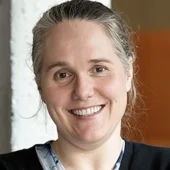 Claire White, professor of civil and environmental engineering and the Andlinger Center, won the 2026 Robert L’Hermite Medal in recognition of her outstanding scientific contributions to sustainable construction and its decarbonization. The International Union of Laboratories and Experts in Construction Materials, Systems and Structures (RILEM) presents the medal annually to a researcher under 40 years of age who has made an exceptional scientific contribution to the field of construction materials and structures.
White’s research group focuses on sustainable cement materials, materials for carbon dioxide capture, and carbon dioxide storage technologies. She uses experimental and computational methods to uncover fundamental insights on physicochemical processes that influence material properties and performance, with the goal of improving performance and reducing cement-based carbon dioxide emissions. “I’m deeply honored to be recognized with the Robert L’Hermite Medal, and grateful for RILEM’s support and community throughout my career,” said White.
Captions: Nan Yao at the Andlinger Center (Photo by Denise J. Applewhite, Office of Communications)
VISITING FELLOW
Electromanufacturing for decarbonization
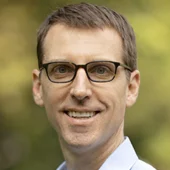 In September 2026, the Andlinger Center welcomed industrial decarbonization leader Paul Majsztrik as a Gerhard R. Andlinger Visiting Fellow to help develop transformative electromanufacturing technologies to sustainably produce materials and chemicals. Majsztrik brings 17 years of experience as an industry researcher including in the U.S. Department of Energy. He will collaborate with sponsors Claire White, Emily A. Carter, the Gerhard R. Andlinger Professor in Energy and the Environment and professor of mechanical and aerospace engineering and the Andlinger Center and applied and computational mathematics, and Yiguang Ju, Robert Porter Patterson Professor in Mechanical and Aerospace Engineering, to grow the Industrial ElectroManufacturing Initiative which was started by Carter in 2022.
“I am passionate about industrial decarbonization and intend to use my skills and experience to enhance the Andlinger Center’s work in this space, help bring in additional funding to support the mission, and enrich student education,” said Majsztrik.
Funding is provided by the Gerhard R. Andlinger Professorships and Visiting Professorships in Energy and the Environment Fund.