Annual Report for the Academic Year 2025–2026
Net-Zero Initiative
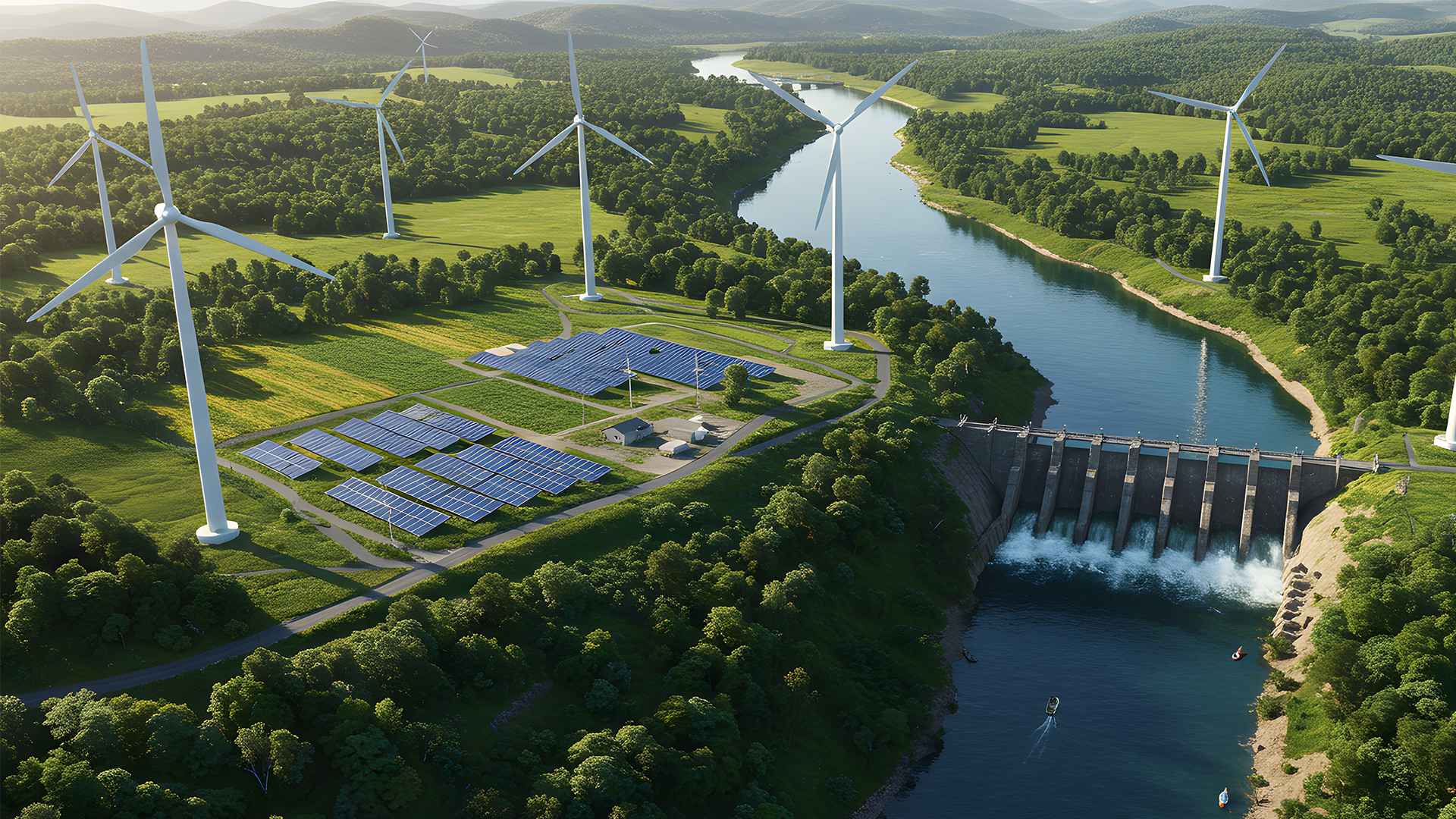
The Net-Zero Initiative led by Andlinger Center for Energy and the Environment advances research and innovation to accelerate the transition to a net-zero emissions energy system, with a focus on clean electricity, industrial decarbonization, and sustainable energy technologies.
RESEARCH IN ACTION
Net-Zero Initiative: Expanding Princeton’s global impact
In 2020, a group of Princeton-led researchers released the Net-Zero America (NZA) report to significant response. The report — which was led by Eric Larson, Chris Greig, and Jesse Jenkins, associate professor of mechanical and aerospace engineering and the Andlinger Center —laid out five technological pathways for the United States to shift its economy with existing technologies in order to reach net zero carbon emissions by 2050. The leaders gave over 300 briefings on the report’s findings to government, private industry, non-governmental advocacy organizations, and other stakeholders.
The impact on domestic industry and policy decision-making inspired NZA leaders to go global with the work. Wei Peng, assistant professor of public and international affairs and the Andlinger Center, joined the leadership group, and operating under the name Net-Zero Initiative — stylized as NZx — the team is partnering with leading research institutions around the world to model pathways to net zero in a variety of countries.
The goal is to work with countries where the researchers believe they can make the biggest difference. “We are committed to working with the big future emitters,” says Greig.
Since launching Net-Zero Australia — the first of the international collaborations — the team has partnered on projects in China, India, Brazil, South Korea, and Poland. More projects are being explored in Pakistan, Mexico, Indonesia, Southern Africa, and the Middle East and North Africa.
Greig, Theodora D. ’78 & William H. Walton III ’74 Senior Research Scientist in the Andlinger Center for Energy and the Environment, is spearheading Princeton’s involvement in the Net-Zero India that is led by the Indian Institute of Technology Delhi and the Prayas Energy Group.
India faces unique challenges. Despite being the third biggest greenhouse gas emitting country in the world, India still doesn’t break the top 100 in terms of emissions per capita. With extremely rapid development projected in the coming decades, the progression of demand in the country is on an unpredictable path.
Princeton’s involvement in the Net-Zero Brazil study is led by Larson, senior research engineer in the Andlinger Center. Collaborators in Brazil include the State University of Campinas and the System for Estimating Greenhouse Gas Emissions, a non-profit group. The team also includes collaborators from the University of Lisbon, Oxford University, and the University of Minnesota who bring expertise on land-use modeling, which is a key consideration for Brazil.
Larson is also heading Princeton’s involvement with the Net-Zero China project led by Tsinghua University. China is projected to have the world’s largest economy by 2050, making the road to the country’s net zero by 2060 pledge demanding. Yet, China is a world leader in renewable energy capacity and growth. The nation already produces more than 35% of its energy renewably and builds twice as much solar and wind capacity annually than the rest of the world combined.
The Net-Zero China team will consider challenges such as the impact of transitioning away from fossil fuels on the coal sector workforce and the leadership role China could play in global decarbonization.
INDUSTRY ENGAGEMENT
Net-Zero South Korea study to accelerate Korea’s energy transition
With support from the Andlinger Center’s Fund for Energy Research with Corporate Partners, researchers at Princeton and the Korea Advanced Institute of Science and Technology (KAIST) have launched the Net-Zero South Korea project. The collaboration aims to accelerate the Republic of Korea’s energy and industrial decarbonization in the near term and strengthen policy decision support over the longer term.
The Net-Zero South Korea project, which is supported by the Andlinger Center and E-ffiliates member Google, will expand the pioneering energy-system transition modeling frameworks introduced in Princeton’s Net-Zero America study. Energy-system models are vital tools for understanding energy transitions and helping to guide national decarbonization strategies.
Along with deep knowledge of the Korean context, KAIST researchers will contribute expertise in global integrated assessment modeling, which will be coupled with Princeton’s subnational modeling approach. Wei Peng is leading the Princeton side of the Net-Zero South Korea effort. Her research uses computational models to quantify social, political, and environmental tradeoffs around climate policy.
“We are delighted to be working with world-class integrated assessment modelers at KAIST,” said Peng. “Integrating our two modeling approaches will build new capabilities relevant for application in many countries, like Korea, where global supply chains and trade are so important to the national economy.”