Annual Report for the Academic Year 2025–2026
Climate Resilience
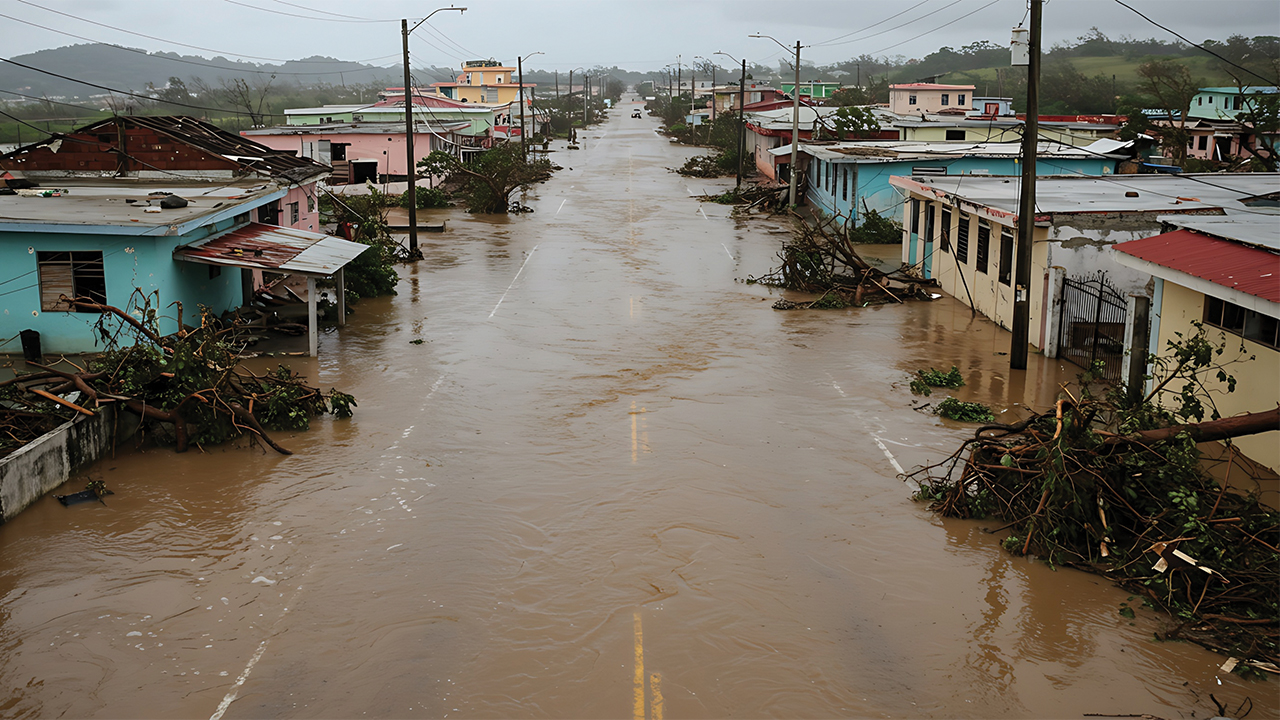
As the impacts of climate change intensify, researchers at the Andlinger Center are developing solutions that mitigate climate risks to human health, infrastructure, and energy and food systems.
INDUSTRY ENGAGEMENT
Understanding power outages for future resilience
Power interruptions are a routine feature of life in the U.S., with an estimated annual economic burden of approximately $79 billion in the U.S. alone. But the costs are not only economic. For households and critical facilities such as hospitals, outages can trigger cascading risks as patients are moved, equipment is restarted, and backup generation is strained.
Ning Lin, professor of civil and environmental engineering, is working with E-ffiliates member Siemens to model and predict power outages caused by extreme weather, which is the dominant cause of large-scale outages in the U.S. Her goal is to enable better preparations.
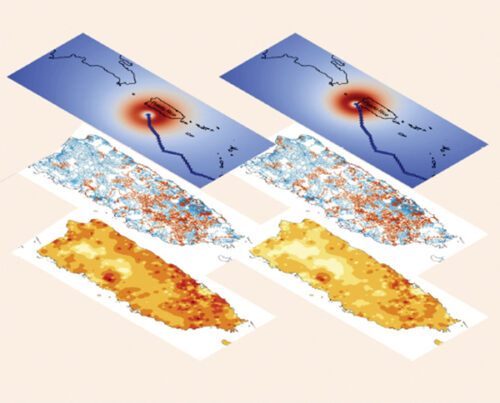 In a recent paper, Lin’s team developed a model for hurricane-induced power outages in the U.S. East and Gulf coasts. Prior approaches to modeling outages provided either high-resolution forecasts for a small number of utilities or studied broad geographical regions without enough spatial resolution for local planning.
The team assembled high-resolution, sub-kilometer-scale data from tropical-cyclone-driven outages, spanning 12 years of storms that had made landfall on the eastern and Gulf coasts. Using this data, they developed a predictive model that estimates outages at sub-kilometer resolution while consistently reproducing larger-scale observations at the county level.
In analyzing these outages, Lin found a consistent relationship: neighborhoods with higher social vulnerability face higher outage rates when storms occur. The infrastructure analysis showed that this was because the least vulnerable communities have a higher proportion of power lines running underground compared to the vulnerable communities, regardless of whether the communities are rural or urban.
Lin’s team will continue to undertake new work to model hurricane hazards such as wind, surge, and rainfall under various climate scenarios. This will eventually be coupled with their high-resolution outage model to enable the team to predict future outage risk.
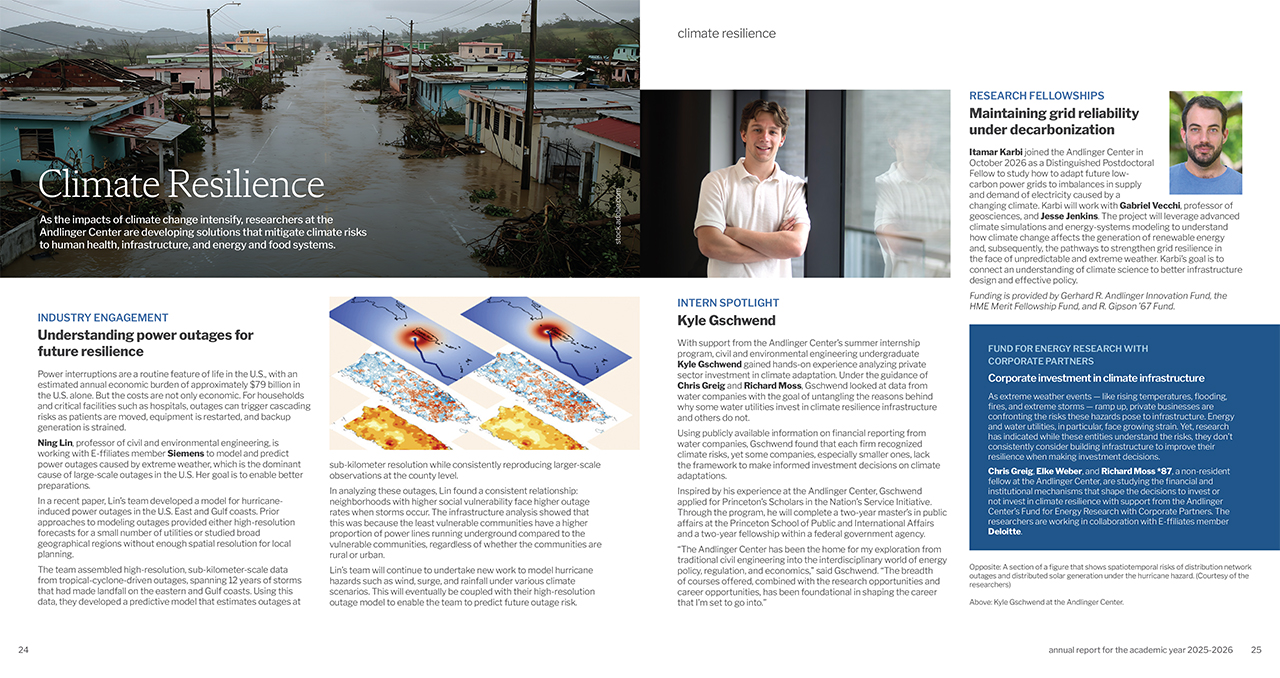
Captions: Banner: stock.adobe.com
Inset: A section of a figure that shows spatiotemporal risks of distribution network outages and distributed solar generation under the hurricane hazard. (Courtesy of the researchers)
INTERN SPOTLIGHT
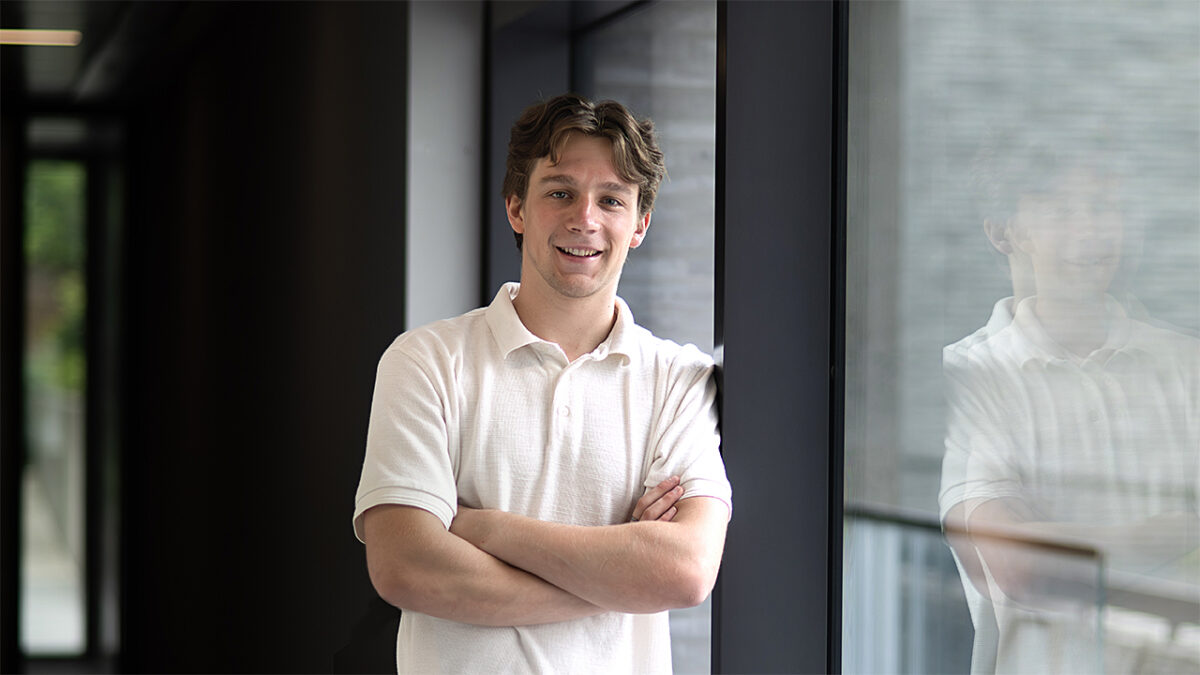
Kyle Gschwend
With support from the Andlinger Center’s summer internship program, civil and environmental engineering undergraduate Kyle Gschwend gained hands-on experience analyzing private sector investment in climate adaptation. Under the guidance of Chris Greig and Richard Moss, Gschwend looked at data from water companies with the goal of untangling the reasons behind why some water utilities invest in climate resilience infrastructure and others do not.
Using publicly available information on financial reporting from water companies, Gschwend found that each firm recognized climate risks, yet some companies, especially smaller ones, lack the framework to make informed investment decisions on climate adaptations.
Inspired by his experience at the Andlinger Center, Gschwend applied for Princeton’s Scholars in the Nation’s Service Initiative. Through the program, he will complete a two-year master’s in public affairs at the Princeton School of Public and International Affairs and a two-year fellowship within a federal government agency.
“The Andlinger Center has been the home for my exploration from traditional civil engineering into the interdisciplinary world of energy policy, regulation, and economics,” said Gschwend. “The breadth of courses offered, combined with the research opportunities and career opportunities, has been foundational in shaping the career that I’m set to go into.”
Captions: Kyle Gschwend at the Andlinger Center. (Photo by Bumper DeJesus)
RESEARCH FELLOWSHIPS
Maintaining grid reliability under decarbonization
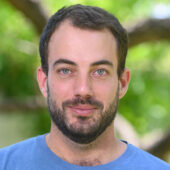 Itamar Karbi joined the Andlinger Center in October 2026 as a Distinguished Postdoctoral Fellow to study how to adapt future low-carbon power grids to imbalances in supply and demand of electricity caused by a changing climate. Karbi will work with Gabriel Vecchi, professor of geosciences, and Jesse Jenkins. The project will leverage advanced climate simulations and energy-systems modeling to understand how climate change affects the generation of renewable energy and, subsequently, the pathways to strengthen grid resilience in the face of unpredictable and extreme weather. Karbi’s goal is to connect an understanding of climate science to better infrastructure design and effective policy.
FUND FOR ENERGY RESEARCH WITH CORPORATE PARTNERS
Corporate investment in climate infrastructure
As extreme weather events — like rising temperatures, flooding, fires, and extreme storms — ramp up, private businesses are confronting the risks these hazards pose to infrastructure. Energy and water utilities, in particular, face growing strain. Yet, research has indicated while these entities understand the risks, they don’t consistently consider building infrastructure to improve their resilience when making investment decisions.
Chris Greig, Elke Weber, and Richard Moss *87, a non-resident fellow at the Andlinger Center, are studying the financial and institutional mechanisms that shape the decisions to invest or not invest in climate resilience with support from the Andlinger Center’s Fund for Energy Research with Corporate Partners. The researchers are working in collaboration with E-ffiliates member Deloitte.