Annual Report for the Academic Year 2025–2026

Carbon Management
Acknowledging the power sector’s role as a lynchpin for economy-wide decarbonization, the Andlinger Center is advancing clean energy and grid modernization solutions to transition toward sustainable electric power.
RESEARCH IN ACTION
Negotiating trade-offs between land use and the energy transition
xxxxxxx
Captions: (Cover) Nikolai Tsvetkov / Adobe Stock
(Inset) The researchers’ proposed ‘traffic-light’ approach to energy planning in Australia. The black circles indicate areas identified as candidate renewable energy zones by the Australian Energy Market Operator.
FUND FOR ENERGY RESEARCH WITH CORPORATE PARTNERS
Modeling complex power systems
Jürgen Hackl received a grant from the Andlinger Center’s Fund for Energy Research with Corporate Partners to develop a modeling framework for power systems that captures the complex interactions of the modern grid more effectively than existing network models. Hackl’s team will build scalable grid forecasting models that support both short-term grid management and long-term grid planning strategies, with a goal of increasing grid forecasting accuracy, robustness, and overall power system efficiency. The project will be carried out with Beacon Power Services as the corporate partner, bringing industry expertise in power systems operations to support the research.
Thermal energy storage and gas-fired power plants
The Andlinger Center’s Fund for Energy Research with Corporate Partners supported research aimed at analyzing how thermal energy storage (TES) systems — an emerging technology that temporarily stores energy by heating or cooling a medium — could help mitigate emissions from natural gas power plants. TES can be charged via excess heat from combustion turbines as they start up or shut down or from excess electricity from the grid, allowing operators to later use that stored heat to supplement or replace natural gas combustion. Jesse Jenkins will lead a team that includes co-PIs Eric Larson and Christos Maravelias, the Anderson Family Professor in Energy and the Environment, to analyze the techno-economic feasibility, market potential, and energy system impacts of integrating TES into natural gas combined cycle power plants. A corporate partnership has already been initiated for the project .
NEW FINDINGS
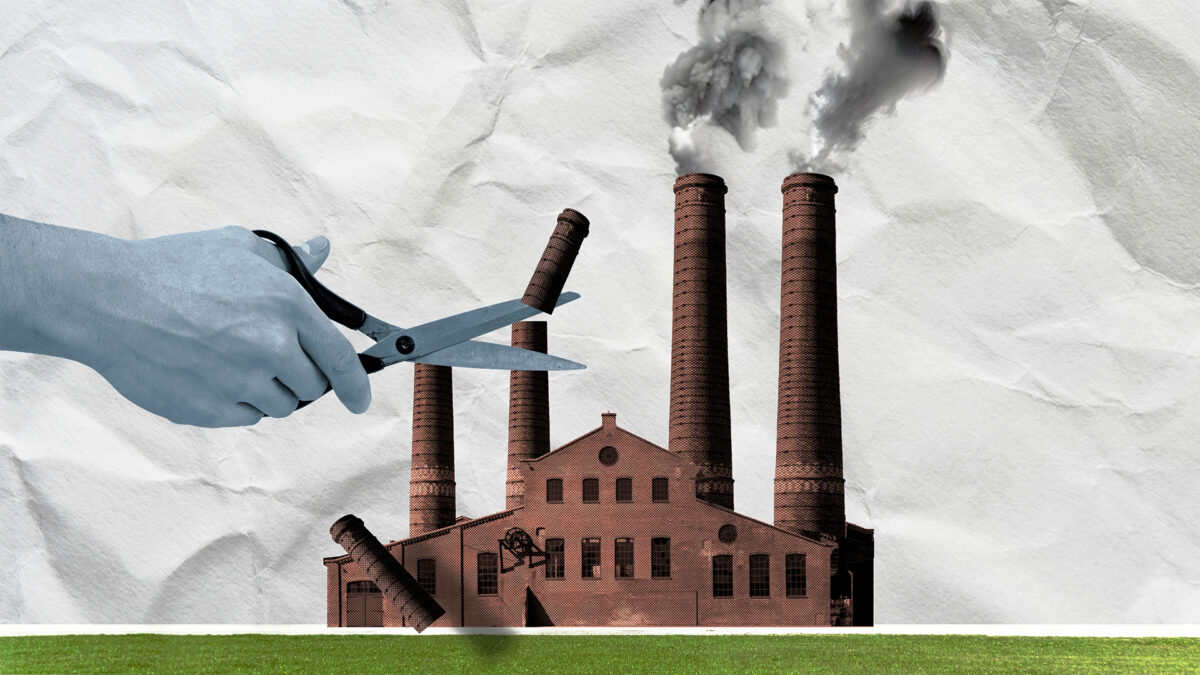
Analyzing the EPA’s actions
In March 2025, the U.S. Environmental Protection Agency (EPA) announced its intention to rollback regulations finalized in 2024 aimed at curbing greenhouse gas emissions from fossil fuel-fired power plants. The regulations set carbon dioxide limits for new gas-fired combustion turbines and provided guidelines for existing coal, oil, and gas-fired steam generating units.
That same month, Jesse Jenkins and associate research scholar Qian Luo published an analysis highlighting the rules’ role in driving down carbon emissions from the power sector and spotlighting the potential impacts of repealing the rules. The analysis also identified potential ways for the rules to be modified to achieve even deeper and more cost-efficient emissions reductions. The team found that:
- under the finalized EPA regulations, power sector emissions could fall 51% compared to 2022 levels, compared to only 26% without the rules.
- most emissions reductions from the regulations would come from accelerated coal plant retirements, accounting for around 70% of the total emissions reductions from the rules.
- the regulations targeted at natural gas plants only affect new natural gas power plants. Consequently, the 2024 regulations could lead to new natural gas plants operating at a lower capacity while ramping up production from less efficient existing natural gas generators, reducing the benefits of the new rules.
- additional regulations targeting existing gas plants could achieve power sector emissions reductions up to 88% below 2022 levels, at an even lower average cost of abatement than the 2024 regulations.
Captions: (Illustration by Bumper DeJesus)